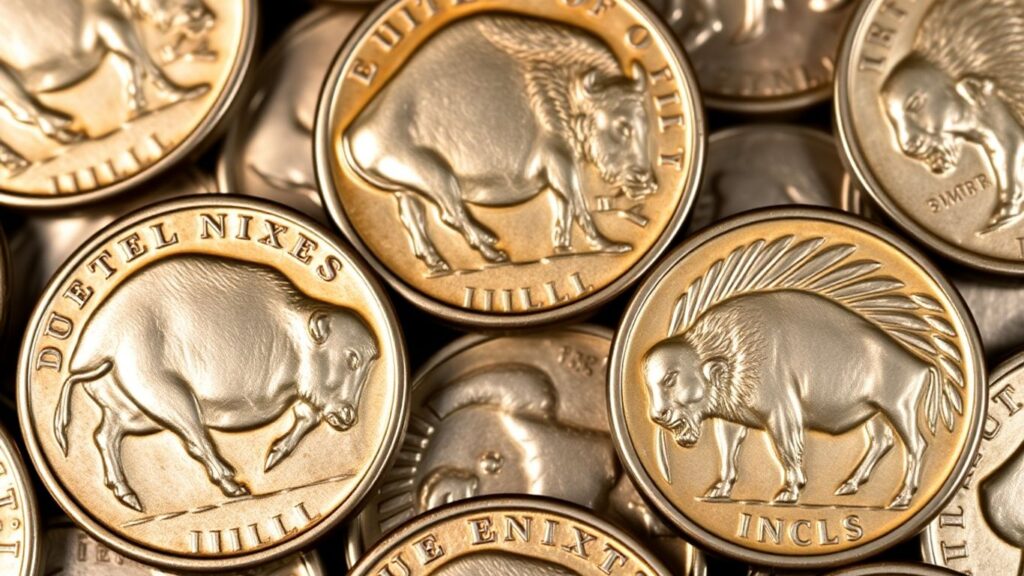
So, you’ve got a Buffalo nickel, huh? Maybe you found it in a jar, or perhaps it’s been sitting in a relative’s collection for ages. These coins, officially called Indian Head nickels, were made from 1913 to 1938. They’re pretty recognizable with that Native American portrait on one side and a buffalo on the other. People really seem to like them, which is why collectors are always looking for them. But not all Buffalo nickels are created equal; some are worth a bit, and others? Well, they can be worth a whole lot more. It really comes down to a few things, like the year it was made, where it was minted, how worn it is, and if it has any weird mistakes or special features. We’re going to break down what makes some of these nickels so popular and what you might have in your pocket.
Key Takeaways
- The Buffalo nickel, designed by James Earl Fraser, was minted between 1913 and 1938 and features a Native American profile and a buffalo.
- A coin’s date, mint mark (or lack thereof), and overall condition are the biggest factors in determining its value.
- Certain years and mint marks are much rarer, like the 1913-S or the 1919-S, making them highly sought after by collectors.
- Errors like the famous ‘3-legged’ buffalo or ‘8 over 7’ date are extremely rare and significantly increase a coin’s worth.
- Even nickels with worn-off dates can have some value, though it’s much harder to pinpoint without the date and depends heavily on the coin’s condition.
Understanding The Buffalo Nickel's Appeal
A Glimpse Into The Indian Head Nickel
The Buffalo Nickel, officially known as the Indian Head Nickel, really captured the public’s imagination when it first came out. It was a big change from the Liberty Head nickels that came before it. People were used to seeing Lady Liberty on coins, so seeing a Native American portrait on the front was something new and exciting. This coin wasn’t just about money; it was a piece of art that told a story about America’s past and its people. It’s this blend of history and striking design that makes collectors so interested.
The Iconic Design By James Earl Fraser
James Earl Fraser, the guy who designed this nickel, really outdid himself. He wanted to create a coin that felt truly American. For the front, he used the profile of a Native American, drawing inspiration from several different tribal leaders he met. For the back, he chose a powerful image of an American bison, or buffalo, standing strong. Fraser’s goal was to capture the spirit of the American West, and he absolutely nailed it. The design is bold, detailed, and instantly recognizable, which is a big part of why people still love this coin today. It’s not just a nickel; it’s a miniature sculpture.
Historical Significance And Minting Years
The Buffalo Nickel was made for a pretty specific window of time: from 1913 all the way to 1938. This period covers some really interesting times in American history, from the roaring twenties to the Great Depression. Because it was only made for about 25 years, and then replaced by the Jefferson Nickel, it has a certain rarity. Collectors often look for coins from specific years within that range, especially those that represent key moments or were made in smaller numbers. The coin’s journey through these historical events adds another layer to its appeal for anyone interested in American numismatics.
Factors Influencing Buffalo Nickel Value
So, you’ve got a Buffalo nickel, or maybe you’re thinking about getting one. It’s easy to look at a coin and think, ‘This is old, it must be worth a lot,’ but it’s not quite that simple. A bunch of things go into figuring out what a Buffalo nickel is actually worth. It’s not just about how old it is, though that’s part of it. Think of it like collecting anything else – condition, rarity, and specific details all play a role.
The Crucial Role Of Date And Mint Mark
The year a coin was made and where it was made (that’s the mint mark) are super important. Some years just had fewer coins made, or maybe a particular mint didn’t produce many. Those are usually the ones people really hunt for. For Buffalo nickels, the date is often the first thing collectors look at. If the date has worn off, which happens a lot with these coins because the design was a bit high-relief, it can really change the value. The mint mark, usually a small ‘D’ for Denver or ‘S’ for San Francisco found on the reverse side below the words "FIVE CENTS," tells you where it was struck. Philadelphia coins don’t have a mint mark. Some mint marks are rarer than others, making those coins more desirable.
Here’s a quick look at how dates and mint marks can affect things:
- Key Dates: Certain years and mint mark combinations were produced in much smaller numbers. These are the coins that collectors often seek out the most. For example, the 1913-S (San Francisco) is a famous key date.
- Mint Mark Rarity: Generally, ‘S’ mint coins tend to be scarcer than ‘D’ mint coins, and both are usually more sought after than Philadelphia issues, though there are exceptions.
- Wear on Dates: As mentioned, the date on Buffalo nickels is prone to wear. If a date is completely gone, it significantly impacts the coin’s value, often reducing it unless it’s an exceptionally rare variety.
Assessing Coin Condition And Luster
This is a big one. How worn is the coin? Does it still have that shiny, original look (that’s luster)? A coin that looks like it just came from the mint, with sharp details and no signs of wear, is worth way more than one that’s been tossed around in pockets for decades. Even a rare date can be worth much less if it’s heavily damaged or worn down.
- Luster: The original mint shine is a major factor. Coins that have been cleaned often lose their luster and, therefore, a good chunk of their value.
- Detail: Look at the details. On a Buffalo nickel, you want to see the details on the buffalo’s fur and the Native American’s headdress clearly defined. The higher the detail, the better.
- Wear Patterns: Even wear isn’t always bad, but how it’s distributed matters. Heavy wear on high points like the buffalo’s horns or the Indian’s nose will reduce value.
The condition of a coin is often the most significant factor in determining its market price. A coin that has been preserved well, showing minimal wear and retaining its original mint luster, will command a much higher price than a similar coin that has been heavily circulated or damaged.
The Impact Of Scarce Varieties And Errors
Sometimes, coins aren’t perfect. Mistakes happen during the minting process, and these ‘errors’ or ‘varieties’ can actually make a coin more valuable, not less. Think of things like doubled dies (where the die was struck twice, creating a doubled image) or special overstrikes. The famous
Identifying Rare Buffalo Nickel Varieties
While many Buffalo nickels are pretty common, some have quirks that make collectors really excited. These aren’t just your everyday coins; they’re the ones with mistakes or special minting details that set them apart. Finding one of these can be a real thrill, and it definitely bumps up the value.
The Notorious 3-Legged Buffalo Nickel
This is probably the most famous Buffalo nickel error out there. Back in 1937 at the Denver mint, something went wrong during the die preparation. A significant chunk of the buffalo’s front leg was accidentally polished away, leaving it looking like it only has three legs. It’s a striking visual error that makes this coin instantly recognizable and highly sought after. Because so few were made this way, they fetch a pretty penny, especially in good condition.
The Intriguing 8 Over 7 Overstamp Error
This one is a bit more subtle but just as interesting. It happened in 1918, again at the Denver mint. The mint workers were supposed to stamp the year ‘1918’ onto the die, but it looks like they actually stamped it over an existing ‘1917’ date. So, you’ll see the ‘8’ clearly, but if you look closely, you can make out the ‘7’ underneath it. It’s a neat little piece of minting history that collectors love to find.
Doubled Die Obverse and Reverse Varieties
Doubled dies happen when the die used to strike the coin gets shifted slightly between the first and second strike. This can result in a doubling effect on the design elements. For Buffalo nickels, you can find these errors on either the front (obverse) or the back (reverse) of the coin. Sometimes the doubling is very obvious, like on the date or the "Liberty" text, while other times it’s much fainter and requires a magnifying glass to spot. These varieties, especially when the doubling is clear and affects important details, can significantly increase a coin’s desirability and price.
Navigating The Value Of Dateless Nickels
Why Dates Wear Off Buffalo Nickels
It’s pretty common to find a Buffalo nickel where the date has completely worn away. Don’t worry, this isn’t some kind of mint error or anything super rare in itself. These coins were all struck with dates, but decades of being passed around in everyday transactions just wore them down. The design, while beautiful, had some elements that were just too exposed. The date, along with the "FIVE CENTS" on the reverse, were particularly vulnerable. Think about how many hands and pockets these coins went through back in the day! It’s a testament to their popularity and use that so many are still around, even if the date is gone.
The Market For Dateless Specimens
So, what’s the deal with these dateless coins in the collector world? Well, they occupy a bit of a niche. They aren’t usually the stars of a collection, but they have their place. Some collectors really enjoy the challenge of trying to figure out what the original date might have been, or they just appreciate having a piece of history that shows heavy circulation. They’re often seen as entry-level coins for people just getting into collecting Buffalo nickels because they’re generally more affordable than dated examples. Plus, there’s a certain mystery to them, right?
Estimating Value Without A Date
Figuring out what a dateless Buffalo nickel is worth can be tricky, but there are some general guidelines. A coin with a completely worn-off date will typically fetch at least 20 to 50 cents, sometimes a bit more, just for being an authentic Buffalo nickel. The real jump in value happens if you can somehow reveal the date. Sometimes, collectors use gentle chemical treatments to bring out faint impressions, but this can be risky and might damage the coin further if not done carefully. It’s usually best to consult with a professional before attempting anything like that.
Here’s a rough idea of what you might see:
- Heavily Circulated (Dateless): $0.20 – $1.00
- Date Partially Visible: Value increases significantly, depending on the year and mint mark.
- Key Date Revealed: Can be worth hundreds or even thousands, depending on the specific coin.
It’s important to remember that the value of a dateless Buffalo nickel is highly dependent on the potential date hidden beneath the wear. While the coin itself has a baseline value due to its design and metal content, uncovering a rare year or mint mark can dramatically change its worth. Collectors often weigh the cost and risk of attempting to reveal a date against the potential reward.
Some collectors even specialize in these dateless coins, appreciating them for the story of wear they tell. They represent a tangible link to the past, showing how much these coins were used and valued in everyday life.
Key Dates And Their Premium Value
Some Buffalo nickels are just plain more interesting, and therefore more valuable, than others. It’s not just about how old they are, but where they were made and if there were any weird printing mistakes. These specific coins, often called ‘key dates,’ are what collectors really hunt for. They can be worth a lot more than your average nickel, sometimes hundreds or even thousands of dollars, depending on how many were made and how many still exist in good shape.
Think of it like this: if you’re collecting stamps, a common one might be worth pennies, but a rare misprint? That’s the one everyone wants. Buffalo nickels have their own set of these special coins.
Here are a few things that make a Buffalo nickel a ‘key date’:
- Low Mintage Numbers: If the mint only made a small number of a particular year and mint mark, it’s automatically rarer.
- High Survival Rate Needed: Even if few were made, if most of them got lost or melted down, the ones left are super rare.
- Specific Mint Marks: Sometimes, a coin from a particular mint (like Denver or San Francisco) is much harder to find than one from Philadelphia.
- Known Errors or Varieties: As we’ll talk about later, certain mistakes during the minting process can make a coin incredibly desirable.
The value jump for these key dates can be pretty dramatic. A regular Buffalo nickel might be worth a few bucks in decent condition, but a key date in the same condition could be worth fifty times that, or even more. It really pays to know your dates and mint marks.
Let’s look at some of the big players:
| Year | Mint Mark | Variety/Notes | Typical Value Range (USD) |
|---|---|---|---|
| 1913 | S | Type I (Mound) | $50 – $150+ |
| 1913 | D | Type II (Line) | $125 – $300+ |
| 1913 | S | Type II (Line) | $350 – $1,000+ |
| 1914 | D | $100 – $250+ | |
| 1915 | D | $75 – $200+ | |
| 1916 | D | $50 – $150+ | |
| 1917 | D | $40 – $100+ | |
| 1918 | D | $50 – $150+ | |
| 1919 | S | $150 – $400+ | |
| 1920 | D | $100 – $250+ | |
| 1921 | D | High Relief | $75 – $200+ |
| 1923 | S | $100 – $300+ | |
| 1924 | D | $50 – $150+ | |
| 1926 | S | $50 – $150+ | |
| 1927 | D | $50 – $150+ | |
| 1931 | D | $75 – $200+ | |
| 1935 | D | $30 – $75+ | |
| 1937 | D | $30 – $75+ | |
| 1938 | D | $30 – $75+ |
Note: Values are approximate and depend heavily on the coin’s condition (grade) and specific market demand at the time of sale. These are rough estimates for circulated examples.
The Importance Of Coin Condition
When you’re looking at Buffalo Nickels, or really any old coin for that matter, how it looks really matters. It’s not just about the date or if it’s a rare variety; the physical state of the coin plays a massive role in what someone will pay for it. Think about it – a coin that’s been worn smooth by years of handling just doesn’t have the same appeal as one that looks like it just left the mint. The difference in value between a worn coin and a nearly perfect one can be staggering.
Understanding Mint State Buffalo Nickels
Mint Marks And Their Value Implications
You know, when you look at a Buffalo nickel, there’s more to it than just the picture of the bison. Little details can really change how much it’s worth. One of those details is the mint mark. It’s like a tiny signature from the place where the coin was made.
The Denver Mint's 'D' Mark Significance
If you see a ‘D’ on your Buffalo nickel, that means it came from the Denver Mint. Denver made a good number of these coins, but some years were definitely scarcer than others. For example, the 1913-D is a bit of a tough one to find in good shape. It’s not the absolute rarest, but it’s definitely more sought after than many of its Philadelphia counterparts. Finding a ‘D’ nickel that’s not all worn down can be a real win.
The San Francisco Mint's 'S' Mark Impact
Now, an ‘S’ means it was minted in San Francisco. These coins often carry a bit more weight with collectors, especially from certain years. The 1913-S is famous, but even other ‘S’ mints from the 1920s can be pretty valuable if they’re in nice condition. San Francisco mintages were sometimes lower, and a lot of those coins didn’t survive the years in great shape. So, an ‘S’ nickel, particularly one that looks almost new, can be quite a find.
Philadelphia Mint's Absence Of A Mark
Here’s a quirky thing: nickels made in Philadelphia don’t have a mint mark at all. Yep, they just don’t put anything there. So, if you don’t see a ‘D’ or an ‘S’, it’s from Philly. This doesn’t automatically make them less valuable, but it does mean you have to look at the date and the coin’s condition even more closely. Some Philadelphia issues are still quite rare and valuable, but you won’t get a quick clue from the mint mark itself.
Here’s a quick look at how mint marks can affect things:
- ‘D’ (Denver): Generally more common than ‘S’ mints, but some dates are scarce.
- ‘S’ (San Francisco): Often scarcer and more desirable, especially in higher grades.
- No Mark (Philadelphia): Requires careful examination of date and condition for rarity.
It’s easy to overlook these little letters, but they’re a big part of the story for any Buffalo nickel. They tell you where the coin started its journey and can be a major clue to its overall rarity and worth. Always check for them, even if you think you know what you’re looking for.
Think of it like this:
| Mint Mark | Location | General Rarity Impact |
|---|---|---|
| D | Denver, Colorado | Moderate |
| S | San Francisco, CA | Higher |
| (None) | Philadelphia, PA | Varies by date |
Decoding The Buffalo Nickel's Reverse
Alright, let’s flip this coin over and check out the back. The reverse of the Buffalo nickel is just as iconic as the front, featuring a powerful image of an American bison. This wasn’t just any bison; it was inspired by a specific animal named ‘Black Diamond’ at the Bronx Zoo. You can see the bison standing on a mound, a detail that actually changed between the first and second versions of the coin, which is pretty interesting.
Type I Vs. Type II Buffalo Nickels
The Buffalo nickel actually had two distinct reverse designs during its run. The first version, known as Type I, was minted from 1913 to mid-1913. The main difference lies in the mound the bison stands on. On the Type I, the mound is quite flat and shallow. This design proved problematic because the "FIVE CENTS" denomination, which is incused (meaning it’s carved into the coin), wore away very easily. This led to a quick redesign.
The Type II design, introduced later in 1913 and used until 1938, features a more pronounced, raised mound. This change made the "FIVE CENTS" inscription much more durable and less prone to wear. So, when you’re looking at a Buffalo nickel, checking out the reverse mound and the clarity of "FIVE CENTS" is a key way to tell if you have a Type I or Type II.
| Design Type | Minting Period | Mound Appearance | ‘FIVE CENTS’ Durability |
|---|---|---|---|
| Type I | 1913 (early) | Flat, shallow | Prone to wear |
| Type II | 1913 (late) – 1938 | Raised, pronounced | More durable |
The Denomination 'Five Cents' Wear
As mentioned, the wear on the "FIVE CENTS" inscription is a big deal, especially for distinguishing between Type I and Type II coins. On Type I nickels, you’ll often find that the letters are faint or completely gone, even on coins that aren’t heavily circulated. This is because the incused lettering sat very low on the coin’s surface, making it a prime target for rubbing during everyday use. The Type II design corrected this, making the denomination much more robust. If "FIVE CENTS" is clear and sharp, it’s almost certainly a Type II. If it’s weak or missing, it could be a worn Type II or, more significantly, a Type I.
The placement and depth of the "FIVE CENTS" inscription were critical design elements that directly impacted the coin’s longevity in circulation. The initial design’s vulnerability led to a swift modification, highlighting the practical challenges faced by coin designers and engravers.
The Bison's Distinctive Features
Beyond the mound and the denomination, the bison itself has some details worth noting. The sculptor, James Earl Fraser, really captured the animal’s mass and power. Look closely at the bison’s shaggy mane, its powerful horns, and the texture of its fur. Even on circulated coins, these features can tell a story. The overall impression is one of strength and the wild American frontier. The quality of the strike can vary a lot, especially on coins with mint marks like the 1913-D Buffalo nickel Type 2 MS68, which sold for a hefty sum. Sometimes, even high-grade coins might have slightly soft details, but the overall artistry usually shines through. It’s these little details that collectors often obsess over when trying to find the best possible example of a particular coin.
Professional Grading And Authentication
So, you’ve got a Buffalo nickel, maybe even one you think is pretty special. That’s awesome! But how do you really know what it’s worth, or even if it’s the real deal? This is where professional grading and authentication come in. It’s like getting a certified report card for your coin.
Why Professional Grading Matters
Think of it this way: anyone can say a coin is in great shape, but a professional grader has seen thousands, maybe millions, of coins. They have a trained eye and a standardized system to look at things like wear, luster, and any nicks or scratches. This objective assessment is key to understanding a coin’s true market value. Without it, you’re kind of guessing, and in the coin world, guessing can cost you.
Understanding Grading Scales
Grading isn’t just "good" or "bad." There’s a whole scale, and the most common one goes from 1 (poor) all the way up to 70 (perfect, mint state). For Buffalo nickels, you’ll often hear about grades like:
- MS-60 to MS-65: These are considered uncirculated, meaning they haven’t been used as money. They’ll have most of their original shine (luster).
- MS-66 and above: These are top-tier uncirculated coins, very rare for Buffalo nickels, and command much higher prices.
- Lower grades (VG, F, VF, XF, AU): These indicate varying degrees of wear. A coin in "About Uncirculated" (AU) might look pretty good but has seen a little bit of circulation.
It’s not just about the wear, though. Surface preservation, strike quality, and eye appeal all play a part. A coin might technically be an MS-65, but if it has a dull surface or a weak strike, it might not look as good as another coin with a slightly lower grade but better overall appearance.
Ensuring Authenticity Of Rare Finds
This is super important, especially if you stumble upon something that looks like a rare variety, like a 3-legged nickel or a doubled die. Counterfeits exist, and some are really good. Professional services don’t just grade; they also authenticate. They’ll check the metal composition, weight, and look for signs of tampering or artificial aging. It’s a bit like a detective’s work for your coin. If you’re dealing with a potentially high-value coin, getting it slabbed (put in a protective plastic holder) by a reputable service like PCGS or NGC is pretty much a must. It gives you peace of mind and makes the coin much more attractive to other collectors and dealers.
The Most Sought-After Buffalo Nickels And Their Values
So, you’ve got a Buffalo Nickel, or maybe you’re thinking about getting one. It’s easy to see why these coins are so popular. They just look cool, right? But not all Buffalo Nickels are created equal when it comes to what they’re worth. Some are pretty common, while others can fetch a serious amount of money. Let’s break down which ones are the real stars of the show and what makes them so special.
Top Valued Buffalo Nickels By Year
When it comes to Buffalo Nickels, the year and where it was made (the mint mark) are huge. Some years just didn’t have as many made, or they were made in places that are rarer to find. The 1913-S, for example, is a big deal because so few were produced at the San Francisco mint. It’s like finding a needle in a haystack. Other years, like the 1919-S and 1920-D, also command high prices because they are scarce and highly desired by collectors.
Here’s a peek at some of the top contenders:
- 1913-S: Often considered the king of Buffalo Nickels. Its low mintage and historical significance make it incredibly valuable.
- 1919-S: Another tough one to find, especially in good condition.
- 1920-D: The Denver mint produced fewer of these, making them a prize for collectors.
- 1923-S: While not as rare as some others, this date in high grade can still bring in a good sum.
- 1929-P: This is another key date that collectors actively seek out.
Understanding Market Trends
Coin values aren’t set in stone. They change based on what people are collecting right now. If a particular year or variety suddenly becomes super popular, its price can jump. It’s a bit like the stock market, but for old coins. Sometimes, a coin that wasn’t a big deal years ago can become a hot item because of a new trend or a famous collection being sold.
The market for these coins is always shifting. What’s considered rare and valuable today might be even more so tomorrow, or a new discovery could change things. Keeping an eye on what collectors are talking about and what’s selling at auctions is key to understanding where the values are headed.
Achieving Maximum Value For Your Collection
So, you’ve got some of these sought-after nickels. How do you make sure you get the most for them? First off, condition is everything. A coin that looks like it just left the mint will always be worth more than one that’s been jingling around in pockets for decades. If you have a coin that might be rare, getting it professionally graded is a smart move. Experts can tell you exactly what you have and give it a grade, which is what buyers look for. Also, knowing the history behind your coin, like if it’s a known error or from a specific collection, can add to its appeal and price. Don’t try to clean your coins yourself, though – that can actually lower their value!
Wrapping Up Your Buffalo Nickel Hunt
So, that’s the lowdown on Buffalo nickels. We’ve seen how these coins, with their cool Indian chief and buffalo designs, can be worth a lot more than just five cents. Remember, it’s all about the date, the mint mark, and how good a shape the coin is in. Some of those rare ones, especially ones with mistakes or from certain years, can really fetch a pretty penny. Even if you’ve got a dateless nickel, it might still be worth something, though usually not as much. Keep your eyes peeled, do your homework, and who knows, maybe you’ve got a hidden treasure sitting in your pocket or an old coin jar. Happy hunting out there!
Frequently Asked Questions
Why are Buffalo Nickels so popular with collectors?
Buffalo Nickels, also called Indian Head Nickels, are super popular because of their cool design. They show a Native American on one side and a buffalo on the other. Plus, they were made a long time ago, from 1913 to 1938, so they have a lot of history behind them. This makes them special to many people who collect coins.
What makes a Buffalo Nickel more valuable than another?
Several things make one Buffalo Nickel worth more than another. The year it was made and where it was minted (like Denver or San Francisco) are super important. Also, how good the coin looks – if it’s worn out or still shiny and clear – really matters. Sometimes, coins with mistakes made during minting, called errors, can be very valuable too.
How can I tell if my Buffalo Nickel is rare?
While millions of Buffalo Nickels were made, coins in really good shape with all their details still sharp are considered rare. This is because most of them were used a lot and got worn down. Special ones, like the famous ‘3-legged’ Buffalo Nickel or ones with printing errors like doubled dates, are also much rarer and more valuable.
What's the deal with Buffalo Nickels that don't have a date?
It’s common for the date on Buffalo Nickels to wear off because the design was made with raised parts that rubbed away easily during use. These ‘dateless’ nickels aren’t special errors. They’re just old coins that have seen a lot of action. While they’re worth more than just their 5-cent value, they’re generally not as valuable as coins with a clear date.
Are there specific years or types of Buffalo Nickels that are worth a lot?
Yes, absolutely! Some years and mint marks are much harder to find and therefore worth more. For example, the 1913-S (San Francisco) is highly sought after. Other valuable ones include certain years like 1919-S, 1920-D, 1923-S, and 1929-P, especially if they are in great condition.
How important is the condition of the coin for its value?
The condition is a HUGE deal for Buffalo Nickels! Coins that look like they just came from the mint, with no signs of wear and a shiny surface, called ‘Mint State’ or ‘uncirculated,’ are extremely rare and command much higher prices. Even a little bit of wear can significantly lower a coin’s value.
What do the mint marks 'D' and 'S' mean on Buffalo Nickels?
The mint marks tell you where the coin was made. A ‘D’ means it was made in Denver, and an ‘S’ means it was made in San Francisco. Coins from these mints can sometimes be rarer than those made in Philadelphia (which usually doesn’t have a mint mark). The mint mark is usually found on the reverse side of the coin.
What's the difference between Type I and Type II Buffalo Nickels?
The main difference is on the back (reverse) of the coin. Type I nickels have the word ‘FIVE CENTS’ written on a bumpy mound. This mound caused the letters to wear off easily. Type II nickels have a flatter design for ‘FIVE CENTS,’ making the lettering last longer. Type II coins are generally rarer and more valuable.