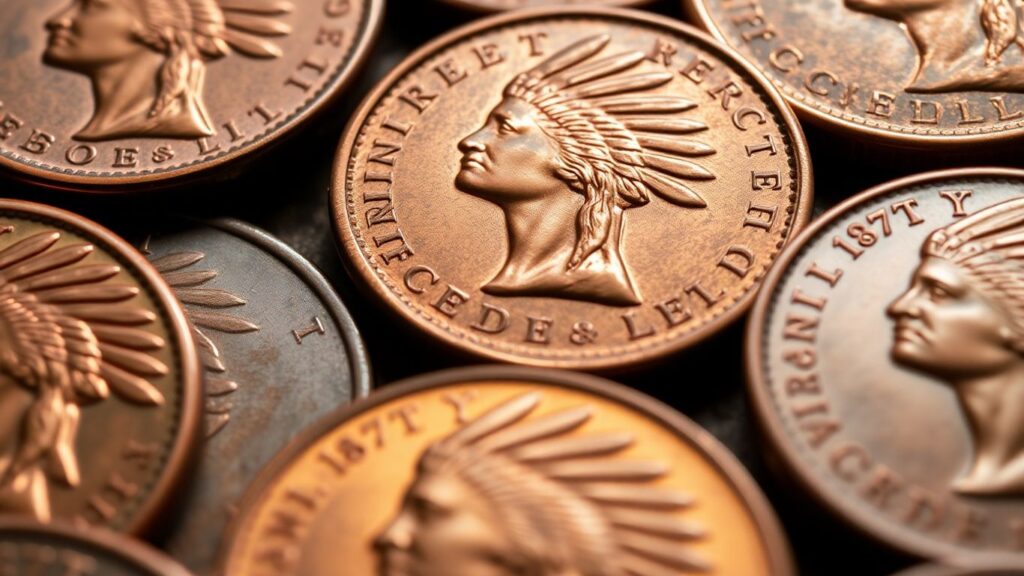
So, you’re wondering what makes those old Indian Head pennies so appealing to collectors? It’s not just about the date or the condition, though those things matter a lot. There’s a whole world of tiny details, historical quirks, and even mistakes made at the mint that can turn a common coin into something really special. We’re going to break down what collectors look for, from the big rarities to the subtle variations, and why these coins have held their charm for so long. It’s a mix of history, rarity, and the simple joy of finding something unique.
Key Takeaways
- The appeal of Indian Head pennies comes from their connection to American history, the excitement of finding rare ones, and the learning that comes with discovering different varieties.
- Mintage numbers are a big deal; coins made in smaller quantities are generally harder to find and worth more.
- Specific dates and mint marks, like the 1909-S VDB or 1914-D, are considered ‘key dates’ because they were produced in very low numbers, making them highly sought after.
- Mistakes made during the minting process, known as die varieties and errors, can significantly increase a coin’s value, sometimes making a common date very rare.
- The physical condition of a coin, including its wear, luster, and any imperfections, plays a huge role in its grade and overall worth to collectors.
Understanding The Appeal Of Indian Head Pennies
A Tangible Link To American Heritage
There’s something special about holding a piece of history in your hand, isn’t there? Indian Head pennies, officially known as the Indian Cent, offer just that. These coins, minted from 1859 all the way up to 1909, put a face on American history that many people connect with. Before Abraham Lincoln got his portrait on the penny, it was Lady Liberty, depicted as a Native American woman, who graced our smallest denomination coin. This connection to a specific era of American development makes them more than just metal; they’re little time capsules. For many collectors, it’s about owning a physical piece of the past, a reminder of the country’s journey through significant periods like the Civil War and westward expansion.
The Thrill Of The Hunt And The Chase
Coin collecting isn’t just about the coins themselves; it’s also about the adventure of finding them. For Indian Head pennies, this often means digging through old coin jars, estate sales, or even just looking through pocket change (though finding one in circulation today is quite rare!). It’s like a treasure hunt. You might be searching for a specific date or mint mark, or maybe you’re just hoping to stumble upon a hidden gem. That moment when you find an Indian Head penny you’ve been looking for, or one that’s in better condition than you expected, is a real rush. It’s this excitement of the search, the possibility of discovery, that keeps many people hooked on collecting these coins.
Unlocking Curiosity Through Discovery
Every Indian Head penny you find can tell a story, and that’s where the curiosity really kicks in. You start wondering: Where has this coin been? Who owned it before? What was happening in the country when it was minted? Looking at the details on the coin – the design, the wear, any imperfections – can spark a lot of questions. This leads collectors to research different dates, mint marks, and even subtle variations in the coin’s design, known as die varieties. It’s a journey of learning about history, metallurgy, and the art of coin making. You might start with just one coin, but soon you’re drawn into a rabbit hole of knowledge, wanting to know more about each piece you acquire.
The appeal of Indian Head pennies goes beyond their metallic worth. They represent a direct connection to American history, offering a tangible link to the past. The process of collecting them, from the initial search to the eventual discovery and research, sparks a unique sense of curiosity and engagement for enthusiasts.
Rarity: The Cornerstone Of Collectibility
When you start looking at Indian Head pennies, you’ll quickly see that not all of them are created equal. Some are pretty common, while others are really tough to find. This difference in how many exist is what we call rarity, and it’s a huge part of why some coins are worth a lot more than others. It’s like collecting anything else – the harder something is to get, the more people want it, and the higher the price tends to go.
Mintage Figures As A Primary Indicator
The first place to look when figuring out how rare a coin is, is its mintage figure. This is simply the number of coins made in a specific year at a specific mint. These numbers are usually published in coin collecting guides. Generally, if a coin had a low mintage, it’s going to be rarer and usually more expensive. Think about it: if only a few thousand were made compared to millions, those few thousand are going to be much harder to track down.
Here’s a simplified look at how mintage can affect things:
| Year | Mint Mark | Mintage (Approx.) | Rarity Factor |
|---|---|---|---|
| 1870 | Philadelphia | 1,500,000 | Low |
| 1877 | Philadelphia | 800,000 | Medium |
| 1909 | San Francisco | 1,000,000 | Medium |
| 1909-S | San Francisco | 484,000 | High |
Key Dates And Their Significance
Within the series, certain dates stand out as being particularly hard to find. These are often called "key dates." They might have had a very low mintage, or perhaps there was a problem during production that made them scarce. Finding a key date in good condition can be a real achievement for a collector. These coins are often the most sought-after pieces for people trying to complete a full set of Indian Head pennies.
Some of the most well-known key dates include:
- 1877
- 1909-S
- 1914-D
These dates are famous because so few were made or survived over the years. They are the ones that often drive up the price of a collection.
Identifying Semi-Key Dates
Besides the main key dates, there are also "semi-key dates." These aren’t quite as rare or as expensive as the true key dates, but they are still significantly harder to find than regular issue coins. They represent a good middle ground for collectors who want a challenge without breaking the bank. Finding these can add a lot of interest to your collection and often represent a good value. They might have had a slightly lower mintage than average or perhaps fewer have survived in good condition. They are the next step up in difficulty after the common dates and are important for building a more complete and valuable collection.
Mint Marks And Their Impact On Scarcity
You know, when you start looking at Indian Head pennies, you quickly realize it’s not just about the date. There’s this whole other layer of information stamped right onto the coin itself: the mint mark. It tells you where the coin was actually made, and believe me, that detail can make a huge difference in how rare and valuable a penny is.
Understanding Mint Mark Designations
Basically, the U.S. Mint had different branches, and each one put its own little stamp on the coins it produced. For Indian Head pennies, you’ll mostly see coins from Philadelphia, Denver, and San Francisco. Philadelphia, being the main facility, usually didn’t put a mint mark on its coins. So, if you see no mark, it’s from Philly. Denver used a "D," and San Francisco used an "S." It’s pretty straightforward once you know what to look for. You can usually find these marks on the reverse side of the coin, right below the date.
- No Mint Mark: Philadelphia Mint
- D: Denver Mint
- S: San Francisco Mint
Mint Marks And Their Influence On Rarity
So, why does this matter? Well, different mints produced vastly different numbers of coins each year. The Philadelphia Mint, being the largest, often churned out millions of pennies. The Denver and San Francisco mints, however, typically had much smaller production runs, especially in the earlier years of the Indian Head series. This means that a penny from the same year but with an "S" or "D" mint mark can be significantly rarer than its Philadelphia counterpart. This difference in production numbers is a primary driver of scarcity and, consequently, a coin’s value. For instance, finding a 1909-S Indian Head penny is a much bigger deal than finding a regular 1909 from Philadelphia.
Specific Mint Marks And Their Historical Production
Looking at specific mint marks gives you a clearer picture. The "S" mint, for example, is famous for producing some of the lowest mintage dates in the series. Coins from San Francisco, especially from the 1870s and early 1900s, are often highly sought after because so few were made. The "D" mint also had its share of low-mintage years, though generally, its production numbers were a bit higher than San Francisco’s. When you’re building a collection, paying attention to the mint mark is just as important as noting the date. It’s a key factor in determining if you’ve got a common coin or something truly special.
The presence or absence of a mint mark is a critical piece of information that profoundly influences a coin’s place in the series. It’s not just a random stamp; it’s a historical marker of production volume and regional output, directly impacting a coin’s rarity and desirability among collectors.
The Allure Of Die Varieties And Errors
Beyond Standard Date And Mint Mark Combinations
When you start digging into Indian Head pennies, you quickly realize that the date and mint mark are just the beginning. There’s a whole other layer of fascinating details that can make a coin much more interesting, and often, much more valuable. These are the die varieties and errors. Think of it like finding a typo in a book – sometimes it’s just a minor slip, but other times, it’s a significant mistake that changes the meaning or makes the book a rare collector’s item. For Indian Head cents, these "mistakes" happen during the minting process when the dies (the metal stamps that strike the coin’s image) get damaged, doubled, or misaligned. It’s these imperfections that collectors often seek out.
Recognizing Valuable Die Varieties
Die varieties are essentially intentional or unintentional variations in the die used to strike the coins. These can range from subtle repunched dates, where the die was struck twice in the same spot, to more dramatic overdates, where a new date is punched over an old one. Then there are things like doubled dies, which create a "ghost" image of the design, or misplaced elements, like a "1" in the neck on some 1897 cents. The thrill of finding these hidden gems is a big part of the hobby. It requires a keen eye and a good reference guide, but the reward can be significant, both in terms of knowledge and potential value. For instance, the 1873 Doubled Liberty is a prime example, showing dramatic doubling on the word "LIBERTY" and other design elements. Finding one of these can be a real feather in a collector’s cap.
Understanding Common Error Types
Errors are a bit different from varieties; they’re usually accidents that happen during the minting process itself. This could be anything from a coin struck off-center, where the design isn’t fully within the planchet (the blank metal disc), to a "clip" error, where the metal was cut improperly before striking. You might also find "brockages," where a coin gets stuck in the die and strikes another coin, or "double strikes," where a coin is struck more than once. While some errors are quite common and don’t add much value, certain dramatic or rare errors can significantly increase a coin’s desirability. It’s a whole different ballgame compared to just collecting by date and mint mark, and it opens up a whole new world of collecting possibilities. Many collectors focus on specific types of errors, building a collection around these unique minting anomalies. It’s a way to appreciate the manufacturing process and the rare instances when things go awry, creating something special. You can find some amazing examples of these coins at major coin dealers.
Collecting die varieties and errors is like being a detective. You’re not just looking at the obvious; you’re searching for the subtle clues left behind by the minting process. It takes patience, a good eye, and a willingness to learn, but the satisfaction of discovering a rare variety or a significant error is immense. It adds a layer of depth and excitement to collecting that goes far beyond simply filling date and mint mark slots in an album.
Notable Indian Head Penny Varieties
The 1873 Doubled Liberty: A Crown Jewel
When you start digging into Indian Head pennies, you’ll quickly find that some coins are way more interesting than others. It’s not just about the date or where it was made; sometimes, the way the coin was struck creates something special. The 1873 Doubled Liberty is a prime example of this. It’s often called the "King of Indians" for a good reason. The doubling on this coin is really dramatic, affecting the "LIBERTY" inscription, the facial features of the Goddess, and even the feathers in her headdress. Finding a well-struck example of this variety is a major achievement for any collector.
It’s important to know that not all 1873 Doubled Liberty coins are created equal. Many have incomplete doubling, especially on the middle letters of "LIBERTY." You’ll also see a lot of these coins with noticeable marks and scratches, even on supposedly uncirculated ones. This means you have to be careful when buying; some coins might look better in pictures than they do in hand, and prices can vary wildly depending on the quality.
Other Major Varieties To Consider
Beyond the famous 1873 Doubled Liberty, there are a few other varieties that serious collectors often seek out. These are recognized by major grading services and are often required for specific registry sets. They represent significant production anomalies that make them stand out from the regular issues.
Here are some of the key ones to keep an eye on:
- 1864/3 Indian Head Cent (Snow 1): This is an overdate where the ‘4’ is struck over a ‘3’. It’s one of the earliest and most sought-after varieties.
- 1873 Doubled Liberty (Snow 1): As discussed, this is the big one, known for its extensive doubling.
- 1888/7 Indian Head Cent (Snow 1): Another overdate, this time a ‘7’ is clearly visible beneath the ‘8’.
- 1894/1894 Indian Head Cent (Snow 1): This is a repunched date, where the date was punched onto the die more than once, creating a strong, visible effect.
- 1897 "1" in Neck Misplaced Date (Snow 1): In this variety, the ‘1’ in the date is significantly out of position, appearing lower and to the left.
These varieties, while not always as visually striking as the 1873 Doubled Liberty, are still very important for completing a comprehensive collection. They often require careful study to identify correctly, which is part of the fun for many collectors. Learning about these can help you spot a good deal when you see one, especially if you’re hunting through dealer bins or online auctions.
The Value Range Of Significant Varieties
The price you’ll pay for these notable varieties can change a lot. It really depends on the specific variety, its condition, and how well it was struck. For instance, the 1873 Doubled Liberty can go from a few hundred dollars in lower grades to well over $100,000 for a top-notch, gem mint state example. That’s a huge range!
Here’s a general idea of what you might expect, keeping in mind that condition is everything:
| Variety | Condition Range | Approximate Value Range |
|---|---|---|
| 1873 Doubled Liberty | Good – Fine | $500 – $1,000 |
| 1873 Doubled Liberty | VF – XF | $2,000 – $4,000 |
| 1873 Doubled Liberty | AU | $4,000 – $10,000 |
| 1873 Doubled Liberty | MS 65 RB | $15,000+ |
| Other Major Varieties | Good – Fine | $50 – $500+ |
| Other Major Varieties | AU – MS | $200 – $2,000+ |
Remember that these are just estimates. The actual market value can fluctuate based on demand, rarity of the specific strike, and the overall condition of the coin. Always do your homework and consult resources like PCGS CoinFacts for the most up-to-date pricing information.
Condition And Its Effect On Value
Impact Of Minor Imperfections On Grade
When you’re looking at an Indian Head Penny, its physical state is a huge deal. Even a coin with a rare date can lose a lot of its appeal if it’s worn down or has been damaged. Think about it like a vintage car – a few dings and scratches can really bring down the price, even if it’s a classic model. Minor issues like tiny scratches, dents, or even little nicks on the edge can make a big difference. Corrosion, often from being stored poorly or exposed to moisture, can really mess up the surface and take away that nice shine. These little flaws might seem small, but they add up and can make a coin much less desirable to collectors.
Understanding Coin Grading Scales
To talk about coin condition, people use a system called the Sheldon Scale. It’s a number from 1 to 70, where 1 is basically falling apart and 70 is absolutely perfect. The higher the number, the better the coin looks and the more it’s usually worth. For example, a coin graded MS-65 (that’s Mint State, meaning it’s never been used) is way more valuable than one graded F-12 (Fine) if they’re the same date and mint mark. It’s pretty important to get a handle on this scale if you’re serious about collecting or investing.
Here’s a quick look at some general categories:
- Poor (P-1) to Good (G-4): These coins show a lot of wear. Details are hard to see, and they’ve clearly been around the block.
- Very Fine (VF-20) to Extremely Fine (XF-45): You can see most of the details, but there’s still noticeable wear, especially on the high points.
- About Uncirculated (AU-50 to AU-58): These coins look almost new. There’s very little wear, mostly just on the highest spots, and they still have a good amount of their original shine.
- Mint State (MS-60 to MS-70): These coins have never been used. They look just as they did when they left the mint. The grades within this range (like MS-63, MS-65, MS-67) refer to how free of marks and how lustrous the coin is.
The Importance Of Luster And Surface Preservation
Beyond just wear and tear, the original shine, or luster, on a coin is a big deal. This is the natural sheen that comes from the minting process. A coin that still has its original, vibrant luster is much more appealing than one that looks dull or has been cleaned. Cleaning a coin, even with the best intentions, can often remove this luster and leave tiny scratches that are only visible under magnification. This damage can significantly lower a coin’s value. So, a coin that has been well-preserved, showing its original surfaces and luster, will almost always be worth more than one that has been handled roughly or cleaned.
When you’re evaluating an Indian Head Penny, pay close attention to the surfaces. Look for original mint luster, which is that soft, satiny sheen. Also, check for any signs of cleaning, which can make the surface look too bright or even show tiny, parallel scratches. A coin that looks like it just came from the mint, with its original surfaces intact, is the goal for most collectors.
The Role Of Professional Grading
Benefits Of Third-Party Grading Services
So, you’ve found a few Indian Head pennies that really catch your eye. Maybe it’s a date you’ve been hunting for, or perhaps one that just looks particularly nice. Before you get too attached, it’s worth thinking about getting it looked at by the pros. This is where third-party grading services come into play. Think of them as the ultimate referees for coin condition and authenticity. Companies like PCGS and NGC are the big names here. They have teams of folks who know these coins inside and out. They’ll examine your penny, check if it’s the real deal, and then give it a grade based on a standardized scale. This objective assessment is super important for collectors.
Ensuring Authenticity And Objective Assessment
When you’re looking at coins, especially older ones like Indian Head pennies, there’s always a chance of encountering fakes or coins that have been messed with. Sometimes people try to make a coin look better than it is, maybe by cleaning it aggressively or adding artificial color. Professional graders are trained to spot these things. They use special tools and their years of experience to tell if a coin is genuine and if its appearance is natural. They’ll also assign a grade, usually on a scale from 1 to 70, which tells you how well-preserved the coin is. This grade isn’t just a number; it’s a standardized way to describe the coin’s condition, looking at things like wear, luster, and any marks it might have.
Here’s a quick look at what some common grades mean:
- Good (G-4): The coin is heavily worn, with major design elements barely visible. You can make out the date and some of the lettering, but not much else.
- Very Fine (VF-20): Significant wear is present, but the main features of the design are clear. You can see Lincoln’s portrait and the basic outline of the headdress.
- Extremely Fine (XF/AU-50 to AU-58): Moderate wear is visible, but the coin still retains a good amount of its original detail and some luster. This is often a sweet spot for collectors who want a nice-looking coin without the highest price tag.
- Mint State (MS-60 and up): These coins have never been used in regular commerce. They show no wear from circulation. The higher the number (e.g., MS-65, MS-67), the more perfect the coin is, with great luster and very few, if any, visible imperfections.
Getting a coin professionally graded means it gets put into a special plastic holder, often called a ‘slab.’ This holder protects the coin and has a label with its grade and a unique identification number. It’s like giving your coin a passport and a report card all in one. This makes it much easier to know exactly what you’re buying and what its condition is.
Enhancing Liquidity And Resale Value
If you ever decide to sell your Indian Head pennies, having them professionally graded can make a big difference. Buyers generally trust coins that have been graded by reputable third-party services. It removes a lot of the guesswork for them. They know the coin has been authenticated and its condition objectively assessed. This confidence often translates into a higher selling price and makes your coins easier to sell. It’s like having a certificate of authenticity and quality that travels with the coin. For collectors looking to build a serious collection or even make an investment, graded coins are usually the way to go because they offer a clearer picture of what you’re getting and what it’s worth on the open market.
Market Dynamics And Acquisition Strategies
Researching Current Market Values
Before you even think about buying an Indian Head Penny, you really need to know what you’re looking at price-wise. It’s easy to get excited about a coin and then find out later you paid way too much. Prices can jump around a lot depending on the coin’s date, mint mark, condition, and if it’s a special variety. You’ve got to do your homework. Check out price guides, look at recent auction results, and see what dealers are asking. Knowing the going rate is your first line of defense against overpaying. It helps you spot a good deal when you see one and avoid coins that are just sitting on the market because they’re overpriced.
Where To Confidently Acquire Authentic Pennies
Finding a trustworthy place to buy these coins is almost as important as knowing their value. You can find Indian Head Pennies in a few different spots. Online auctions are popular, but you have to be super careful. Sometimes you get lucky, but other times you might end up with a coin that’s not what it seems. Coin shows are great because you can see the coins in person and talk to dealers face-to-face. This is often a safer bet. Then there are established coin dealers, both online and brick-and-mortar. These guys usually have a good reputation and stand behind their products. They might cost a little more, but the peace of mind is often worth it.
Here’s a quick rundown of places to look:
- Coin Shows: Great for in-person inspection and dealer interaction.
- Reputable Dealers: Look for members of professional organizations like the ANA or PNG.
- Online Auctions: Use with caution; research sellers thoroughly.
- Specialty Coin Shops: Often have knowledgeable staff and a curated selection.
Characteristics Of Trustworthy Dealers
So, how do you know if a dealer is someone you can trust with your hard-earned money? First off, they should be transparent about everything – the coin’s condition, its history, and its price. They shouldn’t pressure you into buying something you’re not sure about. A good dealer will also be happy to answer all your questions, no matter how basic they might seem. They’ll often have certifications for their coins or be willing to have them graded. Look for dealers who have been around for a while and have positive reviews or a good standing in the numismatic community. They should also have a clear return policy, just in case something isn’t right.
Building a collection takes time and careful choices. It’s not just about finding coins; it’s about finding the right coins from the right sources. Think of it like building a relationship – trust and honesty go a long way in the coin collecting world.
Long-Term Collecting And Investment
Collecting Indian Head pennies isn’t just about finding a cool old coin; for many, it’s a way to build something that could grow in worth over time. Think of it like planting a tree – you don’t get a huge shade canopy overnight, but with patience, it becomes a significant feature. This hobby can be a long game, and understanding that is key.
Collecting Varieties As A Long Game
Seriously, some folks have been hunting for specific Indian Head penny varieties for decades. It’s not a quick flip kind of deal. Building a truly impressive collection of these unique coins takes time, dedication, and a good bit of research. You’re not just buying coins; you’re piecing together a historical puzzle. It’s about the journey, the hunt, and the satisfaction of finding that one piece that completes a set or fills a gap. Don’t expect to get rich quick; this is more about steady growth and the joy of discovery.
Targeting Specific Grades For Value
When you’re looking at value, the condition, or ‘grade,’ of a coin matters a lot. For Indian Head pennies, certain grades are really popular with collectors. For instance, coins graded AU 58 (About Uncirculated) are often seen as a sweet spot. They look fantastic, almost like they just came from the mint, but they’re usually more affordable than perfect, uncirculated coins. This grade offers a great balance of quality and price for many collectors. Then you have the mint state coins, which are even nicer, but they come with a higher price tag. Deciding which grade range you want to focus on can really help you zero in on finding the best examples for your budget and goals.
Here’s a general idea of how grade impacts value, though specific dates and varieties will vary wildly:
| Grade Category | Description |
|---|---|
| Circulated (G-VF) | Shows significant wear, details are softened. |
| Fine Circulated (F-XF) | Moderate wear, most details visible. |
| About Uncirculated (AU) | Very light wear, almost full detail. |
| Mint State (MS) | No wear, full mint luster, often graded 60-70. |
The Enduring Appeal Of Historical Coinage
There’s just something special about holding a piece of history in your hand. Indian Head pennies connect us to a past era, telling stories of the people and times that shaped America. This connection is a big reason why these coins remain so sought after. Even in uncertain economic times, tangible assets like these historical coins can offer a sense of stability. Their value isn’t just tied to market trends; it’s also linked to their scarcity, their historical importance, and the ongoing interest from collectors worldwide. It’s this blend of history, rarity, and demand that gives them their lasting appeal.
Building a collection of Indian Head pennies can be a rewarding endeavor, both personally and potentially financially. It requires patience, a willingness to learn, and a focus on quality. By targeting specific grades and understanding the long-term nature of coin appreciation, collectors can build a portfolio of historical artifacts that may hold its value and even grow over time. It’s about more than just the metal; it’s about the story and the legacy.
The Enduring Appeal of Indian Head Pennies
So, why do these old pennies keep drawing people in? It really comes down to a mix of history, rarity, and the simple thrill of the hunt. Finding a key date or a cool variety feels like hitting the jackpot, even if it’s not worth a fortune. These coins connect us to the past, and for many, that’s worth more than gold. Whether you’re just starting out or have been collecting for years, there’s always something new to discover with Indian Head pennies. It’s a hobby that can grow with you, offering endless opportunities to learn and find those special pieces that speak to you. Keep looking, keep learning, and most importantly, enjoy the search!
Frequently Asked Questions
What makes Indian Head pennies special to collectors?
Indian Head pennies are special because they’re like tiny pieces of history you can hold! They connect us to America’s past, and finding them can feel like a treasure hunt. Many collectors enjoy the excitement of searching for rare ones and learning their stories.
How do I know if an Indian Head penny is rare?
Rarity often comes down to how many were made. Coins with lower mint numbers are usually rarer. Also, certain years and mint marks (like a small ‘S’ or ‘D’ on the coin) are much harder to find. These are called ‘key dates’ and are very valuable.
What are 'mint marks' and why do they matter?
Mint marks show where a coin was made. For example, a ‘D’ means it was made in Denver, and an ‘S’ means it was made in San Francisco. Coins made at certain mints, especially in lower numbers, can be much rarer and more valuable than those made in Philadelphia (which usually has no mint mark).
Are there special mistakes on coins that make them valuable?
Yes! Sometimes, during the minting process, mistakes happen. These are called ‘die varieties’ or ‘errors.’ For instance, a coin might have doubled lettering or a mint mark that’s slightly off. These unusual coins can be very collectible and worth a lot more than regular ones.
What is the '1873 Doubled Liberty' variety?
The 1873 Doubled Liberty is a famous and highly prized variety. It has very noticeable doubling on the word ‘LIBERTY’ and other parts of the design. It’s considered one of the most important and valuable Indian Head pennies for serious collectors.
Does the condition of the coin really affect its price?
Absolutely! A coin that looks almost new, with bright shine and no scratches, is worth much more than one that is worn out and dull. Even small marks or wear can significantly lower a coin’s value. Collectors often look for coins in the best possible shape.
Why should I get my coin graded by experts?
Professional grading services act like official referees for coins. They examine your coin and give it a grade based on its condition and authenticity. This helps ensure you know exactly what you have, makes it easier to sell, and gives buyers confidence they are getting a genuine coin in the stated condition.
Where is the best place to buy Indian Head pennies?
It’s best to buy from trusted dealers or well-known coin shows. Look for sellers who have been in the business a long time, offer clear information about their coins, and have good return policies. This helps make sure you’re getting real coins and paying a fair price.