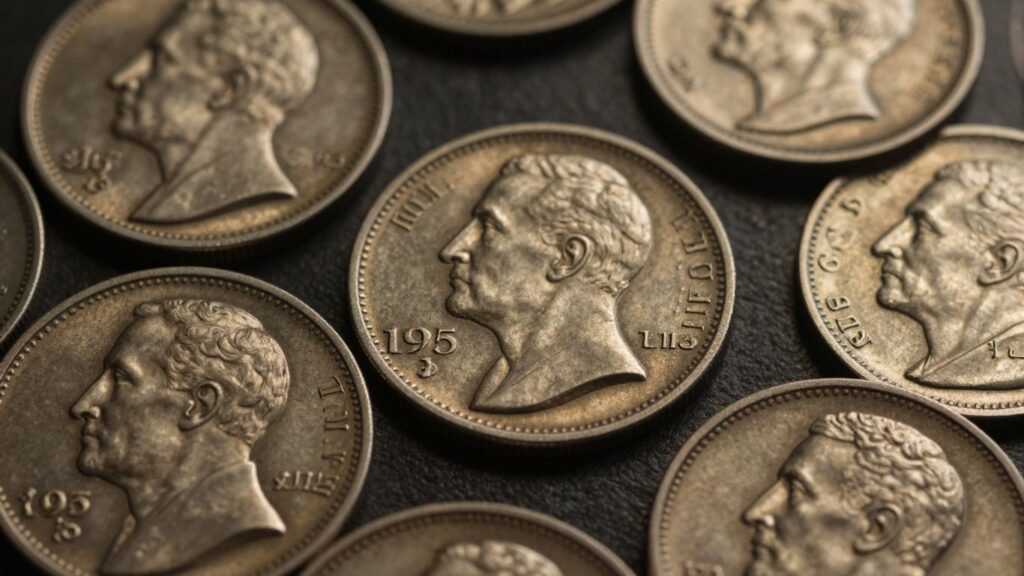
So, you’ve got some old coins lying around, maybe from your grandpa’s collection or just found tucked away. You might be wondering if those dimes and quarters from before 1965 are worth anything more than their face value. Well, turns out, they often are! The value of pre-1965 silver coins today is a mix of their silver content and their history as collectibles. It’s not just about the metal; it’s about the story they tell and the rarity they might hide. Let’s break down what makes these old coins tick and how you can figure out what you might have.
Key Takeaways
- Before 1965, U.S. dimes, quarters, and half dollars were made with 90% silver, making their metal worth much more than their face value today. This is why they aren’t commonly found in circulation anymore.
- A coin’s worth comes from two places: its melt value (the price of the silver inside) and its numismatic value (what collectors will pay for it due to rarity, condition, or historical significance).
- Identifying silver coins is usually easy: check the date (pre-1965 for most) and look at the edge (silver coins have a solid silver stripe, not a copper center).
- While most pre-1965 silver coins are valued for their silver content (often called “junk silver”), certain dates, mint marks, or coins in excellent condition can be worth significantly more to collectors.
- Never clean old coins. Doing so can damage their surface and remove the natural patina that collectors find appealing, drastically reducing their numismatic worth.
Understanding The Value Of Pre-1965 Silver Coins Today
So, you’ve got some old coins lying around, maybe from your grandpa’s collection or just found in a dusty jar. It’s easy to think of them as just old currency, but those pre-1965 silver coins? They’re a whole different ballgame. We’re talking about coins that have two distinct values, and understanding them is key to figuring out what you’ve actually got.
Distinguishing Melt Value From Face Value
First off, let’s clear up what face value means. That’s the number stamped right on the coin – a dime is 10 cents, a quarter is 25 cents. It’s what the government says it’s worth as money. But for coins made before 1965, especially dimes, quarters, and half dollars, that face value is pretty much meaningless today. The real story is in the silver content.
The Intrinsic Worth Of Silver Content
This is where things get interesting. These older coins, typically made of 90% silver, have a value based purely on the market price of silver. Think of it like this: if you melted down a bunch of old quarters, the silver itself would be worth way more than the 25 cents each one is stamped with. This
Identifying Your Silver Coin Holdings
So, you’ve got a pile of old coins, maybe from your grandpa’s attic or just found tucked away. The big question is, which ones actually have silver in them? It’s not as simple as just looking at the date. Lots of old coins aren’t silver at all, and sometimes, coins you wouldn’t expect might be. This is your first step in figuring out what you’ve really got.
The Significance Of The Date On Silver Coins
For a long time, the U.S. Mint put silver into dimes, quarters, and half dollars. This practice changed significantly after 1964. The Coinage Act of 1965 marked a major shift, mostly removing silver from circulating coins because the metal’s price had gone up so much. People started grabbing the older silver coins, which is why finding them now can be a bit of a treasure hunt. Generally, if a U.S. dime, quarter, or half dollar is dated 1964 or earlier, it’s likely 90% silver. After that year, they typically switched to a copper-nickel clad composition, meaning no silver. Of course, there are always a few exceptions, but the date is your primary clue.
Visual Clues: Examining The Coin's Edge
Here’s a neat trick for dimes, quarters, and half dollars: check the edge. If you look closely, you’ll see a distinct silver stripe running around the rim. It’s pretty solid. Modern coins made after the silver was removed usually show a different look on the edge – you can often see a copper-colored stripe sandwiched between the outer layers. It’s a quick visual test that can tell you a lot without needing special tools.
Key Silver Coin Denominations And Their Purity
When we talk about pre-1965 silver coins, we’re usually referring to a few specific types that were made with 90% silver and 10% copper. The copper was added to make the coins a bit more durable for everyday use. Here’s a quick rundown of the common ones:
- Dimes: Think Mercury dimes (1916-1945) and Roosevelt dimes minted before 1965. Each contains about 0.0723 troy ounces of silver.
- Quarters: This includes Barber quarters (1892-1916), Standing Liberty quarters (1916-1930), and Washington quarters dated 1964 and earlier. Each holds roughly 0.1808 troy ounces of silver.
- Half Dollars: You’ll find Barber halves (1892-1916), Walking Liberty halves (1916-1947), Franklin halves (1948-1963), and the 1964 Kennedy half dollars. These have the most silver per coin, around 0.3617 troy ounces.
Remember, even though these are often called "junk silver," they have a solid base value tied directly to the silver content. It’s a tangible asset that’s been around for ages, offering a connection to America’s monetary past. For more detailed information on these historical treasures, you can explore more info about Constitutional Silver.
While these are the most common, don’t forget about silver dollars minted between 1878 and 1935, like the Morgan and Peace dollars. They contain a much larger amount of silver, about 0.7734 troy ounces each. Identifying these coins is the first step toward understanding their potential value, whether it’s just for the silver or for something more.
The Dual Nature Of Coin Worth: Melt Versus Numismatic
When you start looking at pre-1965 silver coins, you quickly realize they have two distinct kinds of value. It’s not just about the silver inside, though that’s a big part of it. You’ve got the melt value, which is pretty straightforward, and then there’s the numismatic value, which is where things get more interesting for collectors.
Calculating Melt Value: Silver's Market Price
The melt value is basically what the silver in your coin is worth if you were to melt it down. This is determined by the current market price of silver. Think of it as the coin’s baseline worth. To figure this out, you need to know how much silver is in the coin and the current price per ounce. For most pre-1965 U.S. coins, they’re made of 90% silver.
Here’s a quick look at the silver content in common coins:
- Dimes (90% silver): About 0.0723 troy ounces of silver.
- Quarters (90% silver): Around 0.1808 troy ounces of silver.
- Half Dollars (90% silver): Roughly 0.3617 troy ounces of silver.
So, if silver is trading at, say, $28 per troy ounce, a dime’s melt value would be about $2.02 (0.0723 oz * $28/oz). It’s a simple calculation, but it gives you a floor for the coin’s worth. This is why these coins aren’t really seen in everyday change anymore – the silver is worth way more than the face value.
Numismatic Value: The Collector's Premium
Numismatic value is what a coin is worth to collectors. This is where rarity, condition, and historical significance come into play. A coin might have a low melt value, but if it’s rare or in amazing shape, collectors might pay a lot more for it. It’s all about demand from people who want to own that specific coin for reasons beyond just its metal content.
Several things bump up a coin’s numismatic value:
- Mintage Figures: How many were made? Fewer coins usually mean higher value.
- Condition: Is it worn out or practically perfect? Better condition means more money.
- Key Dates and Mint Marks: Certain years or coins from specific mints are much rarer and more sought after.
Never, ever clean your old silver coins. Seriously. It might seem like a good idea to make them shiny, but you’ll almost certainly damage the surface. This damage is permanent and can wipe out any numismatic value, leaving you with just the melt value, or even less.
When Numismatic Value Outshines Melt Value
Sometimes, the numismatic value can be vastly higher than the melt value. Take the 1916-D Mercury dime, for example. Its melt value might be a couple of dollars, but because it’s incredibly rare, a single coin in decent condition can be worth thousands of dollars to a collector. This is the magic of numismatics – finding those hidden gems that are more than just silver. It’s why doing your homework on dates, mint marks, and the condition of your coins is so important if you’re looking to get the most out of them.
Factors Driving Numismatic Premiums
So, you’ve got some old silver coins, maybe from your grandpa’s collection or just found tucked away. You know they’re worth something because of the silver, but sometimes, you hear about certain coins being worth way, way more than just their metal weight. That’s where numismatic value comes in, and it’s driven by a few key things. It’s not just about how much silver is in the coin; it’s about its story, its rarity, and who wants it.
Mintage Figures: The Scarcity Factor
This is a big one. Think about it: if only a few of something were ever made, it’s naturally going to be more sought after than something produced in the millions. For pre-1965 silver coins, the number minted, or mintage figure, is super important. A coin with a low mintage is rarer, and rarity often equals higher value. For example, the 1916-D Mercury Dime had a mintage of only 264,000. Compare that to a 1945 Mercury Dime, which had over 200 million made! That huge difference in numbers means the 1916-D is significantly more valuable to collectors, often fetching thousands of dollars even in used condition, way beyond its silver melt value.
- Low Mintage: Fewer coins produced means greater scarcity.
- Survival Rate: Not all minted coins survive. Many get lost, damaged, or melted down over time, further reducing the number of available coins, especially in good condition.
- Key Dates: Specific dates and mint marks within a series are often rarer and more desirable. Identifying these key date junk silver coins is a smart move for collectors.
Condition: The Value Multiplier
Okay, so you’ve got a rare coin. But is it in good shape? The condition of a coin is a massive factor in its numismatic worth. Even a rare coin can be worth much less if it’s heavily worn, scratched, or damaged. Collectors generally want coins that look as close to their original state as possible. This is often graded using a scale, with uncirculated coins (those that have never been used in commerce) being the most prized. For some series, specific design elements need to be sharp and clear to get a premium. For instance, Mercury Dimes with "Full Bands" clearly visible on the reverse, or Standing Liberty Quarters with a "Full Head," command higher prices than those without these details.
| Condition Grade | Description |
|---|---|
| Uncirculated (MS-60+) | No wear, sharp details, high collector appeal. |
| About Uncirculated (AU) | Slight wear on high points, still attractive. |
| Very Fine (VF) | Moderate wear, design details are clear. |
| Fine (F) | Significant wear, but outlines are visible. |
| Good (G) | Heavy wear, details are faint or missing. |
Cleaning a coin can actually destroy its numismatic value. That natural toning or patina often adds to a coin’s appeal and historical character. It’s usually best to leave coins as they are unless you’re an expert.
Mint Marks and Key Dates
Beyond just the date, where a coin was made (its mint mark) can also play a huge role. Different mints produced varying quantities of coins, and some mint marks are rarer than others for specific years. For example, coins from the Denver (D) or San Francisco (S) mints might be scarcer for certain dates than those from Philadelphia (no mint mark). Combining a rare date with a rare mint mark often creates a highly desirable coin. Identifying these specific combinations, often referred to as "key dates," is a core part of understanding numismatic premiums. For instance, the 1901-S Barber Quarter is a prime example where both the date and mint mark contribute to its significant rarity and collector demand.
Profitable 90% Silver Coin Series
So, you’ve got a pile of old dimes, quarters, and half dollars from before 1965. That’s great! These aren’t just old coins; they’re packed with 90% silver, which is pretty neat on its own. But here’s the thing: some of these coins are way more than just their silver weight. We’re talking about specific dates and mint marks that collectors really want, pushing their value way up. It’s like finding a rare comic book in a box of old paperbacks.
Mercury Dimes: Iconic And Collectible
These dimes, minted from 1916 to 1945, have a really distinctive look with Lady Liberty’s wings. They’re popular, and some dates are harder to find than others. The 1916-D is the big one here – super rare. Also, look out for the 1921 and 1921-D issues, as they didn’t make many of those. And if you see a 1942 dime with a ‘1’ or ‘1-D’ over the original date, that’s an error coin that collectors love. Even common dates can get a nice boost if they have what collectors call "Full Bands" on the reverse, meaning all the lines on the fasces are clear.
Standing Liberty Quarters: Rare And Artistic
These quarters, from 1916 to 1930, are really something to look at. Lady Liberty is front and center, and they’re just beautifully designed. The 1916 is the king of this series – incredibly rare, so even beat-up ones can be worth a lot. The 1917 Type 1 quarters, especially from the San Francisco mint (1917-S), are also tougher finds. Like the Mercury dimes, these quarters have a "Full Head" detail on Liberty’s head that collectors pay extra for. A sharp-looking 1927-S is another one to keep an eye out for.
Walking Liberty Half Dollars: Beloved Designs
Running from 1916 to 1947, these half dollars are probably one of the most admired U.S. coin designs. People just love the image of Lady Liberty walking with a flag. The 1916-S and the 1921 and 1921-D are the key dates here, meaning they were made in smaller numbers and are harder to come by. The 1938-D is also a significant one as it was the last one made in Denver for this series. For these coins, a "Full Strike" is important, showing clear details on Liberty’s hand and the eagle’s feathers.
Barber Coinage: Older And Scarcer
These coins, which include dimes, quarters, and half dollars from 1892 to 1916, are older and generally harder to find in good condition. The 1894-S dime is legendary – only 24 were made, and they’re worth millions. For quarters, the 1901-S is a big deal. And if you’re looking at half dollars, an early one from the New Orleans mint, like the 1892-O, is quite desirable. Because these are older and often rarer, their numismatic value usually blows their melt value out of the water.
When you’re looking through your pre-1965 silver coins, remember that condition and specific mint marks can make a huge difference. A common date coin in perfect shape might be worth more than a rare date coin that’s seen better days. It’s always a good idea to check resources like the Red Book for mintage numbers and rarity information.
Here’s a quick look at some key series and what makes them stand out:
- Mercury Dimes (1916-1945): Look for the 1916-D, 1921, 1921-D, and any overdates. "Full Bands" add significant value.
- Standing Liberty Quarters (1916-1930): The 1916 is extremely rare. Also seek out 1917 Type 1 (especially S-mint) and 1927-S. "Full Head" details are a plus.
- Walking Liberty Half Dollars (1916-1947): Key dates include 1916-S, 1921, 1921-D, and 1938-D. Sharp details are important.
- Barber Coinage (1892-1916): The 1894-S dime is a million-dollar coin. Other rarities include the 1901-S quarter and 1892-O half dollar.
Strategic Acquisition And Management
Alright, so you’ve got an idea of what your pre-1965 silver coins are worth, both for their silver content and maybe a bit more if they’re special. Now, how do you actually go about getting more or managing what you have without making a mess of things? It’s not rocket science, but there are definitely some smart ways to do it.
Sourcing From Reputable Dealers and Shows
First off, where do you even find these coins? You could get lucky and find them in circulation, but that’s pretty rare these days. Your best bet is to look for dealers who specialize in coins. Think about coin shows – they’re great because you can see a lot of different dealers and coins all in one place. It’s a good way to get a feel for the market and talk to people who know their stuff. Online dealers are an option too, but you’ve got to be a bit more careful. Look for ones that have been around for a while and have good reviews. Always try to buy from sources that offer some kind of guarantee or return policy.
Here’s a quick rundown of places to look:
- Coin Shows: Great for variety and face-to-face interaction.
- Local Coin Shops: Can be hit or miss, but sometimes you find hidden gems.
- Reputable Online Dealers: Do your homework on their reputation and return policies.
- Auctions (Online & In-Person): Can be good for specific coins, but watch out for buyer’s premiums.
Verifying Authenticity and Cross-Checking Prices
This is super important. You don’t want to pay a premium for a coin that turns out to be fake or overvalued. If you’re buying from a dealer, they should be able to tell you about the coin’s history and why it’s priced the way it is. For more valuable coins, you’ll want to see if they’ve been graded by a professional service like PCGS or NGC. These companies slab the coins in protective cases and give them a grade, which helps confirm authenticity and condition.
Before you buy, do a quick price check. See what similar coins are selling for elsewhere. Websites that track auction results can be really helpful here. It doesn’t take long to get a general idea if the price is fair.
It’s easy to get caught up in the excitement of finding a cool old coin, but taking a moment to verify its authenticity and compare prices can save you a lot of headaches and money down the road. Think of it as due diligence for your treasure hunt.
Preservation: Avoiding Costly Mistakes
Once you have your coins, you need to take care of them. The biggest mistake people make? Cleaning them. Seriously, don’t do it. Cleaning a coin, even with a soft cloth, can remove its natural patina and damage the surface, which drastically lowers its numismatic value. It might look shinier, but to a collector, it looks ruined.
Store your coins properly. For common silver coins you’re holding mainly for their silver content, simple Mylar flips or tubes are fine. For more valuable or collectible coins, consider getting them professionally graded and encapsulated (slabbed) by PCGS or NGC. If you have a significant collection, think about secure storage, like a safe deposit box or a home safe, to protect against theft or damage.
Maximizing Returns When Selling
So, you’ve gone through your collection, maybe found some real treasures, and now you’re thinking about selling. It’s not just about getting rid of them; it’s about getting the most bang for your buck. Selling your pre-1965 silver coins effectively means understanding where to sell and when. It’s a bit of a balancing act, really.
Consigning Rare Coins to Auction Houses
When you have something truly special, like a key date coin in amazing condition or a rare mint mark, an auction house can be your best friend. Think of places like Heritage Auctions or Stack’s Bowers. They have a big audience of serious collectors who might get into a bidding war for your coin. This often means you can get a price that’s way higher than what a dealer might offer. It takes a bit longer, and there are fees involved, but for those standout pieces, it’s usually the way to go.
- Pros: Potential for highest prices, access to dedicated collectors.
- Cons: Takes time, auction house fees, no guarantee of final price.
- Best for: High-value, rare, or exceptionally well-preserved coins.
Selling to Dealers for Quick Liquidity
If you need cash fast, or if you have a larger quantity of more common silver coins (think bags of dimes and quarters), selling to a dealer makes a lot of sense. Dealers buy in bulk and can give you a price pretty quickly. They’re usually buying based on the silver melt value, plus a small premium if the coins have any numismatic appeal. It’s straightforward and efficient, though you probably won’t get the absolute top dollar you might see at auction.
Dealers are professionals who understand the market. They can assess your coins quickly and make a fair offer based on current silver prices and collector demand. While you might leave a little bit of potential profit on the table compared to a perfect auction sale, the speed and certainty are often worth it.
Timing Sales for Optimal Market Demand
This is where a little bit of strategy comes in. The price of silver itself fluctuates, so selling when silver prices are high can make a big difference, especially if you’re selling coins where melt value is a significant part of the price. Beyond that, think about the coin market. Sometimes, certain series of coins become more popular for a while. Keeping an eye on coin shows, collector forums, and even general economic news can give you clues about when demand might be strongest. It’s not an exact science, but being aware can help.
- Monitor Silver Prices: Keep an eye on the spot price of silver. Higher prices generally mean higher returns for your coins.
- Follow Collector Trends: Certain coin series or dates might see increased interest. Researching current popular coins can be beneficial.
- Consider the Calendar: Sometimes, selling before major coin shows or auctions can capture buyer attention, but be mindful of fees and logistics.
Building A Profitable Silver Portfolio
So, you’ve got a pile of old dimes, quarters, and half dollars sitting around, right? Most people just think of them as "junk silver," good for their melt value. And yeah, that’s a big part of it – they’re a solid hedge against inflation, a tangible asset you can actually hold. But here’s the thing: there’s a whole other layer of profit hiding in plain sight. We’re talking about the numismatic side, where specific dates, mint marks, and even the condition of the coin can send its value way, way up, often far beyond just the silver content. It’s about turning that pocket change into something that can really grow.
Balancing Bullion Stability With Numismatic Growth
Think of it like this: you want a mix in your portfolio. You need the steady, predictable value of the silver itself – that’s your bullion stability. This is where buying bags of common dates comes in handy. But then you sprinkle in those special coins, the ones with low mintages or historical significance. These are your numismatic growth engines. It’s not just about owning silver; it’s about owning the right silver. For instance, a common Mercury dime might be worth a few dollars over melt, but a rare 1916-D Mercury dime? That’s a whole different ballgame, potentially worth thousands. It’s a strategy that requires a bit more digging, but the rewards can be substantial.
Leveraging Research Tools For Smart Investing
Okay, so how do you figure out which coins are the real winners? You gotta do your homework. There are some fantastic resources out there. Websites like PCGS and NGC have population reports that show you just how many of a certain coin exist. The fewer there are, the rarer it is. Then there are price guides, which give you a ballpark idea of what coins are selling for. Don’t forget auction results – sites like Heritage Auctions or Stack’s Bowers show you what people have actually paid for coins recently. This kind of data is gold, or in this case, silver. It helps you avoid overpaying and spot opportunities. Knowing the mintage figures and checking current auction prices is key to smart buying.
Transforming Pocket Change Into Tangible Assets
It’s pretty amazing when you think about it. Those coins you might have overlooked for years could be the foundation of a serious investment. The first step is just getting organized. Figure out what you have. Then, start identifying those key dates and mint marks. You don’t need to be a professional numismatist overnight. Start with the well-known series like Mercury Dimes, Standing Liberty Quarters, and Walking Liberty Half Dollars. Look for coins that stand out. Even if you’re just buying bags of 90% silver, keep an eye out for those rarer pieces that might be mixed in. It’s a process, but gradually, you can shift your holdings from just being silver-heavy to having a significant numismatic component. It’s about seeing the potential in what you have and actively seeking out more.
Building a profitable silver portfolio isn’t just about accumulating metal; it’s about strategic acquisition and understanding the dual nature of coin value. By balancing the intrinsic worth of silver with the collector’s premium attached to rare dates and conditions, you create a more dynamic and potentially rewarding investment.
Here’s a quick look at how the gold-to-silver ratio can signal potential:
| Metal | Current Price (Hypothetical) | Gold-to-Silver Ratio (GSR) | Potential Silver Price |
|---|---|---|---|
| Gold | $4000 | 100:1 | $40 |
| Silver | $40 |
This suggests that if gold holds steady, silver could see significant appreciation, making it an attractive part of your investment strategy.
The Value Of Pre-1965 Silver Coins Today
So, you’ve got some old coins lying around, maybe from your grandparents or just found in a drawer. What’s the deal with those pre-1965 silver coins? Turns out, they’re worth a lot more than just their face value. We’re talking about a tangible asset that can act as a hedge against inflation and connect you to a piece of history. It’s pretty neat when you think about it – your pocket change could be a solid investment.
A Hedge Against Inflation And Economic Uncertainty
In uncertain economic times, people often look for ways to protect their money. That’s where precious metals like silver come in. Because these coins are made of actual silver, their value is tied to the market price of that metal. This means they can hold their worth, or even increase, when the value of regular currency goes down. It’s a way to diversify your assets beyond just stocks and bonds.
- Silver’s inherent value: Unlike paper money, silver has a real, physical worth. This makes it a reliable store of value.
- Global demand: Silver is used in industries worldwide, from electronics to jewelry, which helps keep its demand steady.
- Limited supply: While silver is mined, the amount available is finite, which can support its price over time.
The intrinsic worth of the silver content in these coins provides a baseline value. Even if a coin isn’t particularly rare or sought after by collectors, the metal itself has a market price that fluctuates. This metal value acts as a safety net, offering a degree of stability that traditional currency often lacks.
Historical Appeal And Connection To The Past
Beyond the metal’s worth, these coins are little time capsules. Think about the hands they’ve passed through, the events they’ve witnessed. Holding a coin minted decades ago gives you a physical link to history that you just don’t get from a digital transaction or a modern bill. It’s a tangible piece of American heritage.
Diversifying Beyond Traditional Paper Investments
Adding pre-1965 silver coins to your portfolio is a smart way to spread your risk. Instead of putting all your eggs in one basket, you’re adding an asset class that behaves differently from stocks or bonds. This can help smooth out the ups and downs of your overall investments. It’s about building a more resilient financial future by including physical assets. You can check current prices for various silver items, including pre-1964 silver dollars, half dollars, quarters, and dimes, to get an idea of their melt value today’s prices.
Here’s a quick look at what some common pre-1965 coins are worth based on their silver content:
| Coin Type | Silver Content (Troy Ounces) | Approximate Melt Value (per coin)* |
|---|---|---|
| Dime (pre-1965) | 0.0723 | ~$2.25 |
| Quarter (pre-1965) | 0.1808 | ~$5.63 |
| Half Dollar (pre-1965) | 0.3617 | ~$11.25 |
*Values are approximate and based on recent silver market prices. Actual value can vary.
Turning Old Coins into Real Assets
So, we’ve looked at these old silver coins, and it turns out they’re more than just dusty relics. Those pre-1965 dimes, quarters, and half dollars? They’re actually worth something real, mostly because of the silver inside them. We figured out how to tell a regular quarter from one that’s actually got silver, and why knowing the metal’s worth is the key to seeing what these coins can really do for you. That old Mercury dime isn’t just a piece of history; it’s got a good amount of silver that adds up. It’s pretty cool to think that what might have been sitting in a jar could be a solid part of your savings plan.
Frequently Asked Questions
What makes pre-1965 silver coins different from newer coins?
Before 1965, dimes, quarters, and half dollars in the U.S. were made with 90% real silver. After that, the government stopped using silver in most coins because silver prices went up. So, older coins have actual silver value, while newer ones are just worth their face value because they’re made of cheaper metals.
How do I know if my coin has silver in it?
The easiest way is to look at the date. If it’s a U.S. dime, quarter, or half dollar made before 1965, it’s almost certainly 90% silver. You can also check the edge: silver coins have a solid silver band, while modern coins show a copper stripe sandwiched between two layers.
Is the value of my silver coin based on its face value or its silver content?
It’s mostly about the silver content. The face value (like 25 cents for a quarter) is what it was worth as money. But the ‘melt value’ is what the silver metal inside is worth today, which is usually much, much higher. For example, a pre-1965 quarter’s silver is worth way more than 25 cents.
Should I clean my old silver coins?
No, definitely not! Cleaning a coin can seriously damage it and remove its natural shine and color, called patina. Collectors and dealers really like that original look. Cleaning can lower the coin’s value by a lot, sometimes costing you hundreds or even thousands of dollars.
What's the difference between 'melt value' and 'numismatic value'?
Melt value is simply the worth of the silver metal in the coin. Numismatic value is the extra worth a coin has because it’s rare, in great condition, or has historical importance. Some coins are worth much more to collectors than just their silver content.
What makes a silver coin rare and valuable to collectors?
Several things make a coin valuable to collectors. The number of coins made (mintage figures) is a big one – fewer coins mean they’re rarer. The coin’s condition is also super important; a coin that looks brand new is worth more than a worn-out one. Special marks showing where it was made (mint marks) and specific ‘key dates’ can also make a coin much more valuable.
Are there specific types of pre-1965 silver coins that are more valuable?
Yes, some series are very popular. Mercury dimes, Standing Liberty quarters, and Walking Liberty half dollars are highly collected. Older coins like Barber coinage can also be valuable because they are scarcer. Certain rare dates and mint marks within these series can be worth a lot more than just their silver.
How can I make sure I'm getting a fair price when selling my silver coins?
It’s smart to do your homework. Research the specific coins you have, looking at their date, mint mark, and condition. Check prices on reliable websites or with trusted dealers. For very rare or valuable coins, consider selling them through a reputable auction house where they might fetch a higher price from specialized collectors.