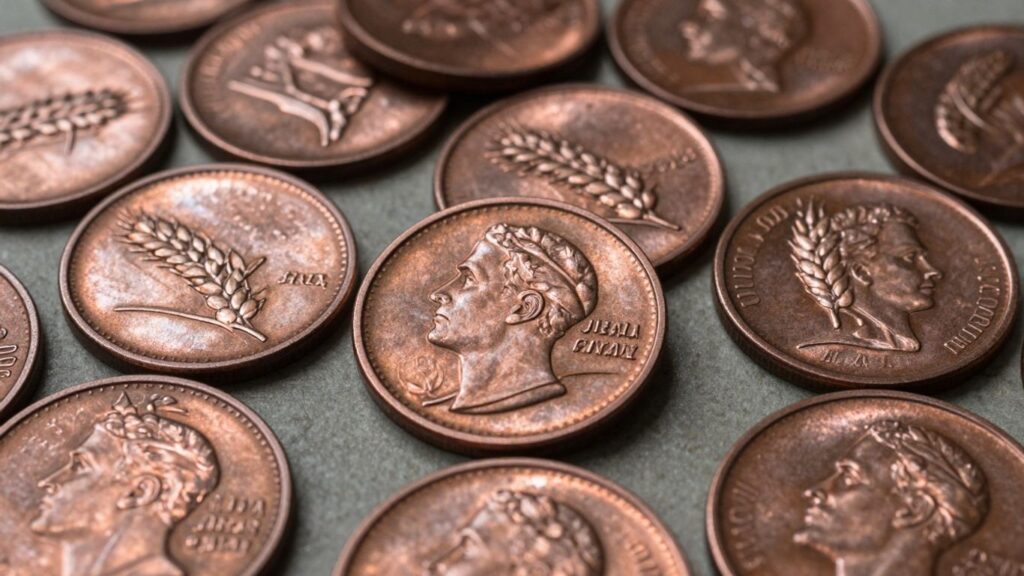
So, you’ve been digging through old coin jars or maybe just found some interesting change and are wondering, “How much are your Wheat pennies actually worth?” It’s a common question, and the answer isn’t always straightforward. While some Lincoln Wheat cents can be surprisingly valuable, most of the ones you’ll find are probably worth just a few cents. This guide is here to help you sort through the common finds and spot the real treasures. We’ll look at what makes some pennies worth a lot more than others, focusing on real-world values, not just what a perfect coin might fetch.
Key Takeaways
- Most Wheat pennies found in circulation or inherited collections are worth less than 10 cents each.
- The value of a Wheat penny is heavily influenced by its date, mint mark, and especially its condition.
- Key dates like the 1909-S VDB and 1914-D are among the most valuable, even in worn condition.
- Mint errors and rare varieties, such as the 1943 bronze pennies, can significantly increase a coin’s worth.
- Understanding grading and knowing which specific dates and mint marks to look for are essential for accurately assessing your Wheat pennies’ value.
Understanding Wheat Penny Value: Setting Realistic Expectations
So, you’ve got a jar full of old pennies and you’re wondering if you’ve stumbled upon a hidden treasure. It’s a common thought, especially when you see those eye-popping prices for rare coins online. Let’s get real for a second: most of the wheat pennies you’ll find, whether from your pocket change, an old coin folder, or inherited collections, aren’t going to make you rich. The vast majority are worth less than a dime each. That’s just the honest truth.
The Reality of Most Wheat Penny Values
When you start looking into wheat penny values, it’s easy to get excited by figures that represent coins in absolutely perfect, uncirculated condition, often graded by professionals. These are the coins that fetch thousands, sometimes even tens of thousands, of dollars. But for the average coin found in circulation, the story is quite different. Think of it like finding a rare book – a first edition in mint condition is worth a fortune, but a well-read copy from the library sale? Not so much.
Pocket Change Findings: What They're Typically Worth
If you’re pulling wheat pennies from your everyday change, you’re most likely looking at common dates from the 1940s and 1950s. These circulated coins usually have visible wear, scratches, and other marks from their time in commerce. Their value is typically quite low, often just a few cents above face value, maybe 5 to 15 cents for a decent-looking common date in circulated condition. Even some earlier dates, if heavily worn, might only fetch around 20 to 50 cents.
Here’s a rough idea:
- Common Dates (1940s-1950s, circulated): $0.05 – $0.15
- Earlier Common Dates (1910s-1930s, circulated): $0.15 – $0.50
- Any Date, Heavily Damaged/Worn: $0.03 – $0.10
Why Condition Dramatically Impacts Value
Condition is king in the coin collecting world, and it’s especially true for wheat pennies. A coin’s grade, which describes its state of preservation, is the biggest factor determining its worth after its date and mint mark.
- Uncirculated (Mint State): These coins have no wear at all. They retain their original mint luster and are worth significantly more, especially for rarer dates.
- Extremely Fine (XF): Shows slight wear, but most of the original detail is still visible.
- Fine (F): Moderate wear, with major features like the wheat stalks and Lincoln’s hair details becoming smoothed.
- Good (G): Heavy wear, with the coin’s overall design being visible but very worn. Often, the date can be hard to read.
The difference between a coin that’s been handled a lot and one that’s been carefully preserved can be the difference between a few cents and several dollars, or even hundreds for truly scarce issues. Always examine your coins closely, but remember that most found in circulation will fall into the lower grades.
Identifying Key Dates: The Most Valuable Wheat Pennies
Most of the wheat pennies you find in your pocket change are pretty common. We’re talking maybe a few cents each, if that. But then there are those special ones, the ones that make collectors’ eyes light up. These aren’t just old coins; they’re historical artifacts with real value, sometimes a lot of it. Knowing which ones to look for can turn a jar of pennies into a treasure chest.
The Four Major Key Dates in the Series
When you’re hunting for valuable wheat pennies, there are a few specific dates and mint marks that stand out from the rest. These are the ones that serious collectors are always on the lookout for. They’re scarce, and because of that, they command higher prices even when they’re not in perfect condition.
Here are the big four that most collectors focus on:
- 1909-S VDB: This is the one everyone talks about. It’s the most famous and sought-after wheat penny.
- 1914-D: A really tough one to find, especially from the Denver mint.
- 1931-S: Another scarce date that’s hard to come by.
- 1909-S: While not as famous as the VDB version, this one is still a major key date.
The Legendary 1909-S VDB
This coin is the king of the wheat penny series. It was made in San Francisco, and only a small number were ever produced. On top of that, it has the initials "V.D.B." (for designer Victor David Brenner) on the reverse, which were later removed due to public outcry. Because of its low mintage and the designer’s initials, the 1909-S VDB is incredibly rare. Even a worn-out example can be worth hundreds, and coins in better shape can fetch thousands of dollars. It’s the ultimate prize for many Lincoln cent collectors.
The Scarce 1914-D Denver Mint Penny
The 1914-D is another big player in the wheat penny world. The Denver mint produced fewer of these than many other dates, making them quite hard to find. Unlike some other rare coins, the 1914-D is valuable across almost all conditions. Whether it’s heavily worn or nearly perfect, collectors are willing to pay a good price for this Denver mint rarity. Its low production numbers and consistent demand from collectors keep its value high.
Finding a key date wheat penny, especially one of the major ones, is like hitting the jackpot in the coin collecting world. While most pennies are common, these specific dates and mint marks were produced in much smaller quantities or have unique historical reasons for their rarity, making them significantly more valuable.
Exploring Semi-Key and Better Dates
Beyond the Major Keys: Other Sought-After Dates
So, you’ve probably heard about the big key dates – the ones that make collectors sweat and wallets weep. But what about the coins that sit just below them in rarity and value? These are the semi-key dates, and they’re often the backbone of a really solid wheat penny collection. They’re not as common as your everyday pocket change finds, but they’re also not so rare that only a handful of people can ever hope to own one. Finding these can be a real thrill, and they add a nice layer of challenge to your collecting journey.
Think of it like this: the major key dates are the Super Bowl rings of wheat pennies. The semi-key dates? Those are more like the championship trophies. Still incredibly impressive and sought after, but maybe a bit more attainable for the average fan. And then you have the ‘better dates,’ which are even more common than semi-keys but still worth more than the regular circulation coins. They’re a great way to start building a collection without breaking the bank.
Denver and San Francisco Mint Marks
When we talk about semi-key and better dates, the mint mark is super important. The Denver (D) and San Francisco (S) mints often produced fewer coins than Philadelphia (no mint mark), especially in certain years. This lower production number naturally makes those coins scarcer. For example, a 1914-D is a major key date, but even less extreme examples from these mints can jump in value. You’ll see a lot of ‘S’ mint coins pop up on lists of semi-key dates, and that’s usually because they just didn’t make as many of them back in the day.
Here’s a look at some dates that often get mentioned in the semi-key and better date categories. Keep in mind that condition plays a huge role, so a worn-out example might not be worth much more than face value, while a crisp, uncirculated one could be quite valuable.
Some Semi-Key Dates to Watch For:
- 1909-S (without VDB)
- 1910-S
- 1911-S
- 1912-S
- 1913-S
- 1914-S
- 1915-S
- 1922-D (especially the "weak D" variety)
- 1924-D
- 1926-S
And some ‘Better Dates’ that are more than common:
- 1909 (Philadelphia, with VDB)
- 1911-D
- 1912-D
- 1913-D
- 1915-D
- 1916-D, 1916-S
- 1920-D
- 1921-S
- 1923-S
- 1925-D, 1925-S
- 1926-D
- 1927-D, 1927-S
- 1928-S
- 1931-D
- 1932-D
- 1933-D
Understanding Mintages and Their Impact
So, why are these specific dates and mint marks more desirable? It really boils down to how many were made and how many have survived. The U.S. Mint keeps records of how many coins are produced each year at each facility. These numbers, called mintages, are a big clue. A date with a low mintage, meaning fewer coins were originally produced, is naturally going to be rarer. Combine that with the fact that many coins from earlier years were melted down, lost, or just worn out from circulation over the decades, and you can see how a low mintage coin can become quite scarce.
The simple math of supply and demand is at play here. When fewer coins were made to begin with, and even fewer are left today in good condition, collectors have to compete for the ones that are available. This competition drives up the price. It’s why a 1931-S penny, with a mintage of just over a million, is worth significantly more than a 1945-P penny, which had a mintage of over 800 million.
It’s not just about the total number minted, though. Sometimes, a particular year might have had a high mintage, but if a large portion of those coins were used in commerce and got heavily worn, then finding one in a higher grade (like uncirculated) can still be difficult. That’s why collectors often look at both the mintage figures and the survival rates in various conditions when trying to figure out a coin’s true rarity and value.
The Role of Mint Errors and Varieties
Sometimes, coins come off the minting press with little quirks. These aren’t just random mistakes; they can turn a regular penny into something quite special, and often, much more valuable. We’re talking about mint errors and varieties here. These are the coins that didn’t quite follow the script, and collectors go nuts for them.
Transitional Errors: Bronze and Steel Pennies
The most famous example of a transitional error involves the 1943 pennies. During World War II, the U.S. Mint switched from copper to steel for pennies to save copper for the war effort. Most 1943 pennies are made of zinc-coated steel. However, a small number were accidentally struck on copper planchets left over from 1942. These 1943 copper pennies are incredibly rare and highly sought after. Finding one could mean you’ve got a coin worth a small fortune.
On the flip side, a few 1944 pennies were mistakenly struck on steel planchets that were supposed to be used for 1943. These 1944 steel pennies are also considered errors, though not as rare as the 1943 copper ones. Still, they’re a neat piece of wartime history and worth more than your average wheat penny.
Notable Double Die Varieties
Double dies happen when the die (the metal stamp that strikes the coin) itself is accidentally doubled during the hubbing process. This results in a coin where the design elements appear to have a "ghost" image or a noticeable doubling. The 1955 Doubled Die Obverse is probably the most famous wheat penny variety. You can often see a clear doubling on the date, the word "Liberty," and "In God We Trust." These can fetch a pretty penny, especially in good condition.
Other double die varieties exist for different years and mint marks, like the 1917 Doubled Die or the 1943-D Doubled Mintmark. Spotting these takes a keen eye and often magnification, but they can significantly increase a penny’s worth.
Other Rare Minting Anomalies
Beyond the big names like the 1943 bronze penny or the 1955 doubled die, there are tons of other less common errors and varieties that collectors look for. These can include:
- Repunched Mint Marks: Where the mint mark (like ‘D’ for Denver or ‘S’ for San Francisco) was punched onto the die more than once, leaving a visible overlap.
- Off-Center Strikes: When the planchet (the blank coin) isn’t perfectly centered under the die, resulting in a coin that’s only partially struck.
- Die Cracks and Chips: These can create raised lines or lumps on the coin’s surface.
- Missing or Weak Mint Marks: Like the famous 1922 "No D" penny, where the Denver mint mark is either missing or very faint.
Identifying these anomalies requires careful examination. You’ll want to look closely at the details, compare your coin to known examples, and sometimes use a magnifying glass. Many of these errors, especially the more significant ones, have been faked, so if you think you’ve found something truly rare, it’s wise to get it authenticated by a professional.
These unique pieces of minting history are what make coin collecting so exciting. You never know when that everyday penny you found might have a hidden story and a surprising value.
Grading Your Wheat Pennies for Accurate Valuation
So, you’ve got a pile of old pennies and you’re wondering if any of them are worth more than just their face value. That’s where grading comes in. It’s basically a way to describe the condition of your coin, and the better the condition, the more it’s usually worth. Think of it like a report card for your penny.
How Condition Affects Your Penny's Worth
Condition is a huge deal when it comes to coin values. A coin that’s been handled a lot, maybe tossed around in pockets or jars, will naturally show wear. This wear smooths out the fine details, making the coin less appealing to collectors who want to see those crisp designs. Even a tiny bit of wear can make a big difference in price. For example, a common date wheat penny in worn condition might be worth only a few cents, while a rare date in mint-state (meaning it looks like it just came from the mint, with no wear) could be worth hundreds or even thousands of dollars. It’s not just about the year and mint mark; how well the coin has survived is key.
Examining the Wheat Stalks for Wear
One of the easiest ways to get a rough idea of your penny’s condition is to look at the wheat stalks on the reverse side. These stalks are pretty delicate.
- High Points: Look at the very tops of the wheat stalks. Are the little parallel lines still visible and sharp?
- Moderate Wear: If those lines are starting to get worn down or are only faintly visible, the coin has seen some circulation.
- Heavy Wear: If the tops of the stalks are completely smooth and you can’t see any detail there, the coin is likely in poor condition.
This is just a quick check, of course. A full grading involves looking at the entire coin – the details on Lincoln’s portrait, the rim, the overall luster, and any marks or scratches.
When Professional Grading Makes Sense
If you think you might have something special, especially a key date or a coin in really nice shape, getting it professionally graded can be a good idea. Services like PCGS or NGC will examine your coin thoroughly and assign it an official grade. This not only gives you a more accurate idea of its value but also makes it more attractive to buyers. Graded coins often fetch higher prices because buyers know exactly what they’re getting. It’s a small cost that can pay off if you have a genuinely valuable coin, potentially helping you get fair market value if you decide to sell. You can find out more about specific coin values by checking out resources on Lincoln cent values.
The difference between a coin that’s just okay and one that’s truly special often comes down to its preservation. Even common pennies can become more interesting if they’ve somehow managed to avoid the wear and tear of everyday life. It’s a reminder that how something is treated over time really matters.
Specific Year and Mint Mark Valuations
Early Lincoln Cents (1909-1915)
The early years of the Lincoln cent, from 1909 to 1915, are where some of the most sought-after coins reside. The 1909 VDB, especially the "S" mint mark version, is a big deal. But even outside of that famous one, there are other dates from this period that collectors really want. Pennies from Philadelphia (no mint mark), Denver (D), and San Francisco (S) all have different production numbers, which really affects how many are still around today.
- 1909 VDB: The "VDB" stands for Victor David Brenner, the designer. These are rare, especially the San Francisco ones.
- 1910-1915: While not as famous as the 1909 VDB, these years can still be quite valuable, particularly in good condition.
- Mint Marks Matter: A "D" or "S" on your penny can make a big difference in its worth compared to one from Philadelphia.
Mid-Series Pennies (1916-1933)
This stretch of years covers a lot of ground. You’ll find plenty of common coins here, but also some that are harder to come by. The key is to look closely at the mint mark and the specific year. For instance, some years had lower mintages, meaning fewer coins were made, making them naturally scarcer. Condition is still king, of course, but a rarer date in just okay shape might still be worth more than a common date in perfect condition.
Here’s a quick look at some general values, but remember, these are just estimates for circulated coins:
| Year | Mint Mark | Common Value (Good/Fine) | Better Date/Condition Value | Notes |
|---|---|---|---|---|
| 1916 | D | $0.50 – $2.00 | Higher | Semi-key date |
| 1917 | D | $0.30 – $1.00 | Higher | |
| 1918 | D | $0.30 – $1.00 | Higher | |
| 1921 | D | $0.50 – $2.00 | Higher | Scarce |
| 1922 | D | $1.00 – $5.00 | Much Higher | Key date, "D" mint mark is scarce |
| 1923 | S | $0.30 – $1.00 | Higher | |
| 1924 | D | $0.30 – $1.00 | Higher | |
| 1925 | D | $0.30 – $1.00 | Higher | |
| 1926 | D | $0.30 – $1.00 | Higher | |
| 1927 | D | $0.30 – $1.00 | Higher | |
| 1928 | D | $0.30 – $1.00 | Higher | |
| 1929 | D | $0.30 – $1.00 | Higher | |
| 1931 | S | $0.50 – $2.00 | Higher | Scarce |
The value of a coin isn’t just about its age or rarity. The metal it’s made from, the specific mint that produced it, and any unique errors or mistakes made during production all play a part. Even the smallest details can turn a common penny into something quite special.
Later Wheat Pennies (1934-1958)
This is the period where most of the wheat pennies you’ll find were made. The vast majority of these are common and usually only worth a few cents over face value, especially if they’ve been heavily circulated. However, there are exceptions. The 1943 steel pennies are a unique case, and certain mint marks or specific years within this range can still be worth a bit more, particularly if they are in uncirculated condition. Checking a detailed value chart can help you pinpoint specific years and mint marks that might be more valuable than you think.
- 1943: These were made of steel due to copper being needed for the war effort. Finding a copper 1943 penny is extremely rare and very valuable.
- Post-War (1944-1958): Most of these are common. Look for uncirculated examples or any potential mint errors.
- Key Dates: While most are common, a few dates like the 1955 Doubled Die (though technically a variety, it’s often discussed here) are highly prized.
The Impact of Material and Production Anomalies
The Unique Case of 1943 Bronze Pennies
Okay, so everyone knows about the 1943 steel pennies, right? They were a wartime measure, a way to save copper. But what if I told you there are bronze pennies from 1943? Yeah, you read that right. These are super rare, like, only about 10 to 15 are thought to exist. They happened when a few copper planchets (the blank discs used to make coins) accidentally got mixed in with the steel ones at the Philadelphia Mint. Finding one of these is like finding a needle in a haystack, but the haystack is made of steel. Most of these rare finds are in lower grades, but even a worn one can be worth a serious chunk of change. A really nice one? We’re talking hundreds of thousands of dollars.
Understanding 1944 Steel Pennies
Now, flip that around. In 1944, the Mint was supposed to be back to using bronze for pennies. But, surprise! Some steel planchets, specifically ones meant for Belgian two-franc coins, somehow ended up in the mix at the Philadelphia Mint. These steel blanks were coated in zinc. So, you get 1944 pennies made of steel. These are actually rarer than the 1943 bronze ones, with maybe only 25 to 30 known examples. They’re incredibly collectible, and a top-condition example has sold for over $180,000. It’s a wild twist of wartime production that created these numismatic oddities.
The Significance of Mint Errors on Value
Beyond just the wrong metal, other production hiccups can make a penny way more interesting – and valuable. Think about things like:
- Double Dies: When the die (the metal stamp that strikes the coin) is accidentally struck twice, it can create a noticeable doubling effect on the design. Some of these, like the 1955 Doubled Die Obverse, are quite famous and valuable.
- Off-Center Strikes: If the planchet isn’t perfectly centered when it’s struck by the die, you get a coin that’s only partially imprinted. The more off-center, the more dramatic the error, and often, the higher the value.
- Die Cracks and Breaks: Sometimes, the dies themselves crack or break during use. These can leave raised lines or chips on the coin’s surface, which collectors look for.
These kinds of errors, especially the more dramatic ones, can turn a common wheat penny into something special. It’s always worth taking a closer look at your coins, because you never know when you might spot a mistake that makes it a treasure. If you’re curious about spotting these, there are resources that show pictures of error pennies to help you identify these rare anomalies.
Coin collecting isn’t just about finding the rarest dates; it’s also about appreciating the mistakes that happened along the way. These production anomalies, whether it’s the wrong metal or a doubled strike, tell a story about the minting process and the challenges faced, especially during wartime. They add a layer of intrigue and potential value that goes beyond the standard catalog listings.
Market Dynamics and Wheat Penny Appreciation
Factors Driving Up Wheat Penny Values
So, what makes one wheat penny worth a bit more than another? It’s a mix of things, really. Rarity is a big one, of course. If only a few thousand were made of a certain date and mint mark, and even fewer survived, that automatically bumps up the price. Then there’s the condition – a super shiny, never-circulated coin will always fetch more than one that’s been tossed around in pockets for decades. Special varieties, like double dies or mint errors, can also make a coin jump in value because they’re just not supposed to exist. And sometimes, it’s just plain old demand. If a lot of collectors suddenly decide they need a specific year for their collection, prices can climb.
Verified Sales vs. Estimated Values
It’s easy to see a price listed somewhere and think, "Wow, my penny is worth that!" But here’s the thing: what someone paid for a coin is way more important than what someone thinks it’s worth. You’ll see lists out there with sky-high numbers, but those are often for coins in absolutely perfect condition, maybe even professionally graded. Most of the wheat pennies you’ll find, especially in old coin jars or inherited collections, aren’t going to hit those top-tier prices. It’s always best to look at actual auction results or sales from reputable dealers to get a real sense of what coins are actually trading for. The price a coin actually sold for is its true market value.
Here’s a peek at how some specific dates have performed in actual sales:
| Date & Mint Mark | Condition | Sale Price |
|---|---|---|
| 1914-D | Uncirculated | $158,625 |
| 1909-S VDB | Uncirculated | $168,000 |
| 1943 Bronze | Uncirculated | $372,000 |
| 1944-S Steel | Uncirculated | $408,000 |
The Long-Term Investment Potential
Can wheat pennies be a good investment? For most people just looking to see if their found coins are worth a bit of cash, probably not in the way you’d think of stocks or bonds. But for serious collectors, especially those focusing on rare dates, mint errors, or coins in top condition, there’s definitely potential for appreciation over time. The hobby has seen steady interest, and as older collectors pass on their collections and new ones come in, demand for certain coins can grow. It’s a slow burn, though. You’re not going to get rich quick with a handful of wheat pennies, but holding onto rare or historically significant ones could pay off down the road.
The market for collectible coins is always shifting. What’s popular today might be less so in a few years, and vice versa. Keeping an eye on trends and understanding what drives value – rarity, condition, and historical interest – is key if you’re thinking about this as more than just a casual hobby.
Common Wheat Pennies: What Are They Worth?
So, you’ve been digging through old jars or maybe just checking your pocket change, and you’ve found a bunch of those Lincoln cents with the wheat stalks on the back. It’s exciting, right? You start thinking, ‘Could this be the one that makes me rich?’ Well, let’s get real for a second. Most of the wheat pennies you’ll find are not going to fund your retirement. That’s just the honest truth.
Post-1933 Common Dates
If you’re finding wheat pennies dated after 1933, chances are they’re pretty common. Unless there’s a significant minting error or a rare variety, these coins typically fetch only a few cents above their face value. We’re talking maybe 2 to 3 cents each if they’re worn. Even in better condition, they rarely break the 10-cent mark. It’s not a get-rich-quick scenario, but hey, they’re still neat pieces of history.
The 1943 Steel Penny Reality
The 1943 steel pennies are a bit of a special case, and people often get them confused with the truly rare ones. During World War II, the U.S. Mint switched from copper to zinc-coated steel for pennies to save copper for the war effort. Over a billion of these steel cents were made. While they look different and are interesting to collectors, a common 1943 steel penny in worn condition is usually worth about 5 to 10 cents. They’re popular, sure, but not exactly rare.
General Circulation Finds
When you pull a wheat penny from circulation, its value is heavily influenced by its condition. Heavy wear means significantly less value. The market just doesn’t demand common dates very strongly. If you’re looking at this from an investment angle, there are usually better options out there than just hoarding common wheat pennies. However, finding them is part of the fun!
Here’s a quick look at what you might expect:
| Date Range | Typical Value (Worn) | Notes |
|---|---|---|
| 1934-1958 | 2-3 cents | Common dates, unless major errors exist |
| 1943 (Steel) | 5-10 cents | Popular due to material, but not rare |
| Post-1933 | Under 10 cents | Value is minimal without errors/varieties |
It’s easy to get caught up in the excitement of finding old coins, but it’s important to have realistic expectations. The thrill of the hunt is often more rewarding than the monetary value of the common finds. Understanding the difference between a common coin and a key date is the first step in appreciating your collection.
Remember, even common coins can be valuable if they have significant mint errors or are part of a specific collection goal. For instance, a 1909-S VDB, a key date, can be worth a lot more than just a few cents. You can check out a price chart for more details on specific coin values.
So, What's the Takeaway?
Alright, so we’ve gone through a lot of numbers and dates, and maybe you’re looking at that jar of old pennies a little differently now. The big thing to remember is that most of those wheat pennies you find just aren’t going to make you rich. We’re talking maybe a few cents each, if that. But, and this is a pretty big ‘but,’ there are definitely some real treasures out there. Those special dates, the ones with minting errors, or coins in really amazing condition – those can be worth a surprising amount. It’s not just about finding a coin; it’s about finding the right coin. So, keep digging through those change jars and coin collections, because you never know when you might stumble upon one of those rare finds. Happy hunting!
Frequently Asked Questions
Are most wheat pennies worth a lot of money?
Sadly, most wheat pennies you find in your pocket change or in old coin collections aren’t worth much more than their face value, usually just a few cents each. While some special ones can be very valuable, the everyday ones are pretty common.
What makes a wheat penny valuable?
A few things make a wheat penny worth more. These include special dates that were made in very small numbers (called ‘key dates’), coins with mistakes or unique minting errors, and coins that are in amazing condition, looking almost brand new.
What are the most important 'key dates' to look for?
Some of the most sought-after wheat pennies are the 1909-S VDB (Very few were made, and they have the initials of the designer), the 1914-D, and the 1931-S. These are rare and highly desired by collectors.
How does the condition of a penny affect its value?
Condition is super important! A penny that looks like it’s been through a lot of use, with scratches and worn details, is worth much less than one that looks almost perfect. Even a rare date can be worth a lot less if it’s in bad shape.
What about the 1943 steel pennies?
In 1943, pennies were made from steel coated in zinc because copper was needed for the war effort. While these steel pennies are interesting and popular, most of them were made in huge numbers, so they are generally not very valuable unless they are a rare error.
Are there any super rare wheat pennies?
Yes! The 1943-D bronze penny is incredibly rare because it was accidentally struck on a copper planchet during the time steel pennies were being made. There are only a few known, and they have sold for hundreds of thousands of dollars!
How can I tell if my wheat penny is in good condition?
You can look at the wheat stalks on the back of the penny. If the lines at the very top of the stalks are still clear and sharp, the coin is likely in better condition. If they are worn down or missing, the coin has seen a lot of wear.
Where can I find reliable prices for my wheat pennies?
To get the best idea of your penny’s worth, look for price guides that show actual sales of coins, not just what someone hopes they’ll get. Professional grading services like PCGS or NGC can also help determine a coin’s true value, especially for potentially rare ones.