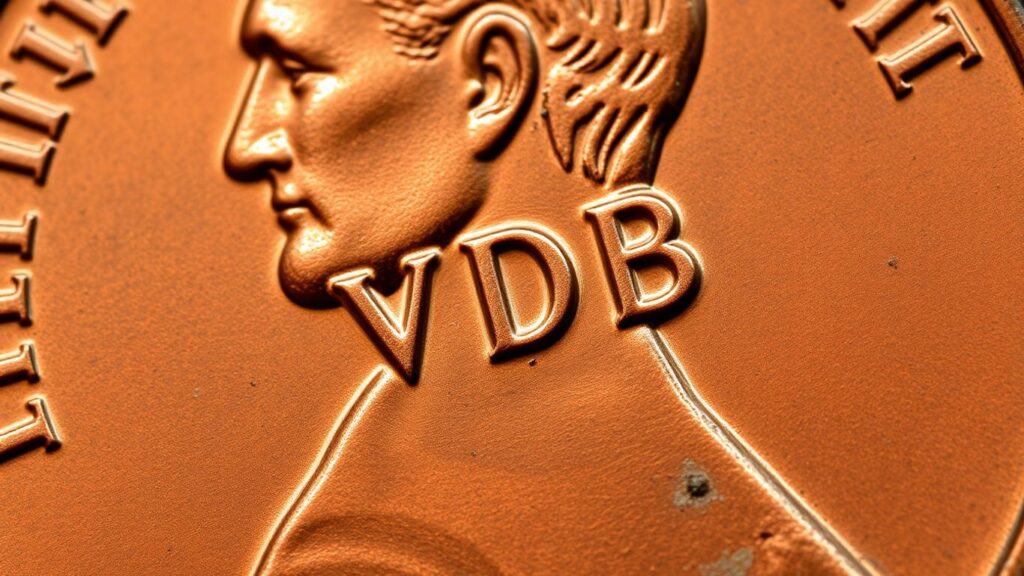
Ever wondered why some old pennies are worth a small fortune? The 1909-S VDB penny is one of those coins that gets collectors really excited. It’s not just any old coin; it’s got a story and some special features that make it stand out. So, what exactly is it about these specific pennies that makes 1909-S VDB pennies worth thousands of dollars? Let’s break it down.
Key Takeaways
- The 1909-S VDB penny is highly sought after because of its very low mintage number, with only 484,000 produced at the San Francisco Mint.
- The controversy surrounding the prominent “V.D.B.” initials of designer Victor David Brenner led to their quick removal from the coin, making the initial runs rare.
- This coin is a key date in the popular Lincoln Cent series, meaning it’s a must-have for many collectors trying to complete their sets.
- The survival rate of these pennies is quite low, meaning fewer are available today compared to the number originally minted.
- Factors like the coin’s condition (grade) and its color (red, red-brown, or brown) significantly impact its market value, with top-condition coins fetching the highest prices.
The Genesis Of The 1909-S VDB Penny
Presidential Vision For Coinage
Back in 1909, the U.S. Mint decided it was time for a change. They wanted to honor President Abraham Lincoln’s 100th birthday with a new penny design. This was a pretty big deal because, up until then, coins usually featured symbolic figures, not actual people. President Theodore Roosevelt was a big fan of this idea, pushing for more artistic and meaningful designs on our currency. He really wanted to see a portrait of Lincoln on a coin, and 1909 was the perfect year to make it happen.
Victor David Brenner's Artistic Contribution
To create this new Lincoln cent, the Mint commissioned a talented artist named Victor David Brenner. He was known for his medals and artwork. Brenner came up with a design that featured a profile of Lincoln on the front (obverse) and a wheat stalk design on the back (reverse). His initials, ‘VDB’, were quite prominent on the reverse, near the bottom. This was pretty standard for artists at the time, but it would soon cause a stir.
Honoring Abraham Lincoln's Centennial
The year 1909 was a landmark year, marking a century since Lincoln’s birth. The introduction of the Lincoln cent was a way for the nation to commemorate this important figure. It was the first time a U.S. coin featured a real person’s portrait, making it historically significant from the get-go. The initial release saw a huge amount of excitement, with people lining up to get their hands on these new coins. It was a moment that really changed American coinage forever, and the 1909 VDB penny is a prime example of this shift.
The Controversial Initials: V.D.B.
Designer's Markings On The Reverse
When the Lincoln cent was first introduced in 1909, it was a big deal. It was the first time a U.S. coin featured a real person’s portrait, and it was Abraham Lincoln, no less, to honor his 100th birthday. The artist behind this new design was Victor David Brenner, a well-known sculptor. Brenner decided to put his mark on the coin, quite literally. His initials, V.D.B., were placed right there on the reverse side, near the bottom, tucked between the wheat stalks. It was pretty common for artists to sign their work, but on a coin? That was a bit different.
Public Outcry Over Prominent Initials
Well, people noticed those initials. A lot of folks thought they were just too big and too obvious. It felt like Brenner was getting free advertising on every single penny. There was quite a bit of grumbling and complaining. Some people thought it was tacky, others felt it was just too much attention for the designer. It wasn’t that people disliked the coin itself – the Lincoln cent was a hit! It was just these initials that seemed to rub some people the wrong way. It became a bit of a talking point, and not necessarily in a good way.
The U.S. Mint's Swift Response
The U.S. Mint heard the complaints loud and clear. They decided to act pretty quickly. To quiet down the public outcry, they ordered the initials to be removed from the coin’s design. However, by the time they made this decision, quite a few of these pennies with the prominent V.D.B. initials had already been made. This included a specific batch from the San Francisco Mint. So, while the Mint tried to erase the initials, they inadvertently created a key part of what makes these coins so special and sought after today. It’s funny how a controversy can end up making something more valuable, isn’t it?
Here’s a quick look at how the initials changed:
- 1909 (Philadelphia & San Francisco): V.D.B. initials are large and prominent on the reverse.
- 1909 (Philadelphia, later issue): V.D.B. initials are removed entirely.
- 1918 onwards: Much smaller V.D.B. initials are added back, this time on the obverse (front) below Lincoln’s bust, where they are much less noticeable.
The whole V.D.B. initial situation really highlights how public opinion and design choices can impact the history and collectibility of coins. What started as a minor design element and a bit of a fuss ended up creating one of the most famous and sought-after coins in American numismatics.
San Francisco Mint's Limited Output
The 'S' Mint Mark Significance
When you see that little ‘S’ on a coin, it tells you it was made at the San Francisco Mint. For the 1909 Lincoln cent, this mark is a big deal. It means the coin came from a mint that, compared to Philadelphia, was a bit of a latecomer to the Lincoln cent party. The San Francisco Mint only started producing these cents later in the year, and their output was way, way smaller.
A Fraction Of Philadelphia's Production
Let’s talk numbers. Philadelphia churned out millions upon millions of Lincoln cents in 1909. The San Francisco Mint, however, produced a significantly smaller amount. For the regular 1909 Lincoln cent (without the VDB initials), San Francisco minted just over 1.8 million. But for the 1909-S VDB variety, the number is even more striking: only 484,000 were made. To put that in perspective, Philadelphia made over 72 million regular 1909 cents and nearly 28 million without the VDB initials. The San Francisco output was a tiny fraction of that.
Here’s a quick look at the mintage figures for 1909:
| Mint Location | Variety | Mintage |
|---|---|---|
| Philadelphia | No Mint Mark | 72,700,000 |
| Philadelphia | No Mint Mark VDB | 27,995,000 |
| San Francisco | ‘S’ Mint Mark | 1,825,000 |
| San Francisco | ‘S’ VDB | 484,000 |
The Impact Of Low Mintage Numbers
So, what does this small mintage mean for collectors? It means scarcity. When you have a coin with a low production number, especially one that was made over a century ago, fewer of them are likely to survive. Think about it: if only a handful of something is made, and most of them get lost, used up, or damaged over time, the few that are left become really special. This is exactly what happened with the 1909-S VDB penny. Its low mintage is a primary reason why it’s so sought after today. Finding one isn’t easy, and that’s part of its charm and value. The low production numbers mean that even coins in lower grades, like a Good 6, can still fetch a decent price, with recent sales showing figures around $660.00 for a 1909-S 1C VDB graded Good 6.
The limited production run by the San Francisco Mint for the 1909-S VDB penny, when compared to the massive output from Philadelphia, directly contributes to its rarity. This scarcity, combined with other factors, makes it a highly desirable coin for collectors.
Rarity Defined: Mintage And Survival Rates
So, how many of these little guys were actually made, and how many are still kicking around today? It’s a bit of a puzzle, but the numbers tell a big part of the story.
The 'S' Mint Mark Significance
First off, that little ‘S’ on the coin tells us it was made in San Francisco. This is a big deal because the San Francisco Mint just didn’t produce as many coins as the Philadelphia Mint back then. Think of it like a smaller, more exclusive workshop compared to a giant factory.
A Fraction Of Philadelphia's Production
When you look at the numbers, it’s pretty wild. The Philadelphia Mint churned out over 72 million regular Lincoln cents in 1909, and even the regular VDBs from Philly were in the tens of millions. But San Francisco? They only made about 1.8 million regular cents and just 484,000 of the VDB versions. That’s a tiny sliver of the total.
The Impact Of Low Mintage Numbers
This dramatically lower mintage is the primary reason the 1909-S VDB penny is so sought after. It’s simple supply and demand, right? Fewer made means fewer to go around for all the collectors out there. But mintage isn’t the whole story. We also have to think about how many have actually survived.
Here’s a quick look at how the mintages stacked up:
| Mint Location | VDB Version Mintage | Non-VDB Version Mintage |
|---|---|---|
| Philadelphia | 27,995,000 | 72,700,000 |
| San Francisco | 484,000 | 1,825,000 |
It’s fascinating how a coin that was initially controversial because of its designer’s initials ended up being so highly prized. The very thing that caused a stir is now a major part of its appeal and value. People hoarded these coins right from the start, partly because of the VDB fuss and partly because they were just less common, especially from the ‘S’ mint.
Even though the ‘S’ mint coins had lower mintages, the VDB versions seem to have a better survival rate than their non-VDB counterparts from the same mint. This suggests that people recognized their special nature early on and tucked them away, saving them from the fate of being spent and lost to time. Estimates suggest only about 5,000 of the 1909-S VDB pennies are still around today, which is a pretty small number when you consider how many were originally minted.
Why The 1909-S VDB Penny Is So Coveted
A Key Date In The Lincoln Cent Series
The 1909-S VDB penny holds the title of "key date" among Lincoln cents, instantly recognized by collectors everywhere. It’s one of those coins everyone hopes to find in an old jar or a family collection. The main reason? Only 484,000 were struck at the San Francisco Mint, making it far scarcer than most of its Philadelphia cousins from the same year. In the world of coin collecting, this date-and-mint combination stands out as a true trophy piece.
Why is it considered the key date?
- First year of the Lincoln cent series
- Low mintage compared to other years and mints
- Both historical and collecting significance
The Allure Of A Controversial Design
What makes this penny even more interesting is its design story. Victor David Brenner, the artist behind the coin, placed his initials—V.D.B.—in a very visible spot on the reverse. Almost right away, people thought it was too much. Some said it overshadowed Lincoln himself. The uproar led the Mint to quickly pull the design and remove the initials, meaning only a small run of these coins ever existed.
- Unique placement of designer’s initials
- Pulled from production soon after release
- Represents a curio in US coin history that never happened again
Finding one of these pennies is like holding a slice of coin-collecting legend: for a moment, controversy, art, and American history all tangled together, then vanished.
Historical Significance And Collector Demand
From the moment it was struck, this penny wasn’t just another coin. It marked Lincoln’s first time on US currency—and at the centennial of his birth, no less. The controversy over Brenner’s initials only made people want the coin even more, leading to hoarding and high collector demand from the very start. Over the decades, as more people have become interested in coin collecting, demand has only increased.
Reasons the 1909-S VDB remains at the top of want lists:
- Connects directly to Abraham Lincoln’s legacy
- Long-standing centerpiece for Lincoln cent collections
- Scarcity means prices keep rising—even worn coins fetch hundreds
In summary, a perfect mix of low supply, drama, and deep historical roots makes this coin irresistible to collectors, new and old alike.
| Feature | 1909-S VDB Penny |
|---|---|
| Mintage | 484,000 |
| Estimated surviving specimens | 5,000 (varies by grade) |
| Typical collector value (Good) | $700–$800 |
| Value in MS67 Red (top grade) | $160,000+ |
| Key Collecting Appeal | Historic design, centennial coinage |
Valuation Factors For The 1909-S VDB Penny
The Role Of Coin Condition And Grade
When it comes to the 1909-S VDB penny, condition is everything. Even the smallest difference in grade can mean a huge price jump. A well-preserved penny graded Mint State (MS) can be dozens of times more valuable than a worn, circulated example. Most collectors pay close attention to whether a coin is:
- Heavily worn, with legends and features faded (Good to Fine)
- Slightly worn but with most details visible (About Uncirculated)
- Crisp and nearly perfect, with all design elements sharp (Mint State)
Here’s a quick look at how condition affects the value:
| Grade | Estimated Value (Range) |
|---|---|
| Good (G-4) | $700–$800 |
| Fine (F-12) | $1,000–$1,300 |
| MS-60 (Uncirculated) | $2,000+ |
| MS-65 Red | $5,000–$25,000+ |
The difference between a scuffed penny and a pristine example is staggering—almost hard to believe unless you see the prices side by side.
Color Variations: Red, Red-Brown, Brown
Copper coins change color over the years, and collectors actually prize redder samples. The grading world uses color codes:
- Red (RD): Looks like it did in 1909, bright and freshly minted.
- Red-Brown (RB): Orangish, starting to show brown oxidation but still plenty of original color.
- Brown (BN): Almost all red faded, looks chocolate or deep brown.
Prices ramp up sharply for true “Red” coins. Here’s a rough comparison:
| Color | Grade | Approximate Value |
|---|---|---|
| Brown | MS-63 | $3,000 |
| Red-Brown | MS-64 | $6,000 |
| Red | MS-65 | $15,000+ |
- Finding a true RD 1909-S VDB is a challenge—many believe most faded long ago.
- Some collectors focus exclusively on color populations when spending high amounts.
- Auction results show that color alone can double or triple a coin’s realized price.
The Impact Of Professional Authentication
In a market this competitive, authenticity is non-negotiable. Professional grading companies, like PCGS and NGC, play a big role:
- They check the coin for any signs of alteration or forgery (a real concern!).
- The grading experts assign a grade based on wear and color—affecting market value.
- A coin with official certification often sells quicker and for more.
Even seasoned collectors trust slabbed and graded coins; no one wants to gamble thousands on an unverified rarity.
In short, how much your 1909-S VDB penny brings depends mainly on three things: the grade, the color, and having a reputable third-party authentication. The priciest examples sit at the peak of all three categories. It’s not just about having the coin—it’s about having the very best version you can find.
Market Performance And Investment Potential
So, you’ve got this 1909-S VDB penny, and you’re wondering what it’s actually worth and if it’s a good idea to hold onto it as an investment. It’s a fair question, especially with these coins fetching some serious money. Let’s break down how these little copper discs perform in the market.
Historical Auction Records
When we look back at what these coins have sold for, it really paints a picture. The numbers can be pretty eye-opening. For instance, a top-tier 1909-S VDB penny, graded as MS-67 RD (that’s a really high grade with a vibrant red color), once sold for a whopping $69,000 back in August 2004. That’s a benchmark that still gets collectors talking. Even coins in less-than-perfect condition can bring in good money. A specimen graded MS-65 RB (red-brown) might fetch around $4,000, and a brown one (BN) could still bring in about $1,680, based on recent sales in 2023. These figures show that the condition and color play a massive role in the final price.
Sustained Value Appreciation Trends
What’s interesting about the 1909-S VDB is that it’s not just a one-hit wonder. This coin has shown a pretty consistent upward trend in value over the years. It’s considered a key date in the Lincoln Cent series for a reason. Collectors know it’s rare, and that demand doesn’t seem to be fading. Think about it: it was the first Lincoln cent made at the San Francisco mint, and it had that whole VDB initial controversy. All that history adds to its desirability. While the market can always have ups and downs, coins like this, with strong historical backing and limited supply, tend to hold their value well and often increase over time. It’s not just about the coin itself, but the story it tells and the challenge of finding one in good shape.
A Blue-Chip Numismatic Investment
When you talk about numismatics – that’s coin collecting as an investment – the 1909-S VDB penny is often considered a solid choice. It’s like a blue-chip stock in the coin world. Why? Because it’s a recognized rarity with a well-documented history of strong performance. It’s not some obscure coin that only a handful of people know about. Major coin grading services and auction houses track its value, and collectors worldwide actively seek it out. This broad appeal and established market presence make it a relatively safe bet compared to more speculative collectibles. If you’re looking to put money into something tangible that has a proven track record and a good chance of appreciating, this penny is definitely worth considering. It represents a piece of American history that’s both beautiful and financially sound.
Identifying Your 1909-S VDB Penny
Figuring out if you’ve actually got the famous 1909-S VDB penny in your hands can be both exciting and a little nerve-wracking. There are a few features that are absolutely key—and if you miss one, you could end up with just a common Lincoln cent. Let’s break it all down so you know exactly what to look for before calling your aunt to brag.
Locating The 'S' Mint Mark
- The 1909-S VDB was minted only in San Francisco, so you need to look for an ‘S’ under the date.
- Flip the penny to Lincoln’s portrait side (obverse).
- Look directly below the year; the small ‘S’ will be stamped just below ‘1909.’
- If you don’t see an ‘S’, it’s not from San Francisco and can’t be an S-VDB.
Recognizing The V.D.B. Initials
- Turn the coin over to the reverse.
- Look near the rim, right at the very bottom, between the two wheat stalks.
- There should be three bold letters: ‘V.D.B.’—these are the designer’s initials, and they’re the heart of the controversy that made this penny famous.
- If the bottom of your penny’s reverse is blank or only a little worn, better check with strong lighting or a magnifier to be sure. If there are no initials, it’s not a VDB variety.
Distinguishing From Other 1909 Varieties
There were several different 1909 pennies made, and only one is the 1909-S VDB. Here’s a simple guide:
| Penny Type | Mint Mark | V.D.B. on Reverse? | Scarcity |
|---|---|---|---|
| 1909 (no mark) | None | No | Common |
| 1909 VDB | None | Yes | Less common |
| 1909-S | S | No | Scarce |
| 1909-S VDB | S | Yes | Very rare |
- Make sure you have both ‘S’ and ‘V.D.B.’ on your penny.
- If either is missing, it’s a different (and usually much less valuable) cent.
- Compare carefully, since the difference can mean thousands of dollars.
Double-checking every detail matters, because the tiniest mark on a century-old penny can mean the difference between a common wheat cent and an exciting, rare find worth serious money. Take your time, use bright light or a magnifier, and don’t trust old family legends until you see those two tell-tale marks: ‘S’ below the date, and ‘V.D.B.’ tucked between the wheat stalks.
The Enduring Appeal Of The 1909-S VDB
A Symbol Of American Numismatics
It’s pretty wild to think about, but the 1909-S VDB Lincoln cent really is something special in the world of coin collecting. It’s not just another old penny; it’s practically a legend. Numismatic experts have even called it the "king of Lincoln Cents," and honestly, it’s hard to argue with that. This coin packs in so much history, a bit of controversy, and a whole lot of scarcity, all into one small piece of copper. It represents a really interesting moment in American history and coin design, making it a standout piece for anyone serious about collecting.
The Story Behind The Rarity
So, what’s the deal with this coin being so rare? Well, it all goes back to 1909 when the U.S. Mint decided to honor President Abraham Lincoln’s 100th birthday with a new cent. The design, by Victor David Brenner, was pretty groundbreaking for its time, featuring Lincoln’s profile and, on the reverse, two wheat stalks. Brenner’s initials, "V.D.B.," were placed on the reverse, but people at the time thought they were too big and looked like the designer was just showing off. Because of the public fuss, the Mint quickly removed the initials. The San Francisco Mint, where this particular coin was made, only produced a limited number – just 484,000 – before the initials were gone for good. That small production run, especially compared to coins made elsewhere, is a huge reason why this coin is so hard to find today. It’s estimated that only a fraction of those originally minted still exist, making it a true treasure.
Why It Remains A Top Collector's Goal
There are a few big reasons why collectors are always on the hunt for the 1909-S VDB. First off, it’s a key date in the Lincoln cent series, meaning it’s a must-have for anyone trying to complete a collection of these coins. Then there’s the whole story behind the initials – the public outcry, the quick removal – it adds a layer of drama that makes the coin more interesting. Plus, the sheer scarcity plays a massive role. When you combine a popular design with a limited supply and a bit of historical drama, you get a coin that’s always in demand. It’s not just about the money, though that’s certainly a factor; it’s about owning a piece of history that tells a unique story. Finding one in good condition can be a real challenge, but that’s part of the thrill for many collectors. It’s a coin that continues to capture the imagination and remains a highly sought-after item in the numismatic world, a true icon of American numismatics.
Here’s a quick look at why it’s so special:
- Low Mintage: Only 484,000 were produced at the San Francisco Mint.
- Controversial Design: The prominent "V.D.B." initials caused a stir and were quickly removed.
- Historical Significance: It marks the first U.S. coin to feature a president and commemorates Lincoln’s centennial.
- Rarity: Very few of these coins are believed to still exist today.
The combination of a low production number, a design that sparked public debate, and its status as a key date makes the 1909-S VDB penny a coin that collectors consistently pursue. Its historical narrative and inherent scarcity ensure its enduring appeal in the numismatic community.
The Enduring Appeal of the 1909-S VDB Penny
So, there you have it. The 1909-S VDB penny isn’t just a coin; it’s a piece of history with a story. Its low mintage, the whole VDB initials drama, and its place in the super popular Lincoln cent series all add up to why it’s so special. Even coins that aren’t in perfect shape can fetch a good price, but the really nice ones? They’re worth a serious amount. It’s a coin that collectors love, and it seems like its value has only gone up over the years. Definitely a coin worth knowing about if you’re into collecting.
Frequently Asked Questions
What makes the 1909-S VDB penny so special?
The 1909-S VDB penny is special because it was made in a very small number at the San Francisco Mint. Also, it has the initials ‘V.D.B.’ from the designer, Victor David Brenner, which caused a lot of talk when the coin first came out. People thought the initials were too big and looked like free advertising.
Why were the initials 'V.D.B.' removed from the penny?
When the Lincoln penny was first released in 1909, some people complained that the designer’s initials, ‘V.D.B.’, were too noticeable on the back of the coin. The U.S. Mint listened to these complaints and decided to remove the initials from the pennies made afterward.
How many 1909-S VDB pennies were made?
Only 484,000 of the 1909-S VDB pennies were ever produced. This is a tiny amount compared to other pennies, which is a big reason why they are so rare and valuable today.
Are 1909-S VDB pennies hard to find?
Yes, they are very hard to find. Because so few were made and many were likely spent and lost over the years, only a small number of these coins still exist. Experts believe only about 5,000 of them are left.
How much is a 1909-S VDB penny worth?
The value can change a lot depending on how good the coin looks. Even pennies that are pretty worn out can be worth at least $300. In better condition, they can be worth $700 to $1,800 or even much more for uncirculated ones.
What does the 'S' on the penny mean?
The ‘S’ on the penny is called a mint mark. It tells you that the coin was made at the U.S. Mint in San Francisco, California. Pennies made in Philadelphia don’t have a mint mark.
What does 'VDB' stand for on the penny?
‘V.D.B.’ are the first initials of the person who designed the Lincoln penny, Victor David Brenner. He put his initials on the coin to sign his work, but it caused some controversy.
Are there different kinds of 1909 pennies?
Yes, there are! Besides the 1909-S VDB penny, there are also 1909 pennies made in Philadelphia with the VDB initials, and 1909 pennies made in both Philadelphia and San Francisco without the VDB initials. The 1909-S VDB is the rarest and most valuable of these.