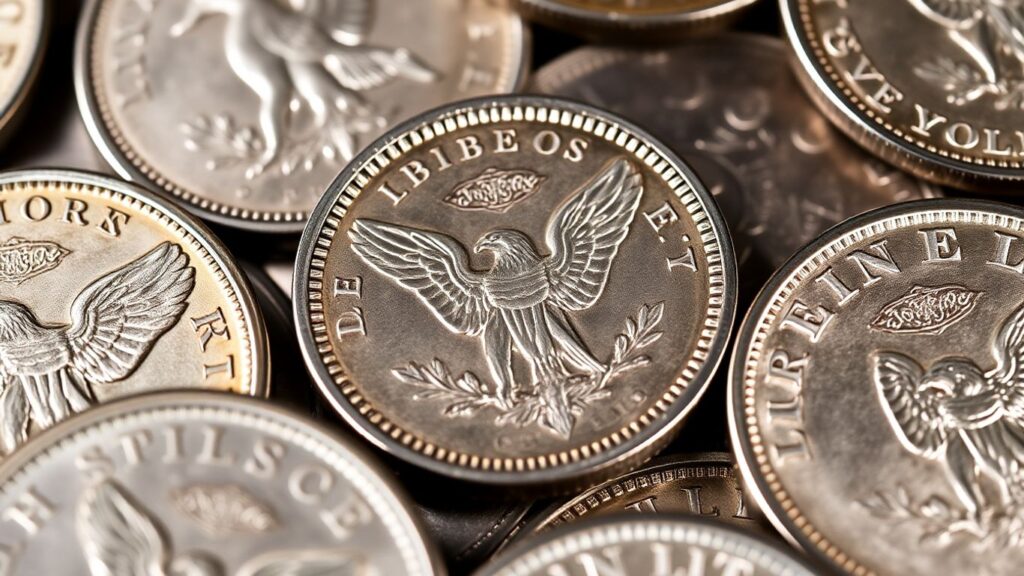
Figuring out if you’ve got a real treasure in your hands when it comes to Morgan silver dollars can feel like a puzzle. These coins, minted a long time ago, have a lot of history, and knowing what makes one more special than another is key. We’re going to break down how to spot the ones that are really worth something, so you can get a better idea of what you might have.
Key Takeaways
- Understand the basics: Know the coin’s specifications, history, and the designer, George T. Morgan.
- Check dates and mint marks: Key dates and mint marks like ‘CC’ can greatly affect a coin’s value.
- Condition matters: A coin’s grade, from worn to mint state, is a major factor in its worth.
- Look for rare varieties: Some coins have unique errors or design variations that make them highly collectible.
- Consider market factors: Rarity, how many people want the coin, and the current price of silver all play a role.
Understanding the Basics of Morgan Silver Dollars
So, you’re interested in Morgan Silver Dollars, huh? They’re pretty popular for a reason. These coins are a big deal in the collecting world, and for good old-fashioned historical reasons too. Let’s break down what makes them tick.
Key Features and Specifications
First off, what exactly is a Morgan Silver Dollar? It’s a U.S. silver dollar coin that was made for a good chunk of time, from 1878 to 1904, and then again for a bit in 1921. The guy who designed it was George T. Morgan, hence the name. You’ll see Lady Liberty on the front, looking all regal, and a pretty cool eagle with its wings spread out on the back. These coins are made of 90% silver and 10% copper. That’s a lot of silver, which is a big part of why people like them.
Here’s a quick rundown of the specs:
- Composition: 90% Silver, 10% Copper
- Weight: About 26.73 grams
- Diameter: 38.1 mm
- Edge: It’s got those little ridges, called reeded.
- Designer: George T. Morgan
- Years Minted: 1878–1904, and 1921
Historical Context of Minting
These coins came about because of some laws passed back in the day, like the Bland-Allison Act. Basically, the government decided to mint a whole lot of silver dollars. Millions and millions of them were made each year. Even though paper money was becoming more common, in the American West, these silver dollars were actually used quite a bit. A lot of these coins ended up just sitting in storage for years because more were made than people actually needed for everyday cash. Later on, some of them were melted down, and others were released through government sales, which really got collectors excited.
The sheer volume of Morgan dollars produced meant that many ended up in government vaults, waiting for their moment to re-enter the market or the melting pot. This storage and subsequent release is a huge part of their story.
The Role of George T. Morgan
George T. Morgan, the man behind the design, was an English engraver who worked for the U.S. Mint. He really put his mark on this coin. The profile of Liberty on the obverse is his work, and he even put his initial ‘M’ subtly on the truncation of the neck. On the reverse, the eagle design is also his creation. He was pretty talented, and his design became one of the most recognizable in U.S. coinage history. It’s a classic look that still holds up today.
Identifying Key Dates and Mint Marks
So, you’ve got a Morgan silver dollar in your hand, and you’re wondering if it’s a keeper, right? Well, a big part of figuring that out comes down to two things: the date it was made and where it was made. These details can seriously change how much a coin is worth. It’s not just about the year; it’s about the whole story behind that specific coin.
Understanding Mint Marks: CC, O, S, D, and None
Think of mint marks as a coin’s birthplace. The U.S. Mint had several facilities back in the day, and each one put its own little stamp on the coins it produced. You’ll usually find these tiny letters on the reverse side, below the wreath. Here’s the rundown:
- No Mint Mark: This means the coin was made at the main Philadelphia Mint. It’s the most common, but some Philly coins are still super valuable.
- O: This one means it came from the New Orleans Mint. These are often popular with collectors.
- S: This indicates the coin was struck at the San Francisco Mint. Like the ‘O’ mints, these have their own following.
- CC: Ah, the famous Carson City Mint mark! These are usually the most sought-after and can fetch a pretty penny. We’ll get to why in a sec.
- D: While less common for Morgan dollars, some later series might have a ‘D’ for Denver, though it’s not a typical mark for this specific coin.
The presence or absence of a mint mark, and which one it is, can dramatically affect a coin’s rarity and value.
The Significance of Carson City Mint Coins
The Carson City Mint in Nevada, often called the "CC" mint, only operated for a relatively short time. Because it produced fewer coins compared to places like Philadelphia or San Francisco, its output is naturally rarer. Coins bearing the "CC" mint mark, especially certain dates, are highly prized by collectors. The 1878-CC and 1889-CC are just a couple of examples that often get collectors excited. Finding a "CC" Morgan dollar in good condition can be a real win for your collection. You can often find more details about these specific mints and their output in resources dedicated to early silver dollars.
Rare Dates and Their Impact on Value
Beyond the mint mark, certain dates just stand out. Some years had very low mintages, meaning fewer coins were produced. Other dates might have had high mintages initially, but most were melted down later, leaving only a fraction for today’s collectors. For instance, the 1893-S is known for its low mintage and is a key date. Then there are the 1895 issues; the regular business strike 1895 Morgan is incredibly rare, with only a handful known, and the 1895-O and 1895-S are also quite scarce. It’s a mix of low production numbers and survival rates that makes these dates so special.
Figuring out the rare dates isn’t always straightforward. Sometimes, a date with a high mintage can still be valuable if most of those coins were lost to melt or simply didn’t survive in good condition over the years. It’s a puzzle that collectors love to solve.
Here’s a quick look at some dates that often get attention:
| Date & Mint Mark | Notes | Potential Value Range (Circulated) |
|---|---|---|
| 1878-CC | Low mintage, highly sought after | $1,000+ |
| 1893-S | Very low mintage | $500+ |
| 1895 | Extremely rare (Proof-only issue) | $5,000+ (for Proofs) |
| 1901 | Low survival rate despite mintage | $50+ |
Remember, these are just general ideas, and the actual value depends heavily on the coin’s condition, which we’ll cover next.
The Importance of Coin Condition and Grading
So, you’ve got a Morgan silver dollar, and you’re wondering what it’s really worth. Well, a big part of that answer comes down to how good of shape the coin is in. It’s not just about the date or the mint mark anymore; the actual physical condition of the coin plays a massive role. Think of it like a vintage car – a pristine, low-mileage model is going to fetch a lot more than one that’s been driven hard and put away wet, right? The same idea applies here.
Professional Grading Services: PCGS and NGC
When you’re serious about knowing your coin’s condition, you’ll want to look at what the big grading services say. The two most well-known are PCGS (Professional Coin Grading Service) and NGC (Numismatic Guaranty Corporation). These folks are like the experts who examine your coin really closely. They check out the shine, how well the design details were stamped onto the coin (that’s the ‘strike’), and if there are any nicks, scratches, or other marks on the surface. They’ve got a whole system for this, and getting your coin graded by them gives you a standardized opinion on its condition. It’s a pretty big deal in the collecting world.
Understanding Coin Grades: From Circulated to Mint State
These grading services use a scale, usually the Sheldon scale, which runs from 1 to 70. A coin with a grade of 1 is pretty beat up, showing heavy wear. On the other end, a 70 is basically perfect, looking like it just came from the mint yesterday. Most coins you’ll find will fall somewhere in between. You’ll hear terms like ‘circulated’ for coins that have been used in everyday transactions – these usually have visible wear. Then there’s ‘uncirculated’ or ‘Mint State’ (often abbreviated as MS), which means the coin shows no signs of wear, even though it might have minor imperfections from the minting process itself. The difference between an MS-60 and an MS-65, for example, can be thousands of dollars.
Here’s a general idea of what those grades mean:
- Poor (P-1) to Good (G-4): Heavy wear, most details are gone. Barely recognizable as a coin.
- Very Good (VG-8) to Fine (F-12): Significant wear, but major features are still visible. You can tell what the coin is.
- Very Fine (VF-20) to Extremely Fine (XF-45): Moderate wear, but details are still quite clear. This is where many circulated coins end up.
- About Uncirculated (AU-50 to AU-58): Very light wear, only seen at certain angles. Most of the original mint luster is still there.
- Mint State (MS-60 to MS-70): No wear from circulation. Higher numbers indicate better eye appeal, strike, and surface preservation.
How Condition Affects Value
Okay, so why does all this grading stuff matter? Because condition is king when it comes to Morgan dollars. A common date Morgan dollar in a low circulated grade might only be worth its silver content. But that same date, if it’s in a high Mint State grade, like MS-65 or even higher, could be worth hundreds or even thousands of dollars. It’s wild how much difference a few points on the grading scale can make. Collectors often strive for the best possible condition for their coins, and the market reflects that demand. So, that little scratch or that dull spot might seem minor to you, but to a grader, it can significantly impact the coin’s value.
When you’re looking at Morgan dollars, especially if you’re thinking about their worth, pay close attention to the details. A coin that looks good at first glance might have hidden flaws that graders will spot. Things like bag marks (scratches from being stored in bags), rim nicks, or a weak strike can all bring down a coin’s grade and, consequently, its price. It’s a bit like looking for imperfections in a diamond; the fewer there are, the more precious it becomes.
So, before you get too excited about a particular Morgan dollar, take a good, hard look at its condition. If you’re thinking of buying or selling, getting it professionally graded is often a smart move. It takes the guesswork out of it and gives you a clear picture of what you’re dealing with.
Recognizing Rare Varieties and Errors
Beyond the standard dates and mint marks, the Morgan dollar series is famous for its many varieties and errors. These can significantly boost a coin’s desirability and value. Think of it like finding a typo in a book – sometimes it makes the book more interesting, right? Numismatists have spent decades cataloging these differences, and some have become quite famous among collectors.
Notable Varieties Such As 'Hot Lips'
Some varieties are named based on their appearance, and the 1888-O ‘Hot Lips’ is a prime example. This one has a distinctive doubling on Liberty’s lips, making them look unusually full, hence the nickname. It’s a really striking example of how die preparation can lead to unique coins. Other popular varieties include different tail feather counts on the eagle’s reverse for 1878 issues, or overdates where one year is punched over another, like the 1880/79-O. These aren’t just minor quirks; they represent specific moments in the minting process that collectors actively seek out.
The 1895 Proof-Only Morgan Dollar
The 1895 Morgan dollar is in a class of its own. It’s unique because it was only issued as a proof coin, meaning it wasn’t intended for circulation. Very few were made, and finding one is a major achievement for any serious collector. Because they were never released into general commerce, surviving examples are typically in pristine condition. This rarity makes the 1895 proof a highly sought-after and valuable piece of U.S. coinage history.
Identifying Die Varieties and Their Significance
Die varieties happen when the dies used to strike the coins are altered, damaged, or prepared in a non-standard way. This can result in things like repunched mint marks (where a mint mark was punched onto the die more than once), doubled dies (where the die itself was struck twice with the hub, creating a raised, ghost-like image), or die cracks. The Van Allen-Mallis (VAM) system is the most widely used catalog for these varieties, assigning a number to each known die pairing. Some VAMs are quite common, while others are incredibly rare and command significant premiums. For instance, certain VAMs are known for having dramatic die breaks or unusual design elements that make them stand out.
Collecting these varieties adds another layer of depth to Morgan dollar collecting. It turns each coin into a puzzle, where identifying the specific die used can reveal its unique story and potential rarity. It’s a fascinating aspect that keeps collectors engaged and always looking for that next special find.
Factors Influencing Morgan Dollar Value
So, you’ve got a Morgan silver dollar, or maybe you’re thinking about getting one. Cool! But how do you figure out what it’s actually worth? It’s not just about the silver content, though that’s part of it. A bunch of things come into play, and understanding them can really help you out, whether you’re buying, selling, or just curious.
Rarity and Mintage Numbers
This is a big one. The number of coins made in a specific year and at a specific mint has a huge impact. Some years, they just churned out millions, while others, especially those from the Carson City (CC) or New Orleans (O) mints, had much smaller runs. And then there are those super rare ones, like the 1895 Proof-only issue – if you have one of those, you’re sitting on something special.
Here’s a simplified look at how mintage can affect things:
- High Mintage: Generally means more coins available, so lower value unless the condition is absolutely top-notch or it’s a key date.
- Low Mintage: Fewer coins produced means they’re harder to find, which usually drives up the price.
- Key Dates: Certain dates and mint marks are just more sought after by collectors, regardless of their exact mintage number, making them inherently more valuable.
Market Demand and Collector Trends
Coins are a bit like anything else – what people want drives the price. The Morgan dollar series has been popular for a long time, and that steady interest keeps values pretty stable. But trends can shift. Sometimes, a particular date or mint mark might get a surge in popularity, or maybe there’s a big influx of coins from a newly discovered hoard that temporarily affects prices. It’s always good to keep an eye on what collectors are talking about and chasing after.
The enduring appeal of Morgan dollars is tied to their history, their silver content, and the simple fact that they represent a tangible piece of the past. This combination keeps them in demand, even when the price of silver itself fluctuates.
The Impact of Silver Prices
Let’s not forget the silver! Morgan dollars are made of 90% silver, so the going rate for silver on the world market is always going to be a baseline for their value. If silver prices shoot up, the melt value of your coin goes up, and that usually pulls the collector value up with it, at least to a certain extent. Conversely, if silver prices drop, the coin’s value might dip too, though the numismatic (collector) value can often cushion the blow if the coin is rare or in great shape.
It’s a balancing act between the intrinsic value of the metal and the collectible value of the coin itself. A common date Morgan might be worth close to its silver content, while a rare Carson City coin will be worth far more than its silver alone, no matter what the silver market is doing.
The Role of Hoards and Government Sales
You know, it’s pretty wild how many Morgan Silver Dollars ended up just sitting around in government vaults for decades. It wasn’t like people were using them much in everyday life, especially outside the American West. Paper money was just easier, right? So, the mint kept churning them out, thanks to laws like the Bland-Allison Act that basically forced them to buy silver and make dollars. Most of these coins just got bagged up and stored away.
The GSA Hoard of Carson City Dollars
This is a big one for collectors, especially those who like the Carson City mint coins. Back in the day, the Treasury had a bunch of these dollars, including some from the famous Carson City Mint. When silver prices went up, and then later, when the government decided to sell off its remaining silver dollars, a lot of these coins came back into the market. The General Services Administration (GSA) handled a huge chunk of this, selling them off through mail-bid auctions in the 1970s and early 80s. These GSA-labeled coins are super popular because they often came in their original packaging and were in great condition. It really kicked off a lot of modern collecting interest.
Discovering Bag Hoards and Their Contents
Besides the official government sales, there have been some amazing discoveries of privately held hoards over the years. Imagine finding bags of uncirculated Morgan Dollars that had been tucked away for ages! These finds, sometimes unearthed in old bank vaults or private collections, can include coins from all sorts of dates and mints. They often provide a fantastic look at what coins were like before they became sought-after collectibles. One such find in 2018, for instance, revealed thousands of uncirculated Morgans, giving collectors a chance to acquire coins that might have otherwise been lost to time. It’s these kinds of discoveries that really add excitement to the hobby.
How Government Sales Shaped the Market
Honestly, these government sales, especially the GSA auctions, totally changed the game for Morgan Dollar collecting. Before that, a lot of these coins were just sitting in storage, not really on the radar for most people. When they started selling them off, suddenly collectors had access to millions of coins, many in really nice condition. This made it possible for more people to build sets, even completing a collection of Morgan Dollars from all five mints. It also helped establish a more formal market for these coins, influencing prices and collector demand. It’s a reminder that sometimes, the coins we collect today were just sitting in a vault yesterday.
Authenticity and Avoiding Counterfeits
So, you’ve got a Morgan Silver Dollar, or you’re thinking about getting one. That’s awesome! These coins are super cool, steeped in history and all that. But here’s the thing: not every shiny silver dollar you see is the real deal. Some folks out there try to pass off fakes, and nobody wants to get stuck with a dud, right? It’s like buying a used car and finding out it’s got a ton of hidden problems. You gotta be a little savvy to make sure you’re getting an authentic piece of history.
Checking Weight and Dimensions
One of the first things you can do is check the basics. Real Morgan Silver Dollars have pretty specific measurements. They should weigh exactly 26.73 grams, and their diameter is 38.1 millimeters. If you have a scale that can measure in grams, it’s a pretty easy check. A coin that’s significantly lighter or heavier is a big red flag. It’s not foolproof, of course, because some fakes might get the weight close, but it’s a good starting point. Think of it like checking the expiration date on milk – it’s a quick way to spot something that’s probably not right.
Verifying Composition and Design Details
Beyond just the weight and size, you need to look at the coin itself. Genuine Morgans are made of 90% silver and 10% copper. While you can’t easily test the composition at home without special equipment, you can look closely at the details. Are the numbers and letters sharp and clear, or do they look a bit mushy or fuzzy? The design elements, like Lady Liberty’s hair or the eagle’s feathers, should have crisp lines. Sometimes, counterfeiters have trouble replicating these fine details perfectly. Also, check the mint mark – if it’s supposed to have one (like a ‘CC’ for Carson City or an ‘O’ for New Orleans), make sure it looks right and is in the correct position. Some fakes have mint marks that are too large, too small, or just look off.
Purchasing from Reputable Dealers
Honestly, the best way to avoid getting a fake is to buy from someone you can trust. This means sticking to well-known coin dealers, either online or in person, who have a good reputation. These dealers usually guarantee the authenticity of the coins they sell. If you buy from a big auction house or a shop that specializes in coins, you’re generally going to be much safer than picking something up at a flea market or from a random online seller you’ve never heard of. It’s like buying groceries; you’re more likely to get good stuff from a reputable supermarket than from a sketchy roadside stand.
When you’re buying any collectible, especially something with inherent value like silver coins, doing your homework on the seller is just as important as knowing about the coin itself. A little bit of research upfront can save you a lot of headaches and money down the road.
Comparing Morgan Dollars to Peace Dollars
So, you’ve been looking at Morgan Silver Dollars, and maybe you’ve seen some Peace Dollars popping up too. They look kind of similar, right? Both are big, silver, and have Liberty on them. But they’re actually two different chapters in U.S. coin history, and knowing the differences can really help you figure out what you’ve got. It’s not just about looks, either; their stories and how they came to be are pretty interesting.
The most obvious way to tell them apart is by looking at the designs. George T. Morgan, the guy the Morgan Dollar is named after, designed Lady Liberty with a profile view, wearing a cap. You’ll see "LIBERTY" on her headband. On the flip side, there’s an eagle with its wings spread wide, holding arrows and an olive branch. It’s a classic, strong look.
Peace Dollars, on the other hand, came a bit later. Designed by Anthony de Francisci, Lady Liberty gets a more modern, stylized look with a radiant crown. The inscription "IN GOD WE TRVST" is a little quirky because it uses a "V" instead of a "U." The reverse shows an eagle resting, holding an olive branch, and the word "PEACE" is right there, front and center. It was meant to mark the end of World War I, so the theme is pretty clear.
Here’s a quick rundown:
- Morgan Dollar: Lady Liberty in profile, eagle with spread wings.
- Peace Dollar: Stylized Liberty with a crown, eagle at rest, "PEACE" inscription.
The Morgan Dollar was minted for a good long run, from 1878 to 1904. Then, for reasons that had to do with silver supply and demand, they stopped making them. But, they brought them back for one last hurrah in 1921. It was during that same year, 1921, that the Peace Dollar started being made. So, you had both coins being produced for a short time. The Peace Dollar was really intended to be a symbol of hope and peace after the big war, a real shift in message from the Morgan.
The transition from the Morgan Dollar to the Peace Dollar wasn’t just a design change; it marked a significant moment in American history, reflecting a nation’s desire for a new era after a global conflict. The coins themselves became messengers of that sentiment.
When it comes to value, both series have their stars. For Morgans, key dates like the 1893-S are super rare and can fetch a lot of money, especially in good condition. The Carson City mint coins (marked with a "CC") are also highly prized. Peace Dollars have their own valuable dates, too. The 1928 Peace Dollar, for instance, has a low mintage and is quite sought after. Generally, both coins are made of 90% silver, so they always have a base melt value. However, rarity, condition, and specific mint marks play a huge role in how much a collector might pay.
| Feature | Morgan Dollar (Typical) | Peace Dollar (Typical) |
|---|---|---|
| Years Minted | 1878-1904, 1921 | 1921-1935 |
| Designer | George T. Morgan | Anthony de Francisci |
| Silver Content | 90% | 90% |
| Diameter | 38.1 mm | 38.1 mm |
| Weight | 26.73 grams | 26.73 grams |
Investment Potential of Morgan Silver Dollars
So, you’re thinking about Morgan silver dollars as an investment? It’s a pretty popular choice, and for good reason. These coins aren’t just old pieces of metal; they’re a tangible link to American history, and that counts for something. Plus, they’re made of silver, which has its own value, right?
Long-Term Appreciation Prospects
When you look at Morgan dollars over the long haul, they’ve generally held their own, and for some specific coins, the appreciation has been pretty impressive. It’s not like a stock that can jump or plummet overnight, but more of a steady climb, especially for rarer dates and coins in top condition. Think about it: the U.S. Mint stopped making them in their original run back in 1904 (with a brief comeback in 1921), so there aren’t any more being produced. That limited supply, combined with a growing number of collectors and investors wanting them, tends to push prices up over time. The key is picking the right ones.
The Appeal of Tangible Assets
In today’s world, where so much is digital, there’s something really satisfying about holding something real, something with weight and history. Morgan dollars fit that bill perfectly. They’re not just numbers on a screen; they’re physical objects you can see, touch, and store. This tangibility offers a sense of security for some investors, a feeling that they own something concrete, especially when the economy gets a bit shaky. It’s like owning gold, but with added historical flavor.
Building a Legacy Collection
Many people get into collecting Morgan dollars not just to make money, but to build something lasting. These coins can be passed down through generations, becoming a family heirloom. Imagine your grandkids opening a box of these beautiful silver dollars, each with its own story. It’s a way to connect with the past and leave a tangible piece of history behind. Plus, the process of researching, acquiring, and organizing a collection can be incredibly rewarding in itself. It’s a hobby that can also grow in monetary worth over time.
Where to Buy and Sell Morgan Silver Dollars
Alright, so you’ve gotten interested in Morgan Silver Dollars, huh? That’s awesome. These coins are pretty cool, a real piece of American history you can hold in your hand. But now the big question is, where do you actually get them, and if you decide to sell, where do you go? It can feel a bit overwhelming at first, but it’s not as complicated as it might seem.
Online Marketplaces and Auctions
This is probably where most people start these days. Websites like eBay are full of them, but you’ve got to be careful. It’s easy to find a good deal, but it’s also easy to get ripped off if you don’t know what you’re looking for. Always check seller reviews and look for listings with lots of clear photos. Some sites specialize in coins, which can be a bit safer. You can often find Morgan dollars for sale online, especially if you’re looking for common dates in uncirculated condition. Auctions can be exciting, too. You might snag a rare piece for less than you expect, or you might get caught up in the bidding war and pay too much. It’s a gamble, but a fun one if you’re prepared.
Reputable Coin Dealers and Shops
If you’re more of a hands-on person, or if you’re buying something really expensive, going to a physical coin shop is a good idea. These dealers usually know their stuff. They can show you the coins, let you inspect them, and answer all your questions. The biggest advantage here is trust. A good dealer will stand behind their coins and offer guarantees. They’ll also have a better handle on the current market prices. You can find dealers in most cities, and many have been around for ages. It’s worth doing a little research to find a well-regarded one in your area. Some dealers also have physical locations you can visit, which is nice if you want to see the coins before you buy.
Understanding Pricing and Offers
No matter where you buy or sell, you need to have a basic idea of what these coins are worth. Prices can swing quite a bit depending on the year, the mint mark, the condition, and, of course, the price of silver itself. A common date Morgan in worn condition might only be worth a little over its silver value, maybe $30 to $50. But a rare date, like an 1893-S, in top-notch condition? That could be worth thousands, even tens of thousands. When you’re selling, expect offers to be below retail. Dealers need to make a profit, after all. If you’re selling a common coin, you might get more selling it directly to another collector online than to a dealer.
When you’re looking to buy or sell Morgan Silver Dollars, remember that authenticity is key. Always try to buy from sources that offer some kind of guarantee, whether it’s a reputable dealer or an online platform with buyer protection. For selling, understanding the difference between melt value, retail value, and what a dealer will offer you is important for getting a fair price.
Wrapping Up Your Morgan Dollar Hunt
So, you’ve learned a bit about what makes a Morgan silver dollar tick, from its date and mint mark to its overall condition. It’s a coin with a lot of history, and finding the right ones can be a real adventure. Remember, checking with grading services and buying from trusted sellers are good steps to take. Whether you’re just starting out or adding to an existing collection, keep an eye out for those special coins. Happy hunting out there!
Frequently Asked Questions
What makes a Morgan Silver Dollar valuable?
The value of a Morgan Silver Dollar depends on several things. Rarity, like how many were made and if it’s a special date or mint mark, is a big factor. The coin’s condition, meaning how worn it is and if it looks like new, also plays a huge role. Plus, its historical importance and the current price of silver can affect how much it’s worth.
How can I tell if my Morgan Silver Dollar is real?
To check if your coin is genuine, first look at its weight and size to make sure they match the official specs. Also, check the mint mark (like ‘CC’ for Carson City or ‘S’ for San Francisco) to see where it was made. The best way to be sure is to buy from trusted dealers who guarantee authenticity.
Are Morgan Silver Dollars a good investment?
Many people see Morgan Silver Dollars as a good investment because they are tangible assets with historical value and silver content. Their value has the potential to increase over time, especially for rare dates and coins in excellent condition. They can be a way to build a collection that lasts for generations.
What are the rarest Morgan Silver Dollars?
Some of the most sought-after Morgan Silver Dollars are the 1893-S, the 1889-CC, and the 1895 Proof-Only coin. These are very hard to find and can be worth a lot of money to collectors.
Where can I find information about my specific Morgan Silver Dollar?
You can find details about your coin by looking at its date and mint mark. Resources like coin collecting books (often called ‘Red Books’), online coin databases, and professional grading services (like PCGS or NGC) can provide a lot of information about specific coins and their value.
What's the difference between a Morgan Dollar and a Peace Dollar?
The Morgan Dollar and the Peace Dollar are different series of silver dollars. The Morgan Dollar was made from 1878-1904 and again in 1921, while the Peace Dollar was minted from 1921-1935. They have distinct designs, with the Peace Dollar celebrating the end of World War I.
How does the condition of a coin affect its value?
A coin’s condition is super important. Coins that look almost new, with no scratches or wear, are called ‘Mint State’ and are worth much more than coins that are heavily worn from being used in everyday transactions. Professional grading services assess this condition on a scale.
What are 'mint marks' and why do they matter?
Mint marks are small letters found on a coin that show which U.S. Mint facility made it. For example, ‘CC’ means it was made in Carson City, ‘O’ in New Orleans, and ‘S’ in San Francisco. Some dates and mint marks are much rarer than others, making those coins more valuable.