Ever looked at a U.S. coin and wondered about the story behind its design? It’s more than just metal; it’s a tiny piece of history. From the very first coins meant to get us working to the fancy designs we see today, U.S. coin designs have really changed a lot. They tell us about who we were, what we valued, and even how technology has moved forward. Let’s take a peek at how these little metal discs went from simple symbols to miniature works of art.
Key Takeaways
- The first official U.S. coin, the Fugio Cent, designed by Benjamin Franklin, carried a message about hard work.
- The establishment of the U.S. Mint in 1792 marked the beginning of official U.S. coinage, with Robert Scot creating early iconic designs.
- U.S. coin designs have evolved significantly over centuries, reflecting cultural shifts, historical figures like Lincoln, and national symbols like the Buffalo Nickel.
- Lady Liberty has been a consistent figure on U.S. coins, representing freedom and the nation’s ideals.
- Modern U.S. coin design benefits from advanced minting technology, allowing for greater detail and security features, and increasingly features diverse themes like Native Americans, presidents, and notable women.
The Genesis Of U.S. Coin Designs
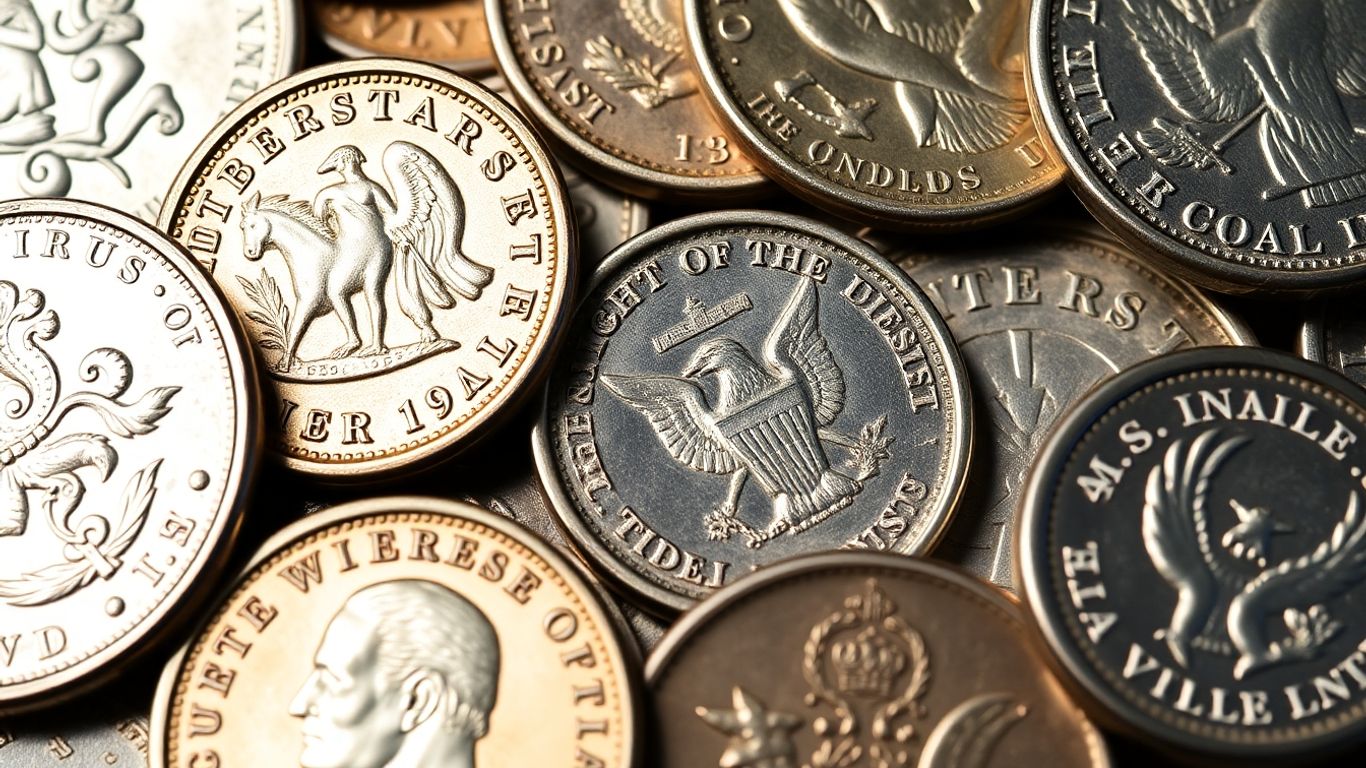
Before the United States had its own official currency, people were using a mix of foreign coins and whatever the individual colonies had managed to mint. It was a bit of a mess, honestly. Then came the idea to create a unified system, and that’s where Benjamin Franklin pops into the picture with his Fugio Cent. This wasn’t an official government coin, mind you, but it was an early attempt at a distinct American coin, featuring a sun and sundial with the motto "Mind Your Business." It really speaks to the values of the time – hard work and self-reliance were big.
Benjamin Franklin's Visionary Fugio Cent
The Fugio Cent, designed by Benjamin Franklin around 1787, stands as one of the earliest examples of an American coin. While not minted by the U.S. government, it represented a significant step towards establishing a national identity through coinage. The design itself, with its sun and sundial, was a clever nod to the importance of time and productivity, reflecting Franklin’s own industrious nature and the prevailing ethos of the young nation.
The Establishment of the U.S. Mint
Things got serious in 1792 when Congress passed the Coinage Act, officially establishing the United States Mint in Philadelphia. This was a huge deal. It meant the government was taking charge of creating its own money, moving away from the hodgepodge of currencies that had been circulating. The act laid out the framework for a decimal system, making calculations much simpler. This foundational legislation set the stage for all U.S. coinage to come. The first coins produced were copper cents and half cents in 1793, followed by silver and gold coins shortly after. It wasn’t an easy start, though; they faced challenges with equipment and even a yellow fever epidemic that shut down production for a bit.
Robert Scot's Enduring Motifs
Once the Mint was up and running, the job of designing the actual coins fell to Robert Scot, the first Chief Engraver. He’s the guy responsible for some of the earliest official U.S. coins. His designs often featured Lady Liberty, a symbol that would become a staple on American currency for generations. On the flip side, he often depicted a heraldic eagle. These motifs weren’t just random choices; they were meant to represent the ideals and strength of the new republic. Scot’s work set a precedent, establishing visual themes that would echo through the history of U.S. currency.
The early days of U.S. coinage were about more than just making money; they were about forging a national identity. Each design choice, from the symbols used to the metal content, was a statement about who the United States was becoming.
Nineteenth And Twentieth Century U.S. Coin Design Milestones
The 19th and 20th centuries were a really dynamic period for U.S. coins. It wasn’t just about making money anymore; designs started telling bigger stories about who we were as a nation. Think about it – these little metal discs were traveling all over, and their look really mattered.
The Iconic Morgan Silver Dollar
One of the most talked-about coins from this era has to be the Morgan Silver Dollar. Introduced in 1878, it was a big deal. The design, by George T. Morgan, featured Lady Liberty on the front, looking pretty regal, and a bald eagle on the back. It was a symbol of American strength and beauty during a time of significant westward expansion and industrial growth. People really connected with its detailed artistry. It was minted for a good run, though it took a break and then came back later for collectors.
Honoring Abraham Lincoln on the Cent
Then came 1909, and things changed for the humble penny. To mark the 100th anniversary of Abraham Lincoln’s birth, the U.S. Mint decided to put his portrait on the one-cent coin. This was a pretty big shift, moving away from allegorical figures like Lady Liberty to a real historical figure. The Lincoln Cent was designed by Victor David Brenner, and it’s been in continuous production ever since, making it the longest-running coin design in U.S. history. It really shows how much Lincoln meant to the country.
The Symbolism of the Buffalo Nickel
Another coin that really captured the spirit of the time was the Buffalo Nickel, first minted in 1913. Designed by James Earle Fraser, this coin is famous for its depiction of an American bison on the reverse and a Native American profile on the obverse. It was a way to honor the vanishing frontier and the indigenous peoples of North America. The design was pretty bold for its time, and the buffalo itself became a powerful symbol of the American West. It’s a design that many people still find really compelling today.
The shift towards featuring prominent historical figures and iconic American symbols on coins during the 19th and 20th centuries reflected a growing national identity and a desire to commemorate important aspects of the country’s heritage and values. These designs weren’t just about currency; they were miniature pieces of art carrying significant cultural weight.
The Evolving Role Of Coins Through History
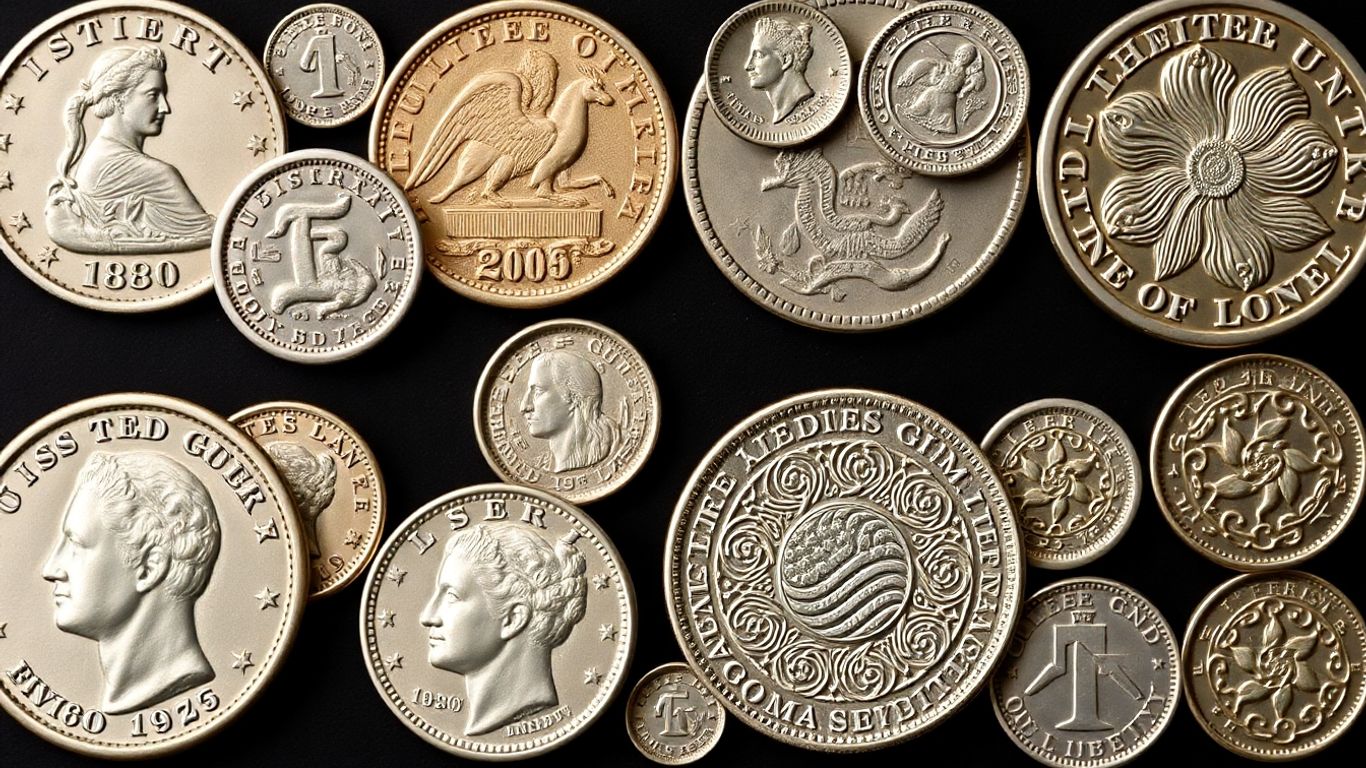
Coins are way more than just pocket change, right? They’re like tiny historical markers, giving us a peek into what people valued, what they believed in, and how they saw their world. Think about it – holding a coin that’s hundreds of years old is pretty wild. It’s a direct link to people who lived long before us, maybe even used it to buy something simple like bread.
Coins as Symbols of Power and Culture
For ages, coins have been used to show off who’s in charge and what a society is all about. Early on, especially in places like Greece and Rome, designs often featured gods, goddesses, or the rulers themselves. This wasn’t just for looks; it was a way to project authority and cultural identity. It’s like a mini billboard for the state, right there in your hand.
- Early civilizations used coins to display religious figures and deities.
- Rulers commissioned coins with their own portraits to assert their power and legitimacy.
- Designs often incorporated symbols representing national pride or important cultural values.
Propaganda and Legitimacy in Ancient Coinage
Ancient leaders really got the memo about using coins for more than just trade. They were smart about it, using them as a kind of propaganda. Imagine a Roman emperor putting his face on a coin that would then circulate throughout the empire. It was a constant reminder of who was in charge and, hopefully, that he was a strong and capable leader. This helped build a sense of unity and reinforced his right to rule.
The practice of engraving detailed images and symbols on coins allowed rulers to communicate messages of strength, victory, and divine favor to a wide audience, solidifying their image and authority across vast territories.
The Shift from Intrinsic Value to Government Faith
One of the biggest changes in how we view coins is the move away from precious metals. For a very long time, the metal the coin was made of was worth about the same as the face value. If you had a silver dollar, it was actually made of silver. But that’s not really the case anymore for most everyday coins. Now, the value comes from the government saying it’s worth something, and we, as citizens, have to have faith that it will be accepted. It’s a big difference from when the coin’s material was its primary value. This shift really started to take hold more significantly in the last century, and it’s a fascinating change to consider the history of U.S. currency.
Lady Liberty: A Recurring Icon In U.S. Coinage
You see her everywhere, right? That familiar profile, often with a crown or a flowing gown, representing freedom and the ideals of the United States. Lady Liberty isn’t just a symbol; she’s practically a character in the story of American coinage. Her image has graced our coins for ages, evolving with the nation itself.
The Enduring Presence of Lady Liberty
Lady Liberty’s roots go way back, even before the United States was a twinkle in anyone’s eye. Think ancient Rome and the goddess Libertas. When the U.S. started minting coins, it made sense to borrow from these powerful, established symbols. She became a go-to figure, especially during times of national pride or change. It’s like she’s the face of American values, showing up on everything from silver dollars to dimes.
- Early Appearances: Often depicted in classical attire, sometimes with a Phrygian cap, a symbol of freedom.
- Evolution: Her look changed over time, reflecting different artistic styles and national moods.
- Modern Usage: Continues to be a popular motif, especially on commemorative and bullion coins.
The consistent use of Lady Liberty on U.S. coinage isn’t just about pretty pictures; it’s a deliberate choice to embed national identity and core principles into something tangible that people carry every day.
Exploring the Artists Behind the Icon
So, who is Lady Liberty, really? Well, she’s often been brought to life by real people. It’s fascinating to think that the face on your pocket change might have belonged to an actual person.
- Anna Willess Williams: The woman whose profile became the iconic Lady Liberty on the Morgan Silver Dollar. She was a teacher and philosopher, not a professional model, and apparently wasn’t too thrilled about the whole modeling gig later in life.
- Teresa de Francisci: Her likeness was used for the Lady Liberty on the Peace Dollar. She was the wife of the coin’s designer, Anthony de Francisci.
- Charles E. Barber: While his dime design featured Liberty, it’s less clear who the specific model was, though it drew inspiration from French coinage.
It’s pretty wild to consider that these individuals, through their connection to the coin designers, have had their faces immortalized on currency that circulates across the country and beyond. It adds a whole human element to these metallic symbols of freedom.
Technological Advancements Shaping Coin Design
It’s pretty wild how much technology has changed the way coins are made, right? We’ve moved way beyond just hammering metal. Think about it: the precision we have now allows artists to get their exact vision onto a coin, down to the tiniest detail. This means designs can be way more intricate and tell a richer story than ever before.
Precision and Detail in Modern Minting
Modern minting uses incredibly sophisticated machinery. We’re talking about high-precision engraving machines and advanced striking techniques that can reproduce complex artwork with amazing accuracy. This allows for:
- Micro-engraving: Tiny details that might have been impossible before are now standard. This adds layers of visual interest and security.
- High Relief Designs: Coins can now have designs that stand out much more dramatically from the surface, giving them a more three-dimensional feel.
- Multi-Metal Striking: Some coins are now made with multiple types of metal, creating unique color contrasts and further enhancing their visual appeal.
Beyond Traditional Circular Forms
Who says coins have to be round? Technology has opened the door to all sorts of shapes. We’re seeing coins that are square, rectangular, or even custom shapes that fit the theme of the design. This really breaks the mold and makes coins stand out as unique pieces of art.
Anti-Counterfeiting Measures in Coin Production
Making coins harder to fake is a big deal, and technology plays a huge role here. The Mint uses a bunch of clever tricks to make sure their coins are the real deal:
- Edge Lettering and Reeding: The patterns and text on the edge of coins are precisely controlled and difficult to replicate.
- Microprinting: Tiny text, often too small to see without magnification, is incorporated into the design.
- Security Features: Some modern coins include holographic elements or other hidden features that are hard for counterfeiters to copy.
The drive for more detailed and secure coinage is constant. As technology advances, so do the methods used to create coins that are both beautiful and trustworthy, reflecting the ongoing innovation in the field of numismatics.
Contemporary Trends In U.S. Coin Design
Honoring Native Americans and Presidents
These days, the U.S. Mint is really making an effort to put a wider range of people and stories on our coins. For a while there, it felt like we were seeing the same few faces over and over. But that’s changing. Starting in the early 2000s, we saw programs like the Sacagawea dollar, which was a big deal for recognizing Native American contributions. Then came the Presidential $1 Coin Program, which put a whole bunch of past presidents on the dollar coin. It was a way to connect with history and, honestly, make the dollar coin a bit more interesting to look at.
The America the Beautiful Quarters Program
This was a really popular one, running from 2010 to 2021. It followed up on the success of the state quarters by featuring a different national park or national site on the reverse of the quarter each year. We got to see designs from places like Yosemite, Grand Canyon, and even places I’d never heard of but now want to visit. It was a neat way to celebrate the country’s natural beauty and history, all on a coin you could actually use in your pocket. Plus, it gave collectors something new to hunt for every year.
Celebrating Trailblazing American Women
This is a more recent initiative, kicking off in 2022 and planned to run through 2025. The American Women Quarters Program is all about honoring women who’ve made significant contributions to American society and history. We’re talking about figures like Maya Angelou, Sally Ride, and Wilma Mankiller. It’s a fantastic way to bring attention to women who might not always get the spotlight they deserve on our currency. It’s a clear sign that coin design is becoming more inclusive and reflective of a broader American experience.
The U.S. Mint is really using coins as a canvas to tell more diverse stories. It’s not just about presidents and historical figures anymore; it’s about recognizing a wider array of achievements and cultural impacts. This shift makes our coinage more relatable and educational for everyone.
The Future Landscape Of Coin Design
Thinking about what’s next for U.S. coin designs is pretty interesting. We’ve seen so much change already, from simple symbols to really detailed art. Now, with new tech and a more connected world, designers have a whole new playground. The goal is to keep coins relevant, telling stories that connect with everyone.
Globalization's Influence on Thematic Diversity
It feels like the world is getting smaller, right? This means coin designs are starting to pull inspiration from all over. We’re seeing themes that reflect a wider range of cultures and global events. It’s not just about what’s happening in the U.S. anymore; it’s about how we fit into the bigger picture. This makes collecting more exciting because there’s so much variety. For instance, the United States Mint has already announced its 2026 coin designs, which will celebrate innovations and innovators from different states, showing this trend in action.
The Potential of Digital and Blockchain Integration
This is where things get really futuristic. Imagine coins that aren’t just physical objects. Digital art and blockchain technology could totally change what a coin is. Maybe we’ll see coins that have a digital twin, or that unlock exclusive content online. It’s a bit hard to picture exactly, but it opens up a lot of possibilities for how we interact with these pieces of history.
The Role of Collectors in Historical Preservation
We can’t forget about the folks who love collecting coins. They’re not just buying pretty objects; they’re actively helping to keep history alive. By taking care of these coins and researching their stories, collectors make sure that the art and history behind them get passed down. They’re like the guardians of these tiny historical records.
Coins have always been more than just money. They’re like little time capsules, holding stories of who we were and what we valued. As technology moves forward, the way these stories are told on coins will surely change, but their importance as historical artifacts will remain.
More Than Just Money
So, looking back at how U.S. coins have changed, it’s pretty wild. We’ve gone from simple metal discs to these mini canvases telling stories about who we are as a nation. It’s not just about what they’re worth in your pocket anymore; they’re like little pieces of history you can actually hold. From Benjamin Franklin’s early ideas to the fancy designs we see today, each coin shows us a bit about the times it was made in. It’s cool to think that these everyday objects have such a deep connection to our past and keep evolving right alongside us.
Frequently Asked Questions
Who designed the very first U.S. coin?
The first coin made in the U.S. was called the Fugio Cent, or sometimes the ‘Franklin Cent.’ Benjamin Franklin designed it way back in 1787. It had cool sayings like ‘Mind Your Business’ and pictures of a sun and a sundial, showing how much he believed in working hard.
When did the U.S. Mint start making official coins?
The United States Mint was officially set up in Philadelphia in 1792. Before that, people used coins from different colonies or foreign coins. The first official U.S. coin was designed by Robert Scot, who was the first Chief Engraver for the Mint. His designs often featured Lady Liberty.
What are some famous U.S. coin designs from the past?
Some really well-known coins include the Morgan Silver Dollar, which came out in 1878. Then there’s the Lincoln Cent, which started in 1909 and is still used today! Another famous one is the Buffalo Nickel, first made in 1913. These coins often showed what was important to Americans at the time, like westward expansion.
Why is Lady Liberty seen on so many U.S. coins?
Lady Liberty is a very important symbol for the United States, representing freedom and the country’s ideals. She has appeared on many U.S. coins since the late 1800s. Different artists have created their own versions of her, making her a lasting icon on our money.
How has technology changed coin making?
Technology has made it possible to create coins with much more detail than before. Artists’ ideas can be put onto coins more precisely. Also, new technologies help make coins harder to copy, which is important for preventing people from making fake money.
What are some new trends in U.S. coin designs?
Lately, U.S. coins have been celebrating important people and groups. For example, there are programs honoring Native Americans and presidents. The America the Beautiful Quarters program featured different national parks, and more recently, the American Women Quarters program honors inspiring women who have made a difference in American history.