World War II was a time of big changes, and that includes coins. Many coins from this period have cool stories behind them. Some are made of different metals because of wartime shortages, while others show symbols of the time. If you’re into history or just like collecting things, looking into WWII coins can be pretty interesting. You might even find something quite special. Let’s explore what makes these coins tick and how to spot the ones that stand out.
Key Takeaways
- The value of WWII coins depends on things like how rare they are, their condition, the date they were made, and if they have special mint marks.
- Coins made from precious metals like silver or gold are often worth more, not just for their historical value but for the metal itself.
- The 1943 steel penny is a famous example of a coin whose value comes from a wartime material shortage.
- Collecting coins from Germany during the Nazi era or the post-war period offers a look into a specific part of history.
- To get the best idea of a coin’s worth, check its condition, look for expert grading, and know where to find reliable information on WWII coins.
Understanding The Value Of WWII Coins
So, you’ve got some old coins lying around, maybe from your grandpa’s attic or a flea market find, and you’re wondering if they’re worth anything, especially if they’re from the World War II era. It’s not just about how old they are; a bunch of things play into what makes a coin valuable. Think of it like this: not all old things are treasures, right? Same with coins.
Key Factors Determining Coin Value
Several elements contribute to a coin’s worth. It’s a mix of its physical attributes and its story. The more of a specific coin that exists, the less it’s generally worth. It sounds simple, but it’s the core idea.
Here’s a quick rundown of what experts look at:
- Scarcity: How many of these coins were made, and how many are still around today? Fewer coins usually mean higher value.
- Condition: Is the coin shiny and new-looking, or is it worn down from years of use? Coins that look like they just left the mint often fetch a much higher price.
- Metal Content: Some coins are made of silver or gold. The value of the metal itself can add a significant chunk to the coin’s worth, sometimes more than its face value.
- Historical Significance: Was this coin part of a major event? Coins from wartime, for instance, can carry extra weight because of the history they represent.
The story behind a coin can be just as important as its physical state. A coin that was minted during a time of great upheaval or change might be more sought after by collectors, regardless of its rarity or condition.
The Role Of Mint Marks And Dates
The date on a coin tells you when it was made, and the mint mark shows where. These aren’t just random letters or numbers; they can tell a story about production numbers and specific historical moments. For example, during WWII, certain metals were scarce, leading mints to use different materials, which in turn made some coins from that year incredibly rare. The mint mark, often a small letter like ‘D’ for Denver or ‘S’ for San Francisco, indicates which facility produced the coin. Sometimes, one mint produced far fewer coins than another in the same year, making those coins more desirable.
Historical Significance And WWII Coins
Coins from the World War II period have a unique appeal. They are tangible links to a time of global conflict and immense change. Think about the 1943 steel pennies; they were made because copper was needed for the war effort. This historical context alone makes them interesting. Collectors often seek out coins that were minted during specific wartime years or those that reflect the economic conditions of the era. Understanding the historical backdrop of these coins is key to appreciating their potential value. You can find resources that list current values for these WWII Emergency Issues, which can be a good starting point.
Identifying Rare WWII Era Coins
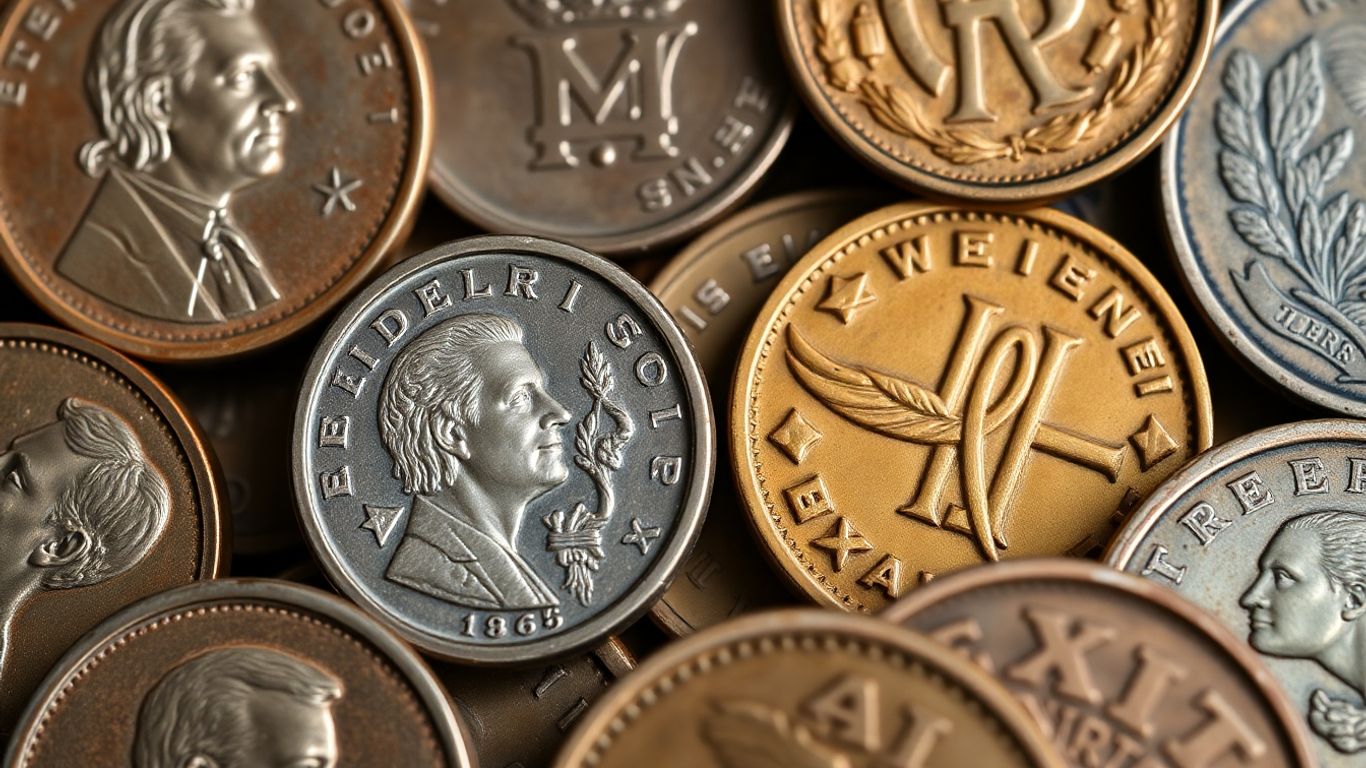
So, you’ve got some coins from around World War II and you’re wondering if you’ve stumbled upon a hidden treasure. It’s not just about the age of the coin; a few key things really make certain coins stand out from the rest. Think of it like finding a specific book in a huge library – some are common, but others are incredibly hard to find.
Scarcity And Its Impact On Value
When we talk about scarcity, we’re basically talking about how many of a particular coin were made and how many are still around today. It’s pretty simple: the fewer there are, the more people will want them, and that drives up the price. Coins get lost, they get melted down, or sometimes they just get tossed aside. All these things chip away at the number of coins that survive. The fewer coins that exist from a specific mint and year, the higher their potential value. For example, some German Pfennig coins from the war years are much harder to find than others, making them more sought after by collectors.
Condition: The Uncirculated Premium
This is a big one. Even if a coin is super rare, if it looks like it’s been through the wringer, its value takes a hit. Collectors really love coins that look brand new, like they just came off the minting press. These are called "uncirculated" coins. You’ll often see a huge jump in price if a coin is in top-notch condition compared to one that’s been passed around in pockets for years. It’s like comparing a pristine, first-edition book to one with ripped pages and a broken spine.
Here’s a general idea of how condition affects value:
- Uncirculated (Mint State): These coins show no signs of wear. They’re the most desirable and command the highest prices.
- Extremely Fine (XF): Very minor wear, usually only visible under magnification.
- Very Fine (VF): Clear details, but noticeable wear on the high points.
- Good (G): Significant wear, with major design elements flattened.
Precious Metal Content In WWII Coins
Don’t forget what the coin is actually made of! Many coins from before or during WWII were made with silver or even gold. Even if the coin itself isn’t super rare in terms of mintage numbers, its value can be significantly boosted by the precious metal it contains. Think about coins made before 1965 in the US, which often had a high silver content. The melt value of the metal alone can be quite substantial. You can check out a summary table of rare and valuable coins to get a better idea of what to look for in this article.
The metal content of a coin is a baseline for its worth. While historical significance and rarity add layers of desirability, the intrinsic value of gold or silver provides a floor below which the coin’s price is unlikely to fall, especially in times of economic uncertainty.
Collecting German WWII Coins
When you start looking into coins from the World War II era, Germany’s history offers a really interesting, and sometimes complicated, set of pieces to collect. The country’s currency, the Deutsche Mark, has seen a lot of changes, especially around the war years. It’s not just about the metal they’re made of; these coins tell a story.
The Deutsche Mark and Its History
Before Germany was a single country, different regions had their own money. Think of it like different states having their own currency today, but way more common back then. The "Mark" name has been around for ages, with the Hamburg Mark being one of the oldest, dating back to the 1600s. It was also the first German currency to use "pfennigs," which are like pennies. This system of 100 pfennigs to a Mark stuck around for a long time. When Germany finally unified in the 1870s, they adopted a single currency, the Goldmark, which really helped smooth out trade between the different parts of the new empire.
Coins Minted During the Nazi Era
During the 1930s and the war years under the Nazi regime, German coins took on a specific look. You’ll often see the swastika symbol on coins from this period, though not always on the circulating currency itself. The official motto often stamped on coins was "Gemeinnutz geht vor Eigennutz," which translates to "The common good comes before self-interest." It’s a phrase that really sums up the ideology of the time. The mints were busy producing various denominations, including:
- Silver: 1/2 Mark and 1 Mark coins were common.
- Base Metals: 1, 2, 5, and 10 Pfennig coins were made from materials like copper, nickel, and even steel during the war.
It’s important to note that while these coins are historically significant, some collectors might avoid them due to their association with the Nazi regime. However, for those interested in the history of the period, they are a direct link to that time.
Post-War German Coinage
After World War II, Germany was divided, and the currency situation was complex. However, the Deutsche Mark was eventually re-established in West Germany. The coins from the late 1940s and 1950s often show a transition. For example, some early 50 Pfennig coins from 1949 and 1950 have slightly different inscriptions as the new Federal Republic of Germany (Bundesrepublik Deutschland) was forming. These "error" coins, or those with transitional markings, can be quite sought after by collectors. The mints continued to produce Pfennigs and Marks until Germany adopted the Euro.
Collecting coins from this period isn’t just about finding old metal; it’s about holding a piece of history that reflects a nation’s journey through immense change, from unification to war and then rebuilding. Each coin has a story to tell about the people who used it and the events that shaped their lives.
Here’s a quick look at some denominations you might encounter:
| Denomination | Material (Typical) | Notes |
|---|---|---|
| 1 Pfennig | Steel, Copper | Often zinc or steel during wartime. |
| 2 Pfennig | Copper, Steel | Similar material variations to the 1 Pfennig. |
| 5 Pfennig | Nickel, Copper | Often a copper-nickel alloy. |
| 10 Pfennig | Nickel, Copper | Also typically copper-nickel. |
| 1/2 Mark | Silver | Silver content varied over time. |
| 1 Mark | Silver | A more substantial silver coin. |
Notable WWII Coin Examples
When you’re looking into coins from the World War II era, a few stand out. These aren’t just pieces of metal; they’re tiny snapshots of history, and some are worth a surprising amount.
The 1943 Steel Penny
This one’s pretty famous. During WWII, copper was needed for the war effort, so the U.S. Mint switched to using steel for pennies in 1943. These steel cents were coated in zinc to prevent rust. They look different – lighter in color and magnetic. Most 1943 pennies you find will be steel, and while they’re interesting, they aren’t super rare. The real treasures are the few 1943 pennies that were accidentally struck on copper planchets. These are incredibly rare and highly sought after by collectors.
- Steel Pennies (1943): Common, made of steel and zinc. Generally worth a few cents to a dollar or two, depending on condition.
- Copper Pennies (1943): Extremely rare, struck on leftover copper planchets. Can be worth thousands of dollars.
- Other Years: Pennies from before and after 1943 were made of bronze (copper and tin).
German Pfennig Coins From The Era
Germany had a lot of different coins during the war, and some are quite collectible. The Pfennig was the subunit of the Reichsmark. Coins from this period often have Nazi symbols or propaganda messages on them, which can make them historically significant but also sensitive to collect. For example, the 1 and 2 Reichspfennig coins were often made of zinc or iron due to metal shortages. The 5 and 10 Reichspfennig coins were typically made of copper-nickel.
Collecting coins minted during the Nazi era requires careful consideration due to their historical context. While some collectors are drawn to the historical significance, others prefer to avoid them.
Silver Mark Coins of WWII
Silver coins were also common. The German Mark (and its subunit, the Pfennig) saw various silver denominations minted. For instance, the 1/2 Mark, 1 Mark, and 2 Mark coins were often struck in silver. The composition and design could change based on metal availability and wartime needs. Some of these silver coins, especially those in good condition or with specific mint marks, can hold a good amount of silver value, plus collector interest. For example, the 1940-1945 issues of the 1, 2, and 5 Reichsmark coins are often found in silver.
| Denomination | Metal Composition | Typical Dates | Notes |
|---|---|---|---|
| 1/2 Mark | Silver | 1933-1944 | Often features Hindenburg |
| 1 Mark | Silver | 1933-1944 | Common silver coin |
| 2 Mark | Silver | 1936-1944 | Larger silver coin |
Navigating The WWII Coin Market
So, you’ve got some coins from the World War II era, or maybe you’re thinking about starting a collection. That’s pretty cool. But how do you actually figure out what these things are worth and where to find more? It can feel a bit like a treasure hunt, honestly.
Where To Find Valuable WWII Coins
Finding these historical pieces takes a bit of effort. You won’t usually stumble upon a rare German Mark in your pocket change. Your best bet is often coin shows, antique shops, and specialized coin dealers. Online marketplaces are also an option, but you’ve got to be careful. Always do your homework before buying anything online. Sometimes, you can find great deals at estate sales or auctions, too. Just be prepared to do some digging. For pricing information, resources like the NGC US Coin Price Guide can give you a general idea of what coins are trading for.
Authentication And Grading Services
This is super important, especially if you think you’ve found something special. Not all coins are created equal, and some might look the part but aren’t the real deal. Professional grading services, like PCGS or NGC, examine your coins and give them a grade based on their condition. They also authenticate them. This process isn’t cheap, but it adds a lot of credibility and can significantly boost a coin’s value if it’s a high-grade specimen. It’s like getting a certificate of authenticity for your historical artifact.
Selling Your WWII Coin Collection
Thinking about selling? It’s a whole different ballgame. You have a few options. You can try selling them yourself online or at coin shows, which might get you more money but takes more time and effort. Alternatively, you can sell to a dealer, which is usually faster but you’ll likely get less than retail. If you have a really significant collection, you might consider consigning it with an auction house. Here are some things to keep in mind:
- Condition is King: A coin’s physical state dramatically impacts its worth. Uncirculated coins are almost always more desirable.
- Rarity Matters: How many of these coins were made, and how many still exist today? Scarcity drives up prices.
- Metal Content: Coins made of silver or gold will have a baseline value tied to the metal’s market price, even if the coin itself isn’t particularly rare.
- Historical Context: Coins tied to significant events or figures from the WWII era can sometimes command a premium.
Deciding whether to sell a coin or keep it is a personal choice. Sometimes, the sentimental or historical value outweighs the monetary worth. It’s worth taking the time to understand what you have before making any hasty decisions. Think about what you want to achieve – quick cash or the best possible price for your collection?
Remember, the coin market can be a bit unpredictable. Prices fluctuate based on demand, rarity, and the overall economic climate. Patience and knowledge are your best friends here.
Wrapping Up Your Coin Collection Journey
So, that’s a look at some of the coins from the WWII era that might be worth something. It’s pretty wild to think that these small metal discs have such a story to tell, right? From the materials they’re made of to the year they were stamped and where they came from, all these little details can really add up. If you’ve got a pile of old coins lying around, maybe it’s time to take a closer look. You never know what historical treasure you might be holding onto. Happy hunting out there!
Frequently Asked Questions
What makes a World War II coin valuable?
Several things make a coin from the WWII era valuable. The date it was made, where it was made (mint mark), how rare it is, and if it contains precious metals like silver or gold all play a part. Also, if the coin has a cool story from history behind it, that can make it worth more.
Are coins made of steel from 1943 special?
Yes, the 1943 steel pennies are quite special! During WWII, copper was needed for making bullets, so the U.S. Mint used steel for pennies that year. Finding a 1943 penny made of copper is super rare because it was a mistake, and those are worth a lot of money.
How important is the condition of a coin?
The condition is a big deal! A coin that looks brand new, like it was never used, is usually worth much more than one that’s worn out from being passed around a lot. Collectors often pay extra for coins that are in really good shape.
Do German coins from WWII have special value?
Yes, German coins from the WWII period, especially those minted during the Nazi era, can be valuable. They often have unique markings and historical significance. Coins made with silver or gold from that time are also sought after.
Where can I find valuable WWII coins?
You might find them in coin shops, at coin shows, or online marketplaces. Sometimes, people find them by looking through old family belongings. It’s always a good idea to check with experts or dealers who know a lot about coins.
How do I know if my WWII coin is real and worth money?
To be sure about a coin’s value and if it’s genuine, it’s best to get it checked by a professional coin grader. Services like the PCGS or NGC can examine your coin and tell you its condition and authenticity, which helps determine its true worth.