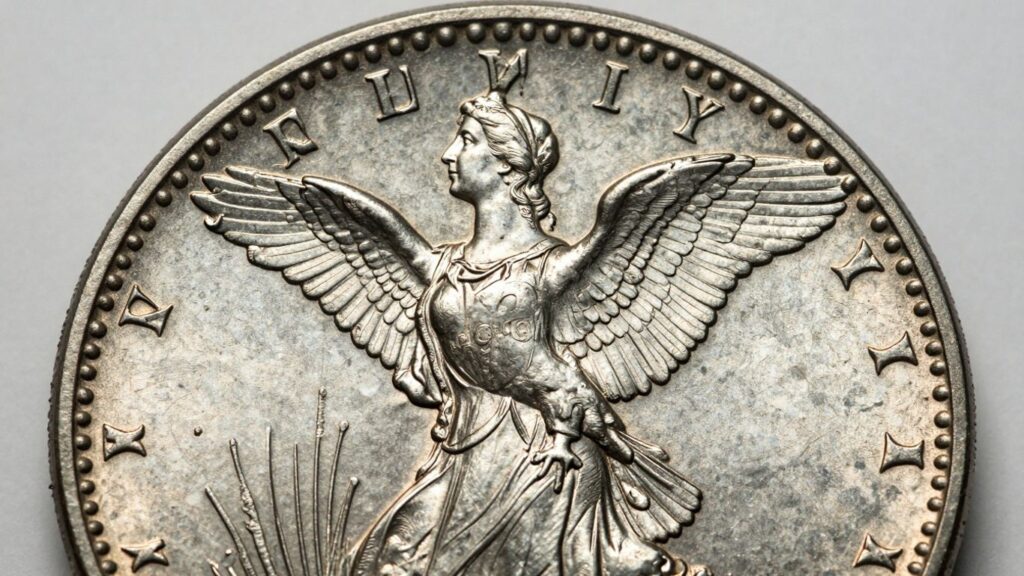
Thinking about Standing Liberty quarters? They’re pretty neat, right? More than just old silver coins, these quarters have a story. From their cool design to how they were made, there’s a lot that makes them stand out. Let’s dig into what makes Standing Liberty quarters special.
Key Takeaways
- The Standing Liberty quarter, designed by Hermon MacNeil, was a big change from older coin styles, showing Liberty standing tall.
- Early versions (Type 1) had a prominent date that wore off easily, a problem fixed in later issues (Type 2) and especially after 1925 when the date was recessed.
- Key dates like the 1916, the 1918/7-S overdate, and tough-to-find well-struck coins (like those with a ‘Full Head’) are highly sought after.
- Coins made at the Denver (D) and San Francisco (S) mints are generally rarer and more valuable than those from Philadelphia (P).
- Completing a set of Standing Liberty quarters can be a real challenge due to scarce dates, wear issues, and the demand for high-quality examples.
The Artistic Vision Behind The Design
A Departure From Tradition
Before the Standing Liberty quarter came along, American coins were, well, a bit samey. For ages, the dime, quarter, and half dollar pretty much shared the same look. But as the 20th century rolled in, there was this big push to make U.S. coinage look more… well, important. President Theodore Roosevelt was a huge part of this, wanting our money to reflect America’s growing status on the world stage. He really pushed for outside artists to get involved, moving away from the Mint’s usual way of doing things where practicality often trumped art. This shift really kicked off a new era for American coins, making them not just currency, but little pieces of art.
Hermon MacNeil's Winning Concept
In 1916, the U.S. Mint held a big design competition, and a sculptor named Hermon MacNeil won the gig for the new quarter. His design was a real showstopper. It featured Lady Liberty standing tall and proud, striding forward through a gateway. She’s got a shield in one hand, and with the other, she’s pulling back the covering, holding an olive branch. The Mint director at the time described her as "bearing the shield in an attitude of protection from which the covering is being drawn." It was meant to symbolize America’s readiness to defend peace. On the flip side, there’s a majestic eagle in full flight. MacNeil’s design was a bold statement, a real break from the past, and it certainly captured the spirit of the times, especially with the country heading towards World War I. It’s a design that still feels powerful today.
The Influence of Theodore Roosevelt
President Theodore Roosevelt was a major force behind the push for more artistic coin designs. He felt that America’s coinage wasn’t living up to the nation’s status as a world power. He championed bringing in talented artists from outside the U.S. Mint, believing they could bring a fresh, artistic perspective. This was a big change from the Mint’s long-standing tradition of relying on its own engravers, who were often more focused on making a coin functional than beautiful. Roosevelt’s vision paved the way for artists like Hermon MacNeil to create the iconic Standing Liberty quarter and other beautifully designed coins of the era. His influence really set a new standard for numismatic art in the United States.
Here’s a quick look at the key elements of MacNeil’s design:
- Obverse: A full-length figure of Liberty, front-facing, head turned left, holding a shield and an olive branch.
- Reverse: An eagle in full flight with wings spread.
- Symbolism: Liberty depicted in a protective stance, representing peace and readiness.
- Stars: Thirteen stars on the obverse gateway and flanking the eagle, representing the original colonies.
The artistic competition that led to the Standing Liberty quarter was a landmark event. It marked a significant departure from the norm, prioritizing aesthetic appeal and symbolic meaning alongside the practicalities of coinage. This approach, heavily influenced by President Theodore Roosevelt’s desire for a more distinguished national currency, resulted in a design that was both artistically striking and deeply meaningful.
Evolution Of The Standing Liberty Motif
The Original Type 1 Design
The Standing Liberty quarter, when it first appeared in 1916, was a real shake-up from the old Barber quarters. Hermon MacNeil’s design was pretty striking, showing Liberty with a shield and an olive branch, stepping forward. It was meant to symbolize America’s readiness for peace and defense, which felt pretty relevant with everything going on in the world back then. The initial version, often called Type 1, had Liberty with a rather exposed chest, wearing what looked like a loose-fitting chainmail shirt. This design was only minted for a short while in 1916 and into early 1917. It was a bold artistic statement, a far cry from the more staid designs that had come before.
Modifications By George Morgan
It wasn’t long before the design saw some changes. By mid-1917, Chief Engraver George Morgan stepped in to tweak MacNeil’s original concept. The most noticeable alteration was covering Liberty’s chest with a more substantial chainmail vest. This was likely done to make the design a bit more modest, or perhaps to address some production issues. Morgan also made adjustments to the reverse, repositioning the eagle and some stars. He even tried to make the coin strike better by adding a bit of a curve to the dies, but ironically, this sometimes made the details, especially Liberty’s face and hair, a little less sharp. It’s interesting how these small changes can create distinct variations that collectors look for.
The Distinct Type 2 Format
The modifications made by George Morgan effectively created what numismatists call the Type 2 Standing Liberty quarter. This format, which ran from late 1917 through 1930 (with a gap in 1922 when no quarters were made), is the more commonly encountered version. While the Type 1 is rarer and often more sought after by collectors for its historical significance and original artistic intent, the Type 2 represents the bulk of the series’ production. The shift to Type 2 wasn’t just about the chainmail; it involved a re-engineering of the reverse as well, with the eagle appearing slightly higher and the stars rearranged. This evolution shows how a design can be adapted and changed even after its initial release, often due to practical considerations or public perception.
The transition from Type 1 to Type 2 is a fascinating study in coin design evolution. It highlights the interplay between artistic vision and the practicalities of mass production, as well as the influence of the Mint’s engraving department on an artist’s original concept. These changes, though subtle to the casual observer, are significant markers for those who study and collect these beautiful silver coins.
The Challenge Of Date Preservation
One of the most talked-about issues with Standing Liberty quarters, especially for collectors trying to put together a complete set, is how the date wears off. It’s a real headache, and it makes finding coins in good condition a lot harder than you might think.
Early Production Vulnerabilities
When these quarters were first made, the date was placed right out in the open, on Liberty’s shield. It wasn’t protected at all. This meant that with just a little bit of handling, like being passed around in pockets or change purses, the date would start to fade. By the time these coins had been in circulation for only about ten years, most of them were already dateless. It’s kind of wild to think about – a coin designed to last for decades, but its identifying year would vanish so quickly. This design choice, while artistic, created a major problem for the coin’s longevity as a dated piece.
The Recessed Date Solution
Thankfully, the U.S. Mint eventually figured this out. Starting in 1925, they changed the design slightly. They moved the date down into a little sunken area, kind of like a small ditch, on the coin. This protected it from the worst of the wear and tear. Coins made from 1925 onwards are much more likely to have a readable date, even if the rest of the coin shows some signs of use. It’s a pretty clear dividing line for collectors – coins before 1925 are tough to find with dates, and coins from 1925 on are generally much easier.
Impact On Collectibility
This whole date issue really messes with collecting. If you want a coin from, say, 1917, and the date is barely visible or completely gone, it’s not worth as much, and it doesn’t really count towards a complete date set. This makes the earlier dates, especially the low-mintage ones like the 1916, incredibly difficult and expensive to find with a clear date. Even common dates from the early period can be surprisingly hard to find in circulated grades where the date is still fully intact. It means collectors often have to make a choice: pay a premium for a well-preserved early date, or settle for a coin with a worn or missing date, which can be a bit of a letdown.
Here’s a quick look at how the date placement affected things:
- Pre-1925: Date is raised and exposed on the shield.
- 1925 and Later: Date is recessed into a protective groove.
- Result: Coins from 1925 onward are significantly more likely to retain their dates.
The vulnerability of the date on early Standing Liberty quarters is a defining characteristic of the series. It wasn’t just a minor flaw; it fundamentally altered the survival rate of dated examples, creating a distinct challenge for numismatists and influencing the rarity and value of coins based on the visibility of their year of minting.
Key Dates And Rare Varieties
The Elusive 1916 Mintage
When you’re hunting for Standing Liberty quarters, the 1916 is the one that often comes up first. It’s the very first year of issue, and guess what? They only made about 52,000 of them. That sounds like a lot, but for a coin that was meant for everyday use, it’s not much at all. Most of these probably got spent and worn down pretty quickly. Finding one today, especially in good shape, is a real challenge. It sets the tone for the whole series – some dates are just plain tough to find.
The 1918/7-S Overdate
This one is pretty wild. Back in 1918, the San Francisco mint was running low on dies. So, they took an older 1917 die and tried to punch an ‘8’ over the ‘7’ in the date. It worked, sort of. You can actually see the ghost of the ‘7’ under the ‘8’ if you look closely. Because they didn’t make many of these, and they circulated for ages before anyone really noticed what they were, finding one in nice condition is incredibly difficult. Mint state examples are super rare, and ones with a perfectly clear head on Liberty? Almost unheard of.
Condition Rarities Like The 1927-S
While the 1916 has low mintage and the 1918/7-S is a cool overdate, the 1927-S is a different kind of beast. They made fewer than 400,000 of these, which is pretty low for the series. But what makes it a real headache for collectors is how poorly they struck them. Liberty’s head is often mushy, and details on her shield are weak. So, even if you find a 1927-S, it might not look very good. Getting one that’s well-struck and in high grade is what makes it a true condition rarity. It’s one of the priciest coins in the series, even in lower grades.
Some other dates might not have tiny mintages, but they still give collectors fits:
- 1919: Over 11 million made, but finding one that hasn’t been cleaned or shows strong detail is tough. People tended to clean these up more than others.
- 1923-S: Another San Francisco coin where finding one without problems, like cleaning or heavy wear, is a major hurdle.
- 1926-S: Similar to the 1927-S, these often have weak strikes, especially on Liberty’s head and the eagle’s feathers.
The Standing Liberty Quarter series, though relatively short-lived, is packed with dates that present significant collecting challenges. Beyond the obvious low mintages, issues arise from poor striking quality, making well-preserved examples of certain dates exceptionally scarce and highly sought after by dedicated collectors.
Mint Marks And Their Significance
Philadelphia's Dominant Role
When you’re looking at Standing Liberty quarters, you’ll notice a small letter, or sometimes no letter at all, stamped near the date. This little mark tells you where the coin was made. Most of these quarters came from Philadelphia, which didn’t use a mint mark back then. So, if you see no mark, it’s a Philly coin. They made a ton of them, so they’re usually the most common and least valuable, unless it’s a super rare date in amazing shape.
The Value Of Denver And San Francisco Strikes
Coins from Denver (marked with a ‘D’) and San Francisco (marked with an ‘S’) are generally more sought after by collectors. These mints produced fewer coins compared to Philadelphia, making their output scarcer. An ‘S’ mint mark, especially on certain dates, can significantly increase a coin’s value. For example, the 1927-S is a well-known key date, partly due to its low mintage and the challenges in finding well-struck examples. The same goes for the 1918-S, which, despite a high mintage, is notoriously difficult to find with sharp details, particularly on Liberty’s head. The presence and condition of the mint mark itself can be a factor in a coin’s desirability.
Understanding Historical Mint Locations
While Philadelphia, Denver, and San Francisco were the main players for Standing Liberty quarters, it’s worth remembering that the U.S. Mint has had other locations throughout history. However, for this specific series, you’ll primarily encounter coins from those three facilities. Knowing the mint mark helps you understand the coin’s production history and its place within the overall series. It’s a simple detail that adds a layer of depth to collecting these beautiful Liberty quarters.
Here’s a quick rundown of the mint marks you’ll typically see:
- No Mint Mark: Philadelphia (most common)
- D: Denver
- S: San Francisco
The mint mark is more than just a factory stamp; it’s a historical marker. It tells a story about where and when the coin was struck, influencing its rarity and appeal to collectors. Understanding these small details is part of the fun of digging into coin history.
The Allure Of Full Head Strikes
Defining A Full Head
When you’re looking at Standing Liberty Quarters, especially the Type 2 ones, you’ll hear a lot about ‘Full Heads.’ It’s not just about whether you can see Liberty’s face. For a coin to get that special ‘FH’ designation, it needs a few specific things to be struck well. We’re talking about seeing all three leaves clearly in her hair, her hairline needing to be complete, and you should be able to make out the indentation of her ear. It’s these little details that really separate a nicely struck coin from a truly exceptional one.
The Difficulty In Achieving Full Definition
Honestly, getting a really sharp strike on these coins wasn’t always easy for the mint. Liberty’s head was a high point on the coin, and it just wore down fast, especially on the earlier issues before the date was recessed. Even with the Type 2 design, which tried to fix some issues, striking quality could be all over the place. Some years, like 1919-D or 1920-D, are notorious for weak strikes, meaning Liberty’s face, the date, or even the rivets on the shield might be mushy. It really depended on the mint, the specific dies they were using, and how hard they were running the presses that day. You’ll find that some dates are just naturally harder to find with that crisp, full strike.
Premium Pricing For Well-Struck Coins
Because of how tough it can be to get a really well-struck Standing Liberty Quarter, coins that do have that ‘Full Head’ definition often fetch a pretty penny. It’s not just about the date or the mint mark; the quality of the strike plays a huge role in a coin’s value, especially in higher grades. A coin that might be common in a ‘flat head’ state can become quite rare and desirable when it shows that full, sharp detail. For collectors aiming for the best, a Full Head is often a must-have, and they’re willing to pay more for that visual appeal and rarity. For example, a rare 1923-S Standing Liberty Quarter graded with a FULL HEAD can command a significant price, showing just how much collectors value that sharp detail on eBay.
Here’s a quick look at how strike can affect rarity for some dates:
| Date | Common Strike Type | Full Head Rarity | Notes |
|---|---|---|---|
| 1917-D | Variable | More Elusive | Gem FH examples bring strong premiums. |
| 1919-D | Weak | Quite Rare | Liberty’s head and shield rivets often poorly defined. |
| 1920 | Weak | Scarce | High mintage, but quantity over quality meant fewer Full Heads. |
| 1924-D | Weak | Very Rare | Many survivors are ‘Flat Heads’; Gem FH are hard to find. |
| 1926-D | Weak | Extremely Rare | Considered the classic ‘Flat Head’ of the series; FH are very scarce. |
The pursuit of a Full Head strike on a Standing Liberty Quarter adds a layer of challenge and reward to collecting. It requires a keen eye to spot the subtle details that indicate a superior strike, distinguishing it from the more common, weakly struck examples. This focus on strike quality is what often separates an average coin from one that truly stands out in a collection.
Material Composition And Production
The Silver And Copper Alloy
The Standing Liberty Quarter, like many coins of its era, was struck from a precious metal alloy. Specifically, these quarters were made from a composition of 90% silver and 10% copper. This blend gave the coins their characteristic luster and durability, though the high silver content also made them a target for melting down over the years. The total weight of a Standing Liberty Quarter is 6.25 grams, with the silver accounting for 5.625 grams of that.
Absence Of Proof Coinage
It’s interesting to note that during the entire production run of the Standing Liberty Quarter, from 1916 to 1930, the U.S. Mint did not produce any official proof versions of this coin. Proof coins are specially struck coins, usually with a mirror-like finish, intended for collectors and often made in limited quantities. Their absence for this series means that all surviving examples are from the regular circulating mintage, adding a layer of challenge for collectors seeking the highest quality specimens.
Total Production Numbers
The mintage figures for Standing Liberty Quarters vary quite a bit from year to year and mint to mint. Some years saw millions of coins produced, while others had significantly lower outputs, especially considering the early years and the impact of World War I. For instance, the initial year of 1916 had a surprisingly low mintage, making those coins particularly sought after. The total number of Standing Liberty Quarters produced across all mints and dates is substantial, but the survival rate in high grades, especially with full detail, is much lower than one might expect.
Here’s a look at the general production breakdown:
- Type 1 (1916-1917): These early issues had a lower overall mintage compared to later years, with 1916 being the lowest.
- Type 2 (1917-1930): Production ramped up significantly after the design change, with millions struck annually at Philadelphia, Denver, and San Francisco.
- Key Dates: Certain dates and mint marks, like the 1916, 1918/7-S overdate, and the 1927-S, had exceptionally low mintages, contributing to their rarity.
The combination of a precious metal composition and the lack of proof strikes means that finding well-preserved Standing Liberty Quarters, especially those with sharp details, is a significant part of the collecting challenge. The wear and tear of circulation, coupled with the inherent softness of silver, means that coins that retain their original mint luster and full design elements are quite special.
Collecting Challenges And Rewards
A Difficult Series To Complete
Let’s be real, finishing a Standing Liberty Quarter set isn’t exactly a walk in the park. These coins were only made for a short time, from 1916 to 1930, and a lot of them saw heavy use in everyday transactions. That means finding them in good shape, especially the earlier ones, can be tough. The date on the original design? It was practically begging to get worn off. Seriously, by the time the 1920s were over, many of these coins were already dateless. It makes you appreciate the ones that have survived with their dates intact.
The Appeal Of A Unique Design
But that difficulty is part of what makes them so cool, right? The Standing Liberty Quarter is just a stunner. You’ve got Lady Liberty, bold and standing tall, holding a shield and an olive branch. It’s a far cry from the more traditional portraits we saw before. This design really captured a moment in time, a bit more dynamic and modern for its era. It’s a coin that just looks good, plain and simple. Even if you’re not a hardcore collector, you can see the artistry here.
The Aura Of Mystery For Collectors
There’s this whole mystique around them. Because so many were worn down or lost to time, finding a really nice example, especially a key date, feels like uncovering a hidden treasure. It’s not just about owning a piece of history; it’s about the hunt. You spend time digging through coin shows, online auctions, or maybe even checking old family attics (you never know!).
Here’s a quick rundown of what makes collecting them a bit of a quest:
- Date Wear: The original placement of the date made it super vulnerable. Finding a coin where the date is still clear is a win.
- Type 1 vs. Type 2: You’ve got two main versions of the design. The Type 1 (1916-1917) is different from the revised Type 2 (1917-1930). Figuring out which is which and finding examples of both adds another layer.
- Key Dates: Some years and mint marks are just plain rare. We’re talking about coins like the 1916 or the 1927-S that can really test your patience and your wallet.
The journey to complete a Standing Liberty Quarter set is a rewarding one, filled with the thrill of discovery and the satisfaction of owning a piece of American numismatic art that truly stands out from the crowd. It’s a series that demands attention to detail and a bit of perseverance, but the payoff is a collection that’s both beautiful and historically significant.
The Standing Liberty Quarter's Legacy
Replacing The Barber Quarter
The Standing Liberty quarter didn’t just appear out of nowhere; it stepped in to replace the Barber quarter, which had been around since 1892. Honestly, the Barber design was a bit old-fashioned by the early 1900s, and President Theodore Roosevelt really wanted American coinage to look more modern and impressive, like a coin from a major world power should. He pushed for new designs, moving away from the Mint’s usual engravers and bringing in outside artists. This shift really set the stage for some of the most artistic coins the U.S. has ever produced, and the Standing Liberty quarter is a prime example of that change.
A Symbol On The Reverse
One of the most striking things about the Standing Liberty quarter is its reverse design. It features a proud eagle, a symbol that has been a constant on U.S. quarters for a long time, even continuing on the Washington quarters until 1999. This eagle, along with Lady Liberty on the obverse, made the coin a powerful representation of American ideals. It’s interesting to think that this design, with its eagle, was part of our daily transactions for so many years, a little piece of art in everyone’s pocket.
Enduring Collectible Status
Even though the Standing Liberty quarter was only made for a relatively short time, from 1916 to 1930, it’s become a really popular series for collectors. Part of the challenge, and what makes it so interesting, is the issue with the dates wearing off on the earlier coins. Before 1925, the date was raised and got damaged easily in circulation. This means finding coins from before 1925 with a clear date is much harder, making them more sought after. It adds a layer of difficulty that serious collectors seem to enjoy.
Here’s a quick look at some of the more challenging dates:
- 1916: The very first year, with a tiny mintage of only 52,000 pieces. It’s the key date for the series.
- 1918/7-S Overdate: A rare variety created when a 1917-S die was used to strike 1918-S coins. It’s a real find for collectors.
- 1927-S: Known as a condition rarity, meaning it’s incredibly hard to find in high grades, especially with a well-defined head.
The Standing Liberty quarter series, despite its production hiccups and relatively short run, has cemented its place in numismatic history. Its artistic merit, coupled with the challenges presented by its design’s wear patterns, continues to draw collectors in, making it a rewarding series to pursue.
Understanding Coin Condition And Value
So, you’ve got a Standing Liberty quarter in your hand. That’s pretty cool, right? But how do you figure out if it’s just pocket change or something worth a bit more? It really comes down to two main things: the coin’s condition and its specific details.
The Importance of Grade
When collectors talk about condition, they’re usually talking about the coin’s grade. Think of it like a report card for your quarter. The better the grade, the more someone’s likely willing to pay. Most dealers use a system that goes from 1 to 70, with 70 being absolutely perfect. A coin that’s been handled a lot will look worn, and that lowers its grade. A coin that looks like it just left the mint will always be worth more than one that’s been passed around for decades.
Here’s a rough idea of how condition affects value for a common date like the 1917:
| Grade Description | Sheldon Scale | Approximate Value |
|---|---|---|
| Good | G-4 | $35 – $50 |
| Fine | F-12 | $65 – $90 |
| Extremely Fine | XF-40 | $130 – $180 |
| About Uncirculated | AU-50 | $190 – $250 |
| Mint State (Uncirc.) | MS-60+ | Significantly Higher |
Wear Patterns and Date Visibility
For Standing Liberty quarters, one of the biggest issues is that date. Remember how we talked about how easily the date wore off on the early ones? Well, that’s a huge factor in grading. If you can’t clearly see the date, the coin’s grade and value take a big hit. You’ll want to look for clear details on Liberty’s head, the shield, and the stars. Even small things like nicks or scratches can lower the grade. It’s all about how much detail is still sharp and clear.
The Standing Liberty quarter series presents a unique challenge for collectors. The original design, while beautiful, was prone to wear, especially on the date. This means that finding coins in high grades, particularly with a fully visible date, can be quite difficult. Many coins that appear to be in good overall condition might still be significantly devalued if the date is illegible or heavily worn. This scarcity of well-preserved examples, especially those with sharp details, drives up their desirability and price among serious collectors.
Factors Influencing Market Price
Beyond just the grade, a few other things play a role. The year the coin was made and where it was minted (its mint mark) are super important. Some years and mint marks are just rarer than others. For example, finding a 1916 Standing Liberty quarter is tough, and if you do find one, it’ll likely cost a pretty penny. Errors during the minting process, like a double strike or an off-center stamp, can also make a coin much more valuable, turning a common date into a rare find. If you’re looking to start a collection, understanding these key dates and mint marks is a good first step.
More Than Just a Quarter
So, we’ve looked at a lot of stuff about these Standing Liberty quarters. They’re not just old coins; they’re pieces of history with some really interesting stories. From the design changes to the dates wearing off, it’s clear these coins have a unique character. Whether you’re a seasoned collector or just starting out, there’s something special about finding one of these, especially one with a clear date. They might be a bit tricky to collect, but that’s part of what makes them so rewarding. They really do stand out beyond just being a 25-cent piece.
Frequently Asked Questions
What makes the Standing Liberty Quarter special?
These quarters are special because of their beautiful design, showing Lady Liberty standing strong. They were made of silver and replaced older quarters. Many people find them interesting because they were only made for a short time and have some unique features.
Who designed the Standing Liberty Quarter?
The design was created by a talented artist named Hermon MacNeil. He won a contest to design the coin, which was a big deal at the time. President Theodore Roosevelt wanted American coins to look more artistic, and MacNeil’s design was a big step in that direction.
Why is the date on some Standing Liberty Quarters hard to see?
In the early years, the date was placed high up on the coin, making it easy to wear off during everyday use. This means many older quarters from before 1925 might not have a visible date. Later, the date was moved to a more protected spot so it would last longer.
Are all Standing Liberty Quarters made of silver?
Yes, they are! These quarters are made from a mix of 90% silver and 10% copper. This is one reason why older quarters, especially those made before 1965, are often worth more than their face value.
What are the rarest Standing Liberty Quarters?
Some of the rarest ones include the 1916 quarter because not many were made. The 1918/7-S overdate is also very rare, which is a special error coin. Sometimes, coins in perfect condition, like the 1927-S, can also be very hard to find and valuable.
What does 'Full Head' mean on a Standing Liberty Quarter?
‘Full Head’ refers to how clearly Lady Liberty’s hair and face are shown on the coin. It means the coin was struck with enough force to make all the details sharp and clear. Coins with a ‘Full Head’ are usually more valuable because they are harder to find.
Where were Standing Liberty Quarters made?
Most of these quarters were made in Philadelphia. However, some were also produced in Denver (marked with a ‘D’) and San Francisco (marked with an ‘S’). Quarters made in Denver or San Francisco are often more valuable than those from Philadelphia.
Is it hard to collect all the Standing Liberty Quarters?
Yes, it can be quite challenging! The series only ran for 15 years, and many coins have worn-off dates or are rare in good condition. Plus, some key dates and rare varieties can be very expensive, making it a tough but rewarding series to collect.