Thinking about old coins? The Walking Liberty half dollar is a really popular one. People like looking at them, and they’re interesting because of when they were made and what they look like. We’ll talk about why these coins are still cool to collect today, looking at their history and what makes them worth something.
Key Takeaways
- The Walking Liberty half dollar, designed by Adolph A. Weinman, was minted from 1916 to 1947 and is admired for its beautiful artwork.
- Key dates and mint marks, along with the coin’s condition, significantly influence its market value.
- Errors like the double die reverse on the 1946 issue are rare and highly sought after by collectors, increasing value.
- The silver content of these coins contributes to their base value, but numismatic factors often drive prices higher.
- Proper storage and handling are important for preserving the condition and long-term value of Walking Liberty half dollars.
The Genesis Of The Walking Liberty Half Dollar
A New Era In American Coinage
Back in 1916, the United States Mint decided it was time for a change. They wanted new designs for their coins, something that really captured the spirit of the country. It was a time of growth and looking forward, and the coinage needed to reflect that. The Walking Liberty Half Dollar was born out of this desire for a fresh look, replacing the old Barber half dollar design. This wasn’t just about making money look pretty; it was about putting American ideals right into people’s pockets. The goal was to create coins that were not only functional but also artistic and meaningful, representing the nation’s aspirations.
The Visionary Design Of Adolph A. Weinman
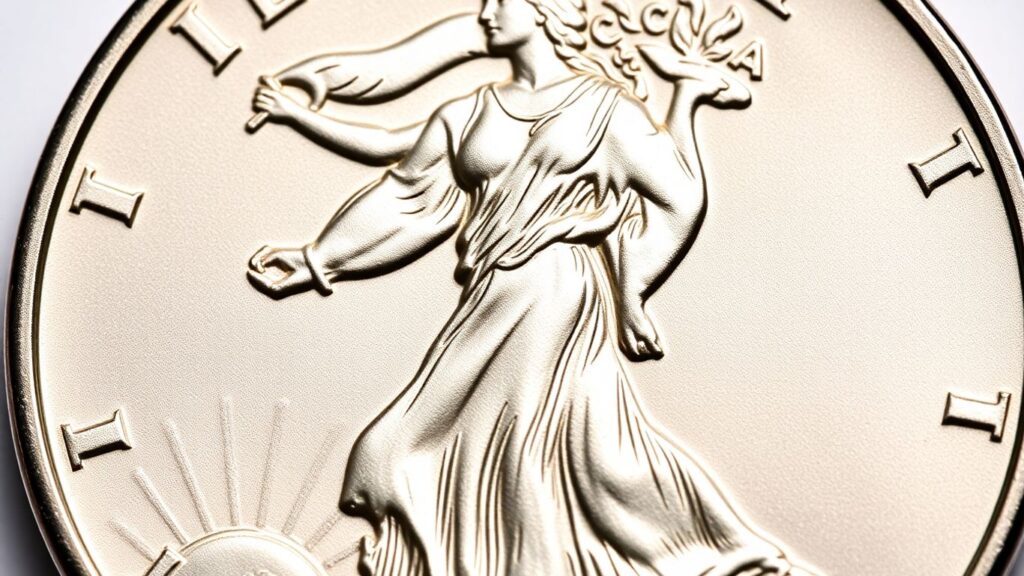
The job of creating this new look went to a sculptor named Adolph A. Weinman. He was already known for his work, and he really knocked it out of the park with this design. He came up with the image of Lady Liberty walking forward, draped in the flag, heading towards the sun. It’s a powerful picture, showing progress and hope. On the other side, there’s an eagle perched on a rock, looking strong and ready. Weinman’s work was a big deal because it was so different and so beautiful compared to what people were used to seeing on coins.
Symbolism Etched In Silver
Every part of the Walking Liberty Half Dollar is packed with meaning. Lady Liberty, with her determined stride, represents the nation moving forward. The laurel and oak branches she carries symbolize peace and strength. The rising sun behind her? That’s all about a new beginning and the promise of a bright future for America. The eagle on the reverse is a classic symbol of the U.S., standing for power and freedom. It’s like a mini history lesson and a patriotic message all rolled into one coin.
The design was so well-received that it’s still admired today, and elements of it have even been brought back for modern coin programs. It really shows how a good design can stand the test of time.
Here’s a quick look at what the design elements represent:
- Lady Liberty: Represents freedom, progress, and the nation’s forward momentum.
- Rising Sun: Symbolizes a new dawn, hope, and future opportunities.
- Laurel and Oak Branches: Signify peace and strength, respectively.
- Eagle: A powerful emblem of the United States, representing independence and might.
The Walking Liberty Half Dollar Series
A New Era In American Coinage
The Walking Liberty Half Dollar, first minted in 1916, marked a significant shift in American coinage. It replaced the Barber half dollar, which had been in circulation for over two decades. This new design was part of a broader effort to modernize the nation’s currency, bringing a fresh artistic vision to everyday money. The coin’s introduction coincided with a period of national growth and optimism, and its design aimed to capture that spirit.
The Visionary Design Of Adolph A. Weinman
Sculptor Adolph A. Weinman was the creative force behind this iconic coin. He was tasked with designing not only the half dollar but also the Mercury dime, both of which debuted in 1916. Weinman’s work on the Walking Liberty Half Dollar is widely considered a masterpiece, celebrated for its artistic merit and detailed execution. He managed to imbue the coin with a sense of movement and grace that was quite revolutionary for its time.
Symbolism Etched In Silver
The obverse of the coin features Lady Liberty in full stride, moving towards the rising sun. She’s draped in the American flag, holding branches of laurel and oak, symbolizing civil and military glory. This powerful imagery represents hope, progress, and the nation’s forward momentum. The reverse side showcases a majestic eagle perched on a rocky crag, wings partially spread, ready to take flight. This symbolizes strength, freedom, and the country’s readiness to face the future. The entire design is a beautiful representation of American ideals and aspirations, making it more than just a coin; it’s a piece of art that tells a story about the nation. The Walking Liberty Half Dollar was minted from 1916 until 1947, with the 1946 issue being one of the last in the series.
Minting History And Key Dates
The Walking Liberty Half Dollar series ran for over three decades, from 1916 to 1947. During this time, millions of these coins were produced at the Philadelphia, Denver, and San Francisco mints. While most dates are relatively common and affordable, some specific mint marks and years are more sought after by collectors. For instance, the 1921-D and 1921-S are scarcer due to lower mintages. The 1938-D is also a key date, often commanding higher prices because of its limited production. Finding coins in high-grade condition, especially those with sharp strikes, can be a challenge, as the design’s high points, like Liberty’s head and hand, and the eagle’s breast, were prone to wear.
Design Variations And Their Significance
While the core design remained consistent throughout the series, there are subtle variations and minting characteristics that collectors look for. One of the most significant is the quality of the strike. Due to the coin’s intricate design, some pieces were struck weakly, resulting in soft details. Conversely, coins with a full, sharp strike, showing all the fine details clearly, are more desirable and command higher prices. Another area of interest for advanced collectors is the presence of mint errors, such as double dies or off-center strikes, which add rarity and uniqueness to individual coins.
The Enduring Appeal Of The Series
What makes the Walking Liberty Half Dollar series so popular? For many, it’s the sheer beauty of Weinman’s design. It’s considered one of the most aesthetically pleasing coins ever produced by the U.S. Mint. Beyond its looks, the coin represents a specific era in American history, a time of change and optimism. Many collectors enjoy putting together a complete set, tracking down different dates and mint marks. The fact that it’s made of 90% silver also adds to its intrinsic appeal, giving it a tangible value beyond its numismatic worth. The design’s lasting impact is undeniable, even being brought back for modern bullion coins.
Here’s a quick look at some key dates and their general rarity:
| Year | Mint Mark | Relative Rarity |
|---|---|---|
| 1916 | (No Mint Mark) | Scarce |
| 1917 | D | Common |
| 1919 | D | Scarce |
| 1921 | D | Very Scarce |
| 1921 | S | Very Scarce |
| 1927 | S | Scarce |
| 1938 | D | Key Date (Very Scarce) |
| 1942 | D | Scarce |
The Walking Liberty Half Dollar series is a cornerstone for many coin collections. Its blend of artistic excellence, historical significance, and silver content makes it a consistently sought-after series for both new and experienced numismatists. The challenge often lies not just in finding the dates, but in acquiring them in pleasing, well-struck condition.
Focus On The 1946 Walking Liberty Half Dollar
A Final Chapter In The Series
The 1946 Walking Liberty Half Dollar marks a significant point for collectors because it’s one of the last coins produced in this beloved series. The entire run officially wrapped up in 1947, so getting your hands on a 1946 piece means you’re holding a coin from the very end of an era. It’s a tangible link to a time of national rebuilding and looking forward after World War II.
The Significance Of The 1946 Mint Year
This particular year is notable for a couple of reasons. For starters, it represents the tail end of a design that had been around since 1916, a period of immense change in America. The imagery of Lady Liberty walking towards the sun, with the eagle on the reverse, really captured the spirit of progress and hope. But what really gets collectors excited about the 1946 is the possibility of finding a double die reverse error. This isn’t super common, but when it happens, it makes the coin much more interesting and, of course, valuable. You’re looking for a slight doubling on the details of the eagle or the lettering on the back.
Minting errors, like the double die reverse, are fascinating because they show us that even with precise machinery, human hands and mechanical processes can sometimes lead to unique, unintended results. These aren’t just mistakes; they’re historical footnotes that add character to a coin.
Collecting The Last Of Its Kind
If you’re aiming to complete a Walking Liberty Half Dollar set, the 1946 is a must-have. It’s a key date for many collectors, especially those looking for the final issues. When you’re hunting for one, keep these points in mind:
- Condition is key: Even though it’s a later date, a well-preserved 1946 can be quite valuable. Look for coins with minimal wear.
- Mint marks matter: While most 1946s were made in Philadelphia (no mint mark), Denver (D) and San Francisco (S) also produced them, and these can sometimes be scarcer.
- The double die reverse: This is the holy grail for many 1946 collectors. Finding one significantly increases the coin’s appeal. You can check resources like the NGC website for more details on identifying these errors.
Finding a 1946 Walking Liberty Half Dollar, especially one with a rare error, is like finding a little piece of history that tells a story of both national ideals and the quirks of the minting process.
Understanding The Double Die Reverse Error
Sometimes, when coins are being made, things don’t go perfectly. One of the more interesting mistakes that can happen is called a "double die reverse." This isn’t just a little slip-up; it’s a pretty noticeable error that happens when the die used to stamp the coin’s back side (the reverse) gets hit twice, or is misaligned during the striking process. This causes a ghost-like image or a "doubling" of the design elements.
What Constitutes A Double Die Error?
A double die error happens during the minting process itself. Basically, the die that strikes the coin’s image onto the metal planchet is prepared in stages. If, during one of these stages, the die is slightly shifted before the second impression is made, you end up with a doubled image. It’s not like a coin that’s just been worn down or hit again later; this doubling is part of the original strike. The key is that the doubling is part of the die itself, not a result of wear or damage after the coin left the mint.
Identifying Doubling On The Reverse
Spotting a double die reverse on a Walking Liberty Half Dollar takes a keen eye, especially if you’re new to coin collecting. You’ll want to grab a magnifying glass or a jeweler’s loupe for this. Focus on the reverse side of the coin. Look closely at the lettering, like "UNITED STATES OF AMERICA" and "HALF DOLLAR." You might see a distinct "shadow" or a second, fainter impression of the letters. The eagle’s feathers and the rays on the reverse are also common places to see this doubling effect. It’s not always super obvious, so comparing your coin to a known, non-error example can be really helpful.
Here’s a quick checklist:
- Examine the words "UNITED STATES OF AMERICA."
- Check the words "HALF DOLLAR."
- Look closely at the details of the eagle, especially its feathers.
- Inspect the sun’s rays.
The Rarity Of The 1946 Double Die Reverse
The 1946 Walking Liberty Half Dollar with a double die reverse is considered quite rare. Because these errors happened during a specific, limited time in the minting process, not many coins were affected. This scarcity is what makes them so interesting to collectors. While exact numbers are hard to pin down, it’s safe to say that finding one is a special event. It’s not something you’ll likely find in a big pile of regular change. Owning one means you’ve got a piece of minting history that most people never see.
The allure of a double die error lies in its imperfection. It’s a tangible reminder that even in highly controlled industrial processes, human error or mechanical quirks can create unique artifacts. For collectors, these errors are not flaws but rather fascinating deviations that add character and rarity to a coin, making it stand out from the millions of perfectly struck examples.
The History And Value Of Walking Liberty Half Dollars
Historical Context Of The Series
The Walking Liberty Half Dollar series, minted from 1916 to 1947, represents a significant chapter in American numismatic history. Its creation came at a time when the U.S. was transitioning through major global events, including World War I and the lead-up to World War II. The design itself, a departure from previous coinage, was intended to embody the nation’s spirit and ideals during a period of change and growth. The series concluded just after World War II, marking the end of an era and paving the way for new designs.
Factors Influencing Coin Value
Several things can affect how much a Walking Liberty Half Dollar is worth. Of course, the date and mint mark play a big role – some years were made in much smaller numbers than others. The condition of the coin is also super important; a coin that looks like it just came from the mint will be worth a lot more than one that’s been worn down from lots of use. Then there are the special cases, like errors during minting, which can make a coin incredibly rare and thus, more valuable. Silver content is another big factor, especially when silver prices go up.
Here’s a quick look at some general value ranges, keeping in mind these are just estimates:
| Condition | Average Value Range |
|---|---|
| Circulated (Good) | $10 – $20 |
| Circulated (Fine) | $15 – $30 |
| Uncirculated (AU) | $40 – $100+ |
| Mint State (MS-65) | $100 – $500+ |
Note: These values can fluctuate based on market demand and silver prices.
The Collector's Market For These Coins
People really seem to like collecting these half dollars. It’s not just about the money, though that’s part of it. Many collectors are drawn to the beautiful design and the history each coin represents. The series offers a good range for different budgets, from common dates in worn condition to rare key dates in perfect shape. Plus, the fact that they’re made of silver adds a certain appeal, especially when the price of silver is on the rise. It’s a market that seems pretty stable, with steady interest from both new and experienced collectors.
The allure of the Walking Liberty Half Dollar lies not just in its silver content or its age, but in the tangible connection it provides to a specific period in American history. Each coin is a small piece of art, a testament to a time when national identity and progress were visually represented on everyday currency.
Identifying And Authenticating Your Coin
So, you’ve got a Walking Liberty Half Dollar, maybe you found it in a grandparent’s old coin jar, or perhaps you picked it up at a flea market. That’s pretty cool! But how do you know if it’s just a regular old coin, or something a bit more special, like that elusive double die reverse error we talked about? It’s not always obvious, and honestly, sometimes it takes a good magnifying glass and a bit of patience.
Tips For Spotting A Double Die Reverse
Spotting a double die error, especially on the reverse (that’s the eagle side), isn’t always straightforward. It’s not like a big, obvious scratch. You’re looking for subtle shifts in the lettering or design elements. Here’s what to keep an eye out for:
- Lettering: Check the words "UNITED STATES OF AMERICA," "E PLURIBUS UNUM," and "HALF DOLLAR." On a double die, you might see a slight "ghosting" or a doubling effect, particularly on the serifs (the little feet) of the letters or the edges of the numerals in the date.
- The Eagle: Look closely at the eagle itself. Details like the feathers, talons, or even the stars above it might show a faint second image or a spreading effect.
- The Rays: The sun’s rays emanating from behind the eagle can sometimes exhibit doubling, appearing thicker or slightly offset.
It’s important to remember that wear on a coin can sometimes mimic doubling. That’s why comparing your coin to known examples or high-quality images is super helpful.
The Role Of Professional Grading Services
If you’re really serious about a coin, or if you think you’ve found something rare like a 1946 double die reverse, sending it off to a professional grading service is a smart move. Companies like PCGS (Professional Coin Grading Service) and NGC (Numismatic Guaranty Company) are the big names in the business. They have experts who know these coins inside and out. They’ll examine your coin under magnification, check its authenticity, and assign it a grade based on its condition. A slabbed coin from a reputable service gives you a lot of confidence in what you own. It’s like getting a birth certificate for your coin, proving what it is and what condition it’s in. This is especially important if you’re thinking about selling or if the coin has significant value.
Distinguishing Genuine Errors From Wear
This is where things can get tricky. A coin that’s been handled a lot over the years will naturally show wear. This wear can soften details, round off edges, and make things look a bit fuzzy. A true double die error, however, is a result of the minting process itself. The doubling will typically be sharp and consistent across the affected areas, not just a general softening. It’s a distinct, secondary impression. Wear, on the other hand, is a gradual erosion of the original design. You might see worn spots on high points of the coin, but a double die error affects specific design elements in a particular way. It’s a bit like the difference between a smudge on a photograph and a double exposure – one is damage, the other is a distinct, albeit unintended, duplication.
When you’re examining a coin for errors, try to do it in good lighting. Natural daylight is often best. Avoid using harsh chemicals or cleaning the coin yourself, as this can actually damage it and reduce its value. If you’re unsure, it’s always better to err on the side of caution and consult with a trusted coin dealer or a grading service.
The Value Proposition Of Walking Liberty Half Dollars
So, why do people get so excited about these Walking Liberty half dollars? It’s not just about having a piece of history in your hand, though that’s a big part of it. These coins have a few things going for them that make collectors really keen to track them down.
Factors Driving Collector Demand
First off, the design itself is a huge draw. Adolph Weinman really knocked it out of the park with Lady Liberty striding confidently towards the sun. It’s a beautiful image, and it really speaks to a sense of optimism and progress, which folks seem to appreciate. Plus, it’s a pretty substantial coin, made of 90% silver, which gives it a baseline value that’s more than just its numismatic appeal. Think about it: you’ve got art, history, and precious metal all rolled into one.
- Artistic Merit: The design is widely considered one of the most attractive ever to grace an American coin.
- Historical Significance: These coins were minted during a transformative period in American history, from the roaring twenties through World War II and into the post-war era.
- Silver Content: The inherent value of the silver provides a floor for the coin’s price, making it attractive to both collectors and investors.
- Series Completion: Many collectors aim to assemble a complete set of Walking Liberty half dollars, driving demand for key dates and scarcer issues.
The Impact Of Silver Content On Value
Now, about that silver. Back when these coins were made, silver was a much more common part of our currency. Today, that 90% silver content means each coin has a melt value. This melt value fluctuates with the price of silver on the global market. So, even a common Walking Liberty half dollar will always be worth at least the value of the silver it contains. This gives collectors a bit of a safety net, knowing their coin has intrinsic worth beyond its rarity or condition.
| Year Range | Silver Purity | Silver Weight (troy oz) | Approximate Melt Value (as of Nov 26, 2025) |
|---|---|---|---|
| 1916-1947 | 90% | 0.3611 | $9.50 – $10.50 (varies with silver price) |
It’s important to remember that for most Walking Liberty half dollars, especially the more common dates in circulated condition, the numismatic value (what collectors are willing to pay for the coin itself) is often higher than the melt value. However, the silver content provides a solid foundation for its worth.
Appreciation Potential For Key Dates
When you get into the specific dates and mint marks, things get really interesting. Some coins, like the 1916-S or the 1921-D, were made in much smaller numbers. These are what collectors call "key dates." Because they’re harder to find, especially in good condition, their prices can really climb. Add in any minting errors, like a double die reverse on a 1946, and you’ve got something truly special that can be worth a significant amount more than its silver or its common counterparts. It’s this combination of beauty, history, silver, and scarcity that makes these coins such a compelling part of the numismatic world.
Caring For Your Numismatic Treasures
Proper Storage and Handling Techniques
So, you’ve got some Walking Liberty Half Dollars, huh? That’s pretty cool. These coins have seen a lot, and if you want them to keep looking good and holding their value, you’ve got to treat them right. First off, forget about touching them with your bare hands. Seriously, the oils and dirt from your skin can actually damage the coin’s surface over time, leading to dull spots or even corrosion. It sounds a bit much, but it’s best to handle them by the edges using soft cotton gloves or a coin holder. When it comes to storing them, you want to avoid anything that can harm the metal. Plastic bags from the grocery store? Nope. Those often contain PVC, which is a big no-no for coins. Instead, look for archival-quality holders. These can be individual flips made from Mylar, or you can get them professionally graded and slabbed by services like PCGS or NGC. These slabs are pretty much the gold standard for protection. If you’re storing a bunch of them, a coin album with proper slots or a sturdy coin box designed for numismatic items is a good bet. Just make sure whatever you use is acid-free and won’t react with the silver.
Preventing Damage and Tarnishing
Keeping your Walking Liberties looking sharp means being mindful of their environment. Tarnishing, that dark film that can appear on silver, is a natural process, but you can slow it down. It’s mostly caused by sulfur compounds in the air. So, keeping your coins in a stable environment with low humidity is key. Avoid storing them in places like basements or attics where temperature and humidity can swing wildly. A dry, climate-controlled room is ideal. Now, about cleaning them – this is a big one. Most collectors agree that cleaning a coin almost always reduces its value. Even a gentle wipe can create microscopic scratches that are visible under magnification. That dull, dark patina some coins develop? That’s often seen as a sign of age and authenticity, and it can actually add to the coin’s appeal and value. So, resist the urge to polish them up. If a coin is heavily tarnished, it’s usually better to leave it as is or consult with a professional numismatist before doing anything drastic. Think of it like an old photograph; you wouldn’t try to ‘clean’ the faded parts, right? Same idea here.
Preserving the Condition For Future Value
When you’re thinking about the long haul with your Walking Liberty Half Dollars, it’s all about preservation. The condition of a coin, often referred to as its grade, is the biggest factor in its value, especially for more common dates. A coin that’s been kept in pristine, uncirculated condition will be worth significantly more than one that’s been handled a lot and shows wear. So, if you’re lucky enough to have a high-grade coin, your primary goal should be to keep it that way. This means using those archival holders we talked about, storing them properly, and handling them as little as possible. For those really valuable or rare pieces, you might even consider a safe deposit box or a home safe that offers protection against fire and theft. It’s not just about keeping them safe from physical damage, but also about maintaining that original mint luster and detail that collectors prize. Remember, these coins are little pieces of history, and taking good care of them ensures that history can be appreciated for generations to come. It’s a bit like being a custodian for a small artifact, and that’s a pretty neat responsibility to have.
The Legacy And Resurgence Of The Design
The Walking Liberty Design's Influence
The Walking Liberty Half Dollar, with its iconic imagery, didn’t just disappear when its run ended in 1947. Its beauty and symbolism left a lasting mark on American coinage. Think about it, this design was around for over three decades, becoming a familiar sight for millions. It represented a hopeful, forward-looking America, and that message stuck.
Reintroduction In Modern Coinage Programs
It turns out that great designs don’t stay retired forever. The U.S. Mint recognized the enduring appeal of Adolph A. Weinman’s creation. In 1986, they brought back the Walking Liberty design, but not on a half dollar. Instead, it became the star of the American Silver Eagle bullion coin. This was a big deal! It showed just how much people still loved the image of Lady Liberty striding towards a brighter future. The Silver Eagle program has been incredibly popular, proving that this design still has serious staying power.
Enduring Popularity Among Collectors
Why do collectors love it so much? Well, for starters, it’s just a really beautiful coin. The detail in Lady Liberty’s flowing gown and the proud eagle on the reverse are top-notch. Plus, there’s that whole silver content thing with the Silver Eagles, which adds another layer of appeal. But beyond the metal and the minting, it’s the story the coin tells. It’s a piece of American history you can hold in your hand. It connects us to a time of optimism and progress, and that’s something pretty special.
Here’s a quick look at the Silver Eagle program’s success:
- American Silver Eagle Bullion Coins: First minted in 1986, featuring the Walking Liberty obverse.
- American Gold Eagle Coins: While not featuring the Walking Liberty design, they are part of the same modern bullion program, highlighting the Mint’s focus on iconic American imagery.
- Commemorative Issues: The original 1916 designs, including the Walking Liberty, were honored on gold coins in 2016 for their centennial, further cementing their place in numismatic history.
The decision to reuse the Walking Liberty design on the Silver Eagle was a smart move by the Mint. It tapped into a pre-existing appreciation for the artwork and provided a tangible link between classic American numismatics and modern bullion collecting. It’s a win-win, really.
It’s fascinating how a design from over a century ago can still capture the imagination and hold such significant value, both intrinsically and historically. The Walking Liberty Half Dollar truly earned its place as a classic.
More Than Just Metal
So, we’ve walked through the story of the Walking Liberty Half Dollar, from its beautiful design to those rare errors like the 1946 double die reverse. It’s pretty clear these aren’t just old coins sitting in a jar. They’re little pieces of history, showing us what folks were thinking and feeling back then. Whether you’re looking to start collecting or just appreciate a good story, these half dollars have a lot to offer. They remind us that sometimes, the most interesting treasures are the ones that have been around for a while, just waiting to be noticed again.
Frequently Asked Questions
What makes the Walking Liberty Half Dollar special?
The Walking Liberty Half Dollar is famous for its beautiful design, showing Lady Liberty walking towards the sun. It was made for many years, and people loved its look. It’s like a piece of art you can hold.
Why is the 1946 version important?
The 1946 coin is special because it was one of the last ones made in the Walking Liberty series, which ended the next year. It’s like the final chapter of a great story.
What is a 'double die reverse' error?
A ‘double die reverse’ is a mistake made when the coin is stamped. It’s like the image on the back of the coin was stamped twice, making some parts look blurry or doubled. It’s pretty rare and makes the coin interesting.
How can I tell if my 1946 half dollar has this error?
You’ll need to look very closely at the back of the coin, maybe with a magnifying glass. Look for any doubled letters or parts of the design, especially around the eagle. It’s a subtle thing, so a good light helps!
Are these error coins valuable?
Yes, coins with errors like the double die reverse are often more valuable to collectors because they are harder to find. The exact value depends on how clear the error is and the coin’s overall condition.
How do I know if my coin is real and in good shape?
For valuable coins, it’s best to have them checked by an expert, like a coin grading service. They can tell you if it’s genuine, confirm any errors, and give it a grade based on its condition.
What makes a coin valuable besides errors?
A coin’s value can depend on many things: how rare it is, its condition (is it worn out or shiny?), how much silver it has, and how many people want to collect it. Older coins with popular designs are often very sought after.
Where can I learn more about collecting these coins?
You can find lots of information online from coin collecting websites, in books about coins, or by talking to experienced coin dealers. Joining a local coin club is also a great way to learn from others.