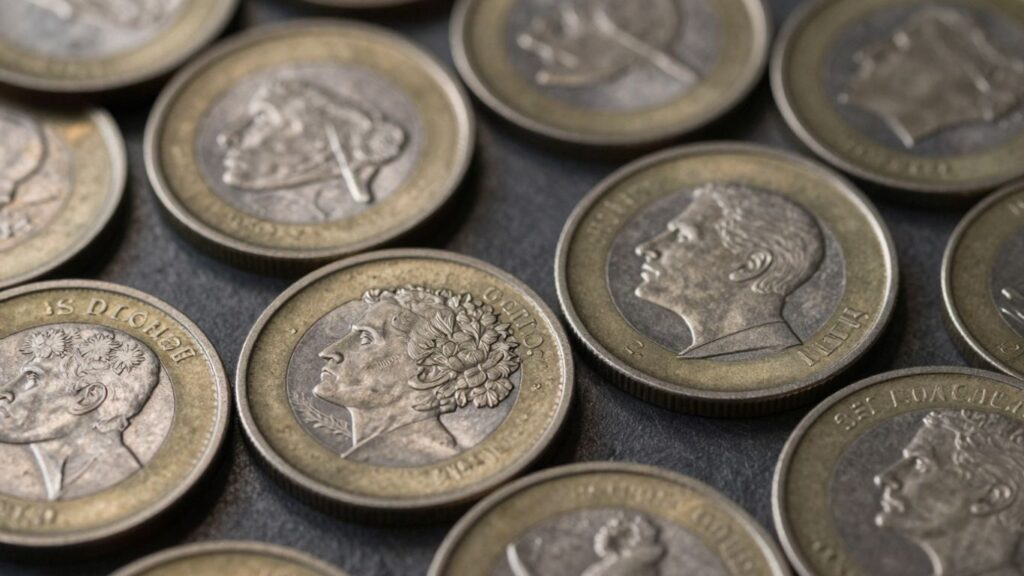
Ever look at your loose change and wonder if there’s a hidden treasure in there? You’re not alone. Many people have a jar of coins stashed away, maybe inherited or just forgotten. The truth is, some of those everyday coins could be worth a lot more than their face value. It’s all about knowing what to look for, and that’s what we’re going to explore. We’ll talk about how to spot valuable varieties in common coins, so you can turn that pocket change into something special.
Key Takeaways
- Many common U.S. coins found in circulation can be worth significantly more than their face value due to specific dates, mint marks, or errors.
- Low mintage numbers, minting mistakes (like double dies or off-center strikes), and historical significance are primary reasons certain coins become rare and valuable.
- Tools like a magnifying glass, coin catalogs, and online resources are helpful for examining coins closely and researching their potential worth.
- The condition of a coin, often described using grading scales like the Sheldon Scale, greatly impacts its value, with uncirculated coins typically being the most prized.
- Learning to identify key dates, mint marks, and common error types can help you find valuable varieties in your own coin collection.
Uncovering Value in Everyday Pocket Change
You know, that jar of loose change sitting on your dresser? It might be worth more than you think. Seriously. Coin collecting isn’t just for folks in dusty shops with magnifying glasses; sometimes, the real treasures are just hiding in plain sight, mixed in with the pennies and dimes you get back from the grocery store. It’s kind of wild when you stop and consider it.
Identifying Valuable Coins in Circulation
So, how do you even start looking? It’s simpler than you might imagine. You just need to pay a little more attention to the coins you handle every day. Think of it like a treasure hunt, but the map is your own pocket.
- Look for older coins: Especially those made before 1965. Many of these were struck using silver, which has its own value separate from the coin’s face amount. Dimes and quarters from before ’65 are good examples.
- Check the dates: Certain years were produced in much smaller numbers than others. These ‘key dates’ are often more sought after by collectors.
- Examine for mistakes: Sometimes, the minting process isn’t perfect. Off-center strikes, doubled images, or other oddities can make a coin unique and, therefore, more valuable.
It’s easy to dismiss a coin as just a coin, but a tiny detail, a specific year, or a manufacturing quirk can change its status from pocket filler to something genuinely interesting to collectors. The trick is knowing what to look for.
Common U.S. Coins Worth More Than Face Value
It’s not just about super rare, ancient coins. Plenty of common U.S. currency can surprise you. Lincoln cents, for instance, have a long history, and certain mint years or specific errors can make them quite desirable. Even state quarters, while modern, can have varieties that collectors hunt for. Don’t forget about nickels and dimes either; some older ones might contain silver, and specific mint marks or dates can add a premium.
| Coin Type | Potential Value Factors | Notes |
|---|---|---|
| Lincoln Cent | Key dates (e.g., 1909-S, 1931-S), mint errors, copper | |
| Buffalo Nickel | Key dates (e.g., 1937-D 3-Legged), condition | |
| Mercury Dime | Silver content (pre-1965), key dates (e.g., 1916-D) | |
| Washington Quarter | Silver content (pre-1965), error varieties | |
| State Quarters | Error varieties (e.g., ‘Extra Leaf’ 2004-D Wisconsin) |
The Magic of Rare Coins
What makes a coin truly ‘rare’ and desirable? It’s usually a mix of things. Low production numbers are a big one – if only a few thousand were made, they’re naturally harder to find. Then there are minting errors, like those doubled dies or off-center strikes we talked about. Sometimes, a coin’s historical connection or a unique feature, like a special mark or a particularly striking design, adds to its appeal. It’s this combination of scarcity, unique characteristics, and collector interest that gives certain coins their ‘magic’ and significant value.
What Makes Certain Coins Exceptionally Valuable
So, you’ve got a handful of coins, and you’re wondering if any of them are more than just pocket change. It’s a fair question! Not all coins are created equal, and a few key things can turn a common coin into something quite special. It’s not just about age; sometimes, it’s about how the coin was made or what happened to it over time.
The Role of Low Mintage Numbers
Think of it like this: if a company makes a million of something, it’s pretty common. If they only make a hundred, it’s much harder to find. The same applies to coins. "Mintage numbers" just means how many of a specific coin were produced in a certain year at a particular mint. When those numbers are low, the coin becomes rarer, and collectors are often willing to pay more for it. It’s simple supply and demand, really.
Here’s a quick look at how mintage can affect things:
| Coin Series Example | Year | Mint Mark | Mintage | General Rarity | Potential Value |
|---|---|---|---|---|---|
| Lincoln Cent | 1909-S | S | 424,000 | Rare | High |
| Washington Quarter | 1932-D | D | 436,800 | Rare | High |
| Jefferson Nickel | 1938-D | D | 1,202,000 | Scarce | Moderate |
| Roosevelt Dime | 1949-S | S | 1,220,000 | Scarce | Moderate |
Note: "Potential Value" is highly dependent on condition and other factors.
Understanding Minting Errors and Varieties
Sometimes, the mint messes up, and that’s good news for collectors! These "errors" can make a coin unique and sought after. It could be anything from a die that was struck twice (a "double die") to a coin that wasn’t perfectly centered on the metal disc it was struck from ("off-center strike"). These aren’t just flaws; they’re often what make a coin stand out from the thousands of others made the same way.
Some common errors to keep an eye out for include:
- Double Dies: When the die used to strike the coin is accidentally doubled, causing letters or design elements to appear doubled.
- Off-Center Strikes: The coin blank isn’t perfectly aligned under the die, resulting in a design that’s cut off on one side.
- Struck Through: When something foreign, like a piece of cloth or metal, gets between the die and the coin blank during striking, leaving an impression or a hole.
- Clipped Planchets: The metal disc (planchet) used to make the coin was cut from a sheet of metal where another coin was already partially punched out, leaving a "bite" mark.
Mistakes during the minting process, while unintended, can create one-of-a-kind pieces. These aren’t just damaged coins; they are anomalies that collectors actively seek out because of their rarity and the story they tell about the manufacturing process.
Historical Significance and Unique Features
Beyond just how many were made or if there was a mistake, a coin’s story can also add to its appeal. Was the coin minted during a significant historical event? Does it have a unique design feature that was only used for a short time? These elements can make a coin more interesting to collectors, driving up demand and, consequently, its worth. Think about coins that represent a specific era or a particular artistic style that was later changed. These pieces become tiny historical artifacts, capturing a moment in time that people want to preserve.
Essential Tools for Coin Identification
So, you’ve got a pile of change and you’re wondering if there’s a hidden gem in there. That’s awesome! But looking at coins without the right gear can be like trying to read a book in the dark. You need a few things to really see what you’re looking at.
Magnifying Glass for Detailed Examination
This is probably the most important thing to get. You can’t see the tiny details on a coin with just your eyes, especially if you’re looking for mint marks or small errors. A good magnifying glass, maybe something with 5x or 10x magnification, will let you see things like:
- Mint Marks: Those little letters (like ‘D’ for Denver or ‘S’ for San Francisco) that tell you where the coin was made. They can be super small!
- Date Details: Sometimes the numbers in the date can be worn down or have slight variations that matter.
- Die Varieties: Things like a
Key Factors in Determining Coin Worth
So, you’ve got a handful of coins and you’re wondering if any of them are more than just pocket change. It’s a fair question! Several things really make a coin go from common to collectible. It’s not just one thing, but a mix of factors that collectors and dealers look at. Let’s break down what makes some coins worth a lot more than others.
Rarity and Mintage Figures
This is a big one. If only a small number of a particular coin were ever made, it’s naturally going to be harder to find. This is what we mean by rarity. The number of coins a mint actually produced in a given year is called the mintage figure. Lower numbers usually mean higher value, assuming there’s demand for that coin. Think about it: if there are only 1,000 of something in the whole world, and 10,000 people want it, that thing is going to be pretty pricey. The opposite is true too; if millions were made, it’s probably not going to be worth much unless something else makes it special.
Here’s a quick look at how mintage can affect things:
- Low Mintage: Fewer coins produced, generally higher rarity and potential value.
- High Mintage: Many coins produced, generally lower rarity and value.
- Survival Rate: Even if many were minted, how many are still around today? Coins lost, melted, or damaged reduce the available supply.
Sometimes, a coin’s story adds to its rarity. A coin that wasn’t supposed to exist, or one where most were destroyed, can become incredibly sought after just because of its unusual history and the few examples that managed to survive.
The Impact of Coin Condition and Grading
Even if a coin is super rare, if it looks like it’s been through a washing machine, its value will drop quite a bit. Condition is everything in the coin world. We’re talking about wear and tear. A coin that looks almost brand new, with all its original details sharp and clear, is in much better shape than one that’s heavily worn down. This is where grading comes in. Professional services look at coins and give them a score, usually on a scale from 1 to 70. The higher the score, the better the condition, and generally, the higher the price.
Here are some general ideas about condition:
- Mint State (MS): These coins show no signs of wear. They look like they just came from the mint. The higher the MS number (like MS-65 or MS-67), the more perfect it is.
- Extremely Fine (XF): Shows very light wear, but most details are still clear.
- Fine (F): Noticeable wear, but the main features of the coin are still visible.
- Good (G): Heavy wear, major details might be worn flat.
Metal Content and Intrinsic Value
Some coins are made of precious metals like gold or silver. These coins have what’s called intrinsic value, meaning the metal they’re made of is worth something on its own. The price of gold and silver changes daily, so a coin made of these metals will fluctuate in value based on the market. Even if a coin isn’t particularly rare or in perfect condition, its metal content can give it a baseline value. For example, a silver dollar from the 1800s might not be a key date, but it will still be worth at least the melt value of the silver it contains. This is something to keep in mind, especially with older coins that might be made of silver or gold.
Spotting Key Dates and Mint Marks
Identifying Rare Dates
When you’re sifting through your change, a coin’s date can be a big clue to its potential worth. Some years, the U.S. Mint just didn’t produce a lot of a particular coin. These low-production years are what collectors call "key dates." Finding one of these can be like hitting the jackpot, especially if the coin is in good shape. It’s not just about the year itself, but how many of that specific coin were actually made. Think of it like a limited edition item – the fewer there are, the more people want it.
Understanding the Significance of Mint Marks
Ever notice those tiny letters on coins? Those are mint marks, and they tell you where the coin was made. The main ones you’ll see are ‘D’ for Denver, ‘S’ for San Francisco, and often no letter at all for Philadelphia. Sometimes, a coin made in a particular year at one mint might be much rarer than the same coin made at another. For example, a coin from the San Francisco mint in a specific year might have had a much smaller run than the one from Denver. This difference in production numbers is a huge factor in how collectible and valuable a coin becomes. The combination of a key date and a less common mint mark is often where the real treasure lies.
Examples of Key Date and Mint Mark Coins
It helps to know some specific examples of what to look for. These aren’t the only ones, of course, but they’re good starting points:
- Lincoln Cents: The 1909-S VDB (San Francisco, with designer’s initials) is famous. Also, look out for the 1914-D (Denver).
- Buffalo Nickels: The 1937-D is a popular one, especially if you can find one with a bit of wear but still showing detail.
- Mercury Dimes: The 1916-D is a classic rarity.
- Washington Quarters: The 1932-D and 1932-S are the first issues and had very low mintages.
Remember, even if a coin has a key date or a rare mint mark, its condition plays a massive role. A worn-out key date might be worth less than a common coin in perfect condition. Always check both aspects.
Here’s a quick look at some notable combinations:
| Coin Type | Key Date/Mint Mark | Notes |
|---|---|---|
| Lincoln Cent | 1909-S VDB | Low mintage, designer initials |
| Buffalo Nickel | 1937-D | Key date for this series |
| Mercury Dime | 1916-D | Extremely low mintage |
| Washington Quarter | 1932-D / 1932-S | First year of issue, low production numbers |
| Morgan Dollar | 1893-S | Very scarce, highly sought after |
Common Minting Errors to Look For
Sometimes, the most interesting finds aren’t the ones that look perfect. In fact, mistakes made during the minting process can turn an ordinary coin into something quite special, and often, quite valuable. These aren’t just flaws; they’re historical accidents that collectors actively seek out. Think of them as tiny, metallic fingerprints left by the machines that made them.
Recognizing Double Dies and Off-Center Strikes
One of the most talked-about errors is the double die. This happens when the die used to strike the coin gets struck itself, causing a slight shift before the coin is made. The result? You see a ghosting effect, where letters, numbers, or design elements appear doubled. It’s not just a blurry impression; it’s a distinct, often dramatic, doubling. You might see it on the date, the motto, or even the portrait.
Another common issue is an off-center strike. Imagine the coin blank (called a planchet) not being perfectly positioned in the press. The design will be heavily tilted, with a large blank area on one side and the design pushed towards the other. Sometimes, the strike is so far off that a significant portion of the design is missing entirely.
Identifying Broadstrikes and Clipped Planchets
A broadstrike occurs when the collar that normally keeps the coin’s shape during striking is missing or fails. Instead of a nice, round coin with a reeded edge, the metal is forced outwards, creating a larger, often oval-shaped coin. It looks like it’s spread out, almost like a pancake.
Then there are clipped planchets. These are coin blanks that were cut from a sheet of metal in a way that left a crescent-shaped notch. If this imperfect blank makes it into the press, the resulting coin will have a distinct bite taken out of its edge. It’s a pretty obvious sign that something went wrong before the striking even happened.
Spotting Lamination Errors and Other Anomalies
Lamination errors are a bit different. They happen when the metal used for the planchets isn’t perfectly uniform, leading to layers that don’t bond well. Over time, or sometimes right from the mint, these layers can start to peel apart. You might see a flake or a blister on the surface of the coin, or even a piece of the metal might have flaked off entirely, revealing the layered structure underneath.
Beyond these, there are countless other small mistakes. Sometimes a die might break, leaving a crack or a raised line on the coin. Other times, foreign objects can get caught in the press, creating odd marks or indentations. Even a missing mint mark, while not strictly an error, can make a common coin surprisingly rare.
Keep in mind that not every imperfection means a coin is valuable. Some errors are more common than others, and the overall condition of the coin still plays a big role. But learning to spot these manufacturing quirks is a great way to start looking for those hidden treasures in your pocket change.
Famous Varieties Hiding in Plain Sight
You know, sometimes the most interesting coins aren’t the ones that look ancient or have a fancy story. They’re the ones that look like regular change you might find in your pocket or a piggy bank. It’s wild to think that a coin you might overlook could actually be worth a good chunk of money. These aren’t necessarily super old coins; some are quite modern but have a little something extra that makes them special to collectors.
The 2000 Sacagawea 'Cheerios' Dollar
This one is a bit of a legend. Back in 2000, when the Sacagawea dollar was first released, some promotional dollars were put into Cheerios cereal boxes. Now, these weren’t just any Sacagawea dollars. They had a slightly different design on the reverse, with more detail on the eagle’s tail feathers. Finding one of these can mean a payday of over $5,000, even if the coin isn’t in perfect condition. It’s a great example of how a small change in production can create a big difference in value.
The 1982-D Small Date Lincoln Penny
Pennies are everywhere, right? But this particular penny from 1982, minted in Denver (that’s the ‘D’ mint mark), is a bit tricky. There were two versions made that year: one with a larger date and one with a smaller date. The smaller date version is the one people really hunt for, especially if it’s made of copper. Most 1982 pennies are mostly zinc, but the copper ones, particularly the small date variety, are much rarer and can be worth a pretty penny – sometimes hundreds or even thousands of dollars depending on condition.
The Legendary 1943 Lincoln Head Copper Penny
This is the one that really blows people’s minds. In 1943, during World War II, the U.S. Mint switched from copper to steel for pennies because copper was needed for the war effort. So, almost all 1943 pennies are made of steel. However, a very small number were accidentally struck on copper planchets (the blank discs used to make coins). These 1943 copper pennies are incredibly rare. Imagine finding one of these in your change – it could be worth over a million dollars! It’s the ultimate ‘needle in a haystack’ find.
Here’s a quick look at why these specific coins became so sought after:
- Production Quirks: The ‘Cheerios’ dollar had a slightly different die used for its reverse. The 1982-D penny’s value comes from a mix of its small date and its composition (copper vs. zinc). The 1943 copper penny is a pure accident of history, a copper coin made when only steel was supposed to be used.
- Rarity: While millions of regular coins are made, these specific varieties were produced in much smaller numbers or were mistakes that were not caught.
- Collector Demand: Once collectors realized these varieties existed and were rare, demand went up, driving prices higher.
It’s easy to dismiss coins that look common, but sometimes the most exciting discoveries are the ones that are right in front of us, just with a slight twist that makes them stand out to those who know what to look for. Keep your eyes peeled; you never know what treasure might be hiding in your pocket change.
Steps to Identify Potentially Valuable Coins
So, you’ve got a pile of coins and you’re wondering if there’s a hidden gem in there. It’s not as complicated as it might seem. You just need a bit of a system. Think of it like being a detective, but for coins.
Gathering and Organizing Your Coin Collection
First things first, get all your coins together. Don’t just leave them in random jars or pockets. It’s way easier to check things if they’re all in one place. You can use small plastic bags or coin holders, whatever works for you. Then, sort them out. Grouping them by type (like pennies, nickels, dimes) and then by year makes the next steps much smoother. It’s like tidying up your workspace before starting a big project.
Assessing Condition and Identifying Errors
Now for the fun part: looking closely. Grab a magnifying glass – a simple one will do. You want to check the coin’s surface. Look for any signs of wear. Is the design still sharp, or is it worn down? This is about condition. Also, keep an eye out for anything that looks ‘off.’ Did the minting process mess up? Maybe a letter or number is doubled, or the coin looks like it was cut wrong. These are minting errors, and sometimes they make a coin worth a lot more.
Here’s a quick rundown of things to spot:
- Wear: Check the high points of the design. Are they smooth or detailed?
- Scratches: Look for any lines on the surface. Big ones are bad.
- Double Dies: See if any letters, numbers, or parts of the design look like they were stamped twice, slightly off-center.
- Off-Center Strikes: Is the design pushed to one side, with a blank edge showing?
- Lamination Errors: Does the coin’s surface look like it’s peeling or flaking?
Don’t clean your coins! Seriously. Cleaning can damage the surface and drastically reduce a coin’s value, even if it looks better to you. It’s better to leave them as they are.
Researching Your Findings and Consulting Experts
Once you’ve got a coin that looks interesting – maybe it’s a rare date, has a strange mint mark, or shows a clear error – it’s time to do some digging. You can use coin catalogs, like the ‘Red Book,’ or look up information online. Websites dedicated to coin collecting are great resources. They’ll tell you about mintage numbers (how many were made) and what similar coins have sold for. If you find something you think might be really special, don’t hesitate to ask someone who knows their stuff. A local coin dealer or a professional appraiser can give you a solid idea of what you’ve got. They’ve seen it all before.
Understanding Coin Grading Scales
The Sheldon Scale Explained
So, you’ve found a coin that looks interesting, maybe even a bit special. But how do you know if it’s just an old coin or something worth more than its face value? A big part of that answer comes down to its condition. That’s where coin grading comes in. Think of it like a report card for your coin, telling you how well it’s held up over time. The most common system used is called the Sheldon Scale. It’s a number system that goes from 1 all the way up to 70. The higher the number, the better the coin looks.
Key Grade Levels and Their Significance
While the Sheldon Scale has numbers from 1 to 70, most collectors focus on a few key ranges. You’ll hear terms like ‘Good,’ ‘Very Fine,’ ‘Extremely Fine,’ ‘About Uncirculated,’ and ‘Mint State.’ Each of these tells you something important about the coin’s appearance and wear.
- Poor (P-1): Barely recognizable. Most details are gone.
- Good (G-4): Significant wear, but the main design elements are still visible.
- Very Fine (VF-20): Moderate wear, but the coin still has some sharpness to its details.
- Extremely Fine (EF-40): Very light wear, often only seen under magnification.
- About Uncirculated (AU-50): Almost no wear, maybe just a hint on the highest points.
- Mint State (MS-60 to MS-70): This means the coin has never been used in regular circulation. It looks as it did when it left the mint. The numbers here (like MS-65 or MS-67) get more specific about how flawless the coin is, looking at things like bag marks or toning.
Why High-Grade Preservation Matters
Why all the fuss about these numbers? Well, condition is a huge factor in how much a coin is worth. A coin that’s in top-notch, Mint State condition will almost always be worth far more than the exact same coin that’s been worn down to a ‘Good’ or ‘Very Fine’ grade. Even a small difference in grade can mean a big jump in value, especially for rarer coins. The difference between an MS-65 and an MS-67 coin can be thousands of dollars. It shows that keeping coins safe and sound, without cleaning them or letting them get damaged, really pays off if you’re looking to find hidden riches.
Cleaning coins is a big no-no for collectors. Even a gentle wipe can remove the coin’s natural patina, which is part of its history and character. Once that’s gone, the value can drop dramatically, sometimes by 50% or more. It’s better to leave a coin as is, even if it looks a little dirty, than to risk damaging it permanently.
Navigating Coin Shows and Dealers
Coin shows and local dealers can be fantastic places to hunt for those hidden treasures. It’s where collectors and sellers gather, and you might just stumble upon a coin that’s worth way more than its asking price. But, like anything, there’s a bit of an art to it.
Choosing the Right Environment for Discovery
Not all coin shows are created equal when you’re looking for those under-the-radar varieties. Big, well-known shows can be a bit of a frenzy. Think of it like a treasure hunt where everyone else has a metal detector and knows exactly what they’re looking for. Dealers at these events often have their best stuff already priced correctly, especially for popular coin series like Morgan dollars or Lincoln cents. Sometimes, smaller, local shows or even just a regular visit to a reputable coin shop can be more fruitful. You might find a dealer who isn’t as focused on specific varieties and might overlook a gem.
- Arrive Early: Many shows offer "early bird" passes. Getting in before the general public can give you a head start on sifting through tables.
- Consider Smaller Shows: Less competition means a better chance of finding overlooked coins.
- Build Relationships: Getting to know local dealers can lead to them setting aside interesting coins for you.
Understanding Dealer Knowledge and Pricing
This is where things get interesting. Some dealers are absolute wizards when it comes to coin varieties. They know their VAMs (varieties of Morgan and Peace dollars) and die varieties inside and out. If you walk up to a table where everything is meticulously organized and priced, chances are they’ve already done their homework. Finding a deal often means looking at coins that aren’t in the most popular series or ones that require a keen eye to spot the difference. It’s tough to find a rare variety of a common coin at a bargain price because everyone is looking for it.
Etiquette When Searching for Varieties
This is super important. You don’t want to be that person at the coin show. Nobody likes the collector who spends twenty minutes with a thick reference book spread out over a dealer’s table, scrutinizing every single coin. It makes the dealer nervous, and frankly, it’s a bit rude. It signals that you think they’ve priced something way too low. It’s better to be discreet. If you’re interested in a particular coin, ask the dealer about it. If you want to look through a stack of coins, try to do it without making a huge production out of it. A quick, polite examination is usually fine, but if you’re going to spend a lot of time, it’s best to ask permission or find a less crowded spot.
When you’re at a coin show, remember that dealers are running a business. While they want to sell coins, they also want to feel respected. A friendly attitude and a bit of patience go a long way. If you’re unsure about a coin’s variety, a quick, polite question is better than a lengthy, silent inspection that might make the dealer feel uneasy about their pricing.
Here’s a quick rundown of what to keep in mind:
- Be Respectful: Don’t spend ages with a reference book at a dealer’s table.
- Ask Questions Politely: If you’re curious about a coin, ask the dealer directly.
- Don’t Haggle Aggressively: Especially on coins that are clearly marked with a known variety.
- Consider Obscure Series: Dealers might have less knowledge or interest in less common coin types, offering better opportunities.
Beyond Collectibles: Coins as Tangible Assets
Coins as a Hedge Against Inflation
Think about it: while the price of pretty much everything else seems to go up and up, certain coins, especially those made of precious metals or with significant rarity, tend to hold their value, and sometimes even increase it. It’s like having a little bit of financial insurance tucked away. When the economy gets shaky, or the dollar doesn’t stretch as far as it used to, these tangible assets can offer a bit of stability. They aren’t tied to the daily ups and downs of the stock market in the same way other investments are. This makes them a solid choice for people looking to protect their savings from the slow creep of inflation over time.
Diversifying Portfolios with Numismatics
Most folks know about stocks and bonds, maybe real estate. But adding coins to your investment mix, a practice called numismatics, can be a smart move. It’s like not putting all your eggs in one basket. If one part of your investment portfolio isn’t doing so well, your coins might be holding steady or even growing. This is especially true for rare coins that have a strong collector base. Their value isn’t just about the metal they’re made of; it’s also about their history, their scarcity, and how much people want them. This adds a different kind of potential return that you just don’t get from more traditional investments.
Emotional and Legacy Value of Rare Coins
Beyond the numbers and market trends, there’s a whole other layer to owning special coins. They connect us to history. Holding a coin that’s over a hundred years old, that passed through countless hands before yours, is pretty amazing. It’s a physical piece of the past. For many, these coins become family heirlooms, passed down through generations. They carry stories, memories, and a sense of continuity. It’s not just about the money; it’s about preserving a piece of history and creating a lasting legacy for your family. It’s a tangible link to the past and a potential treasure for the future.
Here’s a quick look at why coins can be more than just pocket change:
- Tangible Asset: You can hold it. It exists physically, unlike digital assets or stock certificates.
- Inflation Hedge: Historically, certain coins have maintained or increased their purchasing power over time, even when currency loses value.
- Portfolio Diversification: Adds a non-correlated asset class to your investments, potentially reducing overall risk.
- Historical Connection: Each coin tells a story, linking you to past events and people.
- Legacy Building: Can be passed down, creating a lasting inheritance with both monetary and sentimental worth.
When considering coins as an investment, remember that not all coins are created equal. Rarity, condition, historical significance, and market demand all play a part. It’s wise to do your homework or consult with a knowledgeable dealer to understand what makes a coin truly stand out beyond its face value or metal content. Building a collection with intention is key.
Wrapping Up Your Coin Hunt
So, that’s the lowdown on finding those potentially valuable coins hiding in plain sight. It’s not rocket science, but it does take a bit of looking. Remember, things like specific dates, mint marks, or even little mistakes made during production can turn a regular coin into something special. Don’t expect to get rich overnight, but keeping an eye out might just surprise you down the road. Whether you’re just tidying up your change jar or starting a real collection, a little knowledge goes a long way. Who knows, maybe that old coin you’ve had for ages is worth more than you ever imagined.
Frequently Asked Questions
What kind of coins should I look for in my everyday change?
You might find valuable pennies, nickels, dimes, or quarters in your pocket change. Keep an eye out for older silver coins, like dimes and quarters made before 1965. Also, certain Lincoln cents, especially the 1943 steel penny, or modern coins with mistakes can be worth more than their face value. Paying attention to these details can lead to surprising discoveries.
How can I tell if a coin is valuable?
To figure out if a coin is valuable, check its date and mint mark to see how many were made. Look closely for any unusual mistakes or errors during the minting process, as these can make a coin rare. Also, consider how well the coin has been kept; coins in great shape are usually worth more.
Where is the best place to sell valuable coins?
If you have valuable coins, it’s best to sell them to trusted coin dealers or through auction houses that specialize in coins. Before you sell, do some research to know what your coin is worth, perhaps using a coin guide book. Getting an expert opinion can help make sure you get a fair price.
What tools do I need to check my coins?
You don’t need a lot of fancy equipment to start. A magnifying glass is super helpful for seeing small details like wear or mint marks. A coin catalog or online resources can tell you about different coins and their values. A soft cloth is also good for handling coins without scratching them.
What are some common mistakes that make coins valuable?
Mistakes made when coins are produced can actually increase their value! Things like a ‘double die’ where the image looks doubled, or coins that are struck off-center, are often sought after. Sometimes, parts of the metal might be missing, or layers can peel off, creating unique errors that collectors find interesting.
Are old coins always more valuable?
Not necessarily! While some old coins are very valuable due to rarity or historical importance, newer coins can also be worth a lot. This is often because of mistakes made during production, very low numbers made, or special collector’s editions. It’s the combination of factors like rarity and condition that truly determines value.
What does 'mint mark' mean on a coin?
A mint mark is a small letter or symbol on a coin that shows which U.S. Mint facility made it. For example, ‘D’ usually means Denver, and ‘S’ means San Francisco. Sometimes, coins from a specific mint in a certain year are much rarer and therefore more valuable than those from other mints.
What is coin grading, and why is it important?
Coin grading is like giving a coin a score based on its condition, from worn out to perfectly preserved. The better the condition (or grade), the more valuable the coin usually is. Experts use a scale, often from 1 to 70, to describe the coin’s appearance and wear, which helps collectors and buyers understand its worth.