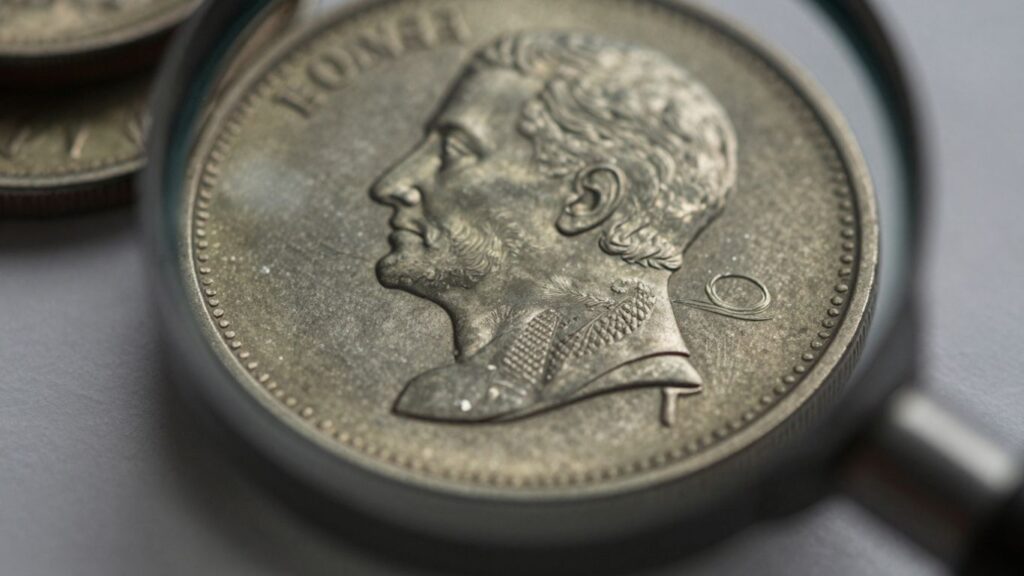
Ever looked at an old coin and wondered if it’s worth more than its face value? You’re not alone. Many people have coins lying around, maybe from grandparents or found in old boxes, that could be surprisingly valuable. The trick often lies in the tiny details, like a small mark that tells you where and when it was made. This guide is all about helping you figure out how to find the mint mark on your coins, which is a big step in understanding their potential worth.
Key Takeaways
- Mint marks are small symbols or letters on a coin that show which U.S. Mint facility produced it.
- Finding the mint mark is a key step in identifying a coin’s origin and potential rarity.
- You can usually find mint marks near the coin’s date or on the reverse side.
- Tools like magnifying glasses and coin value guides are helpful for spotting these small details.
- The condition, rarity, and historical context of a coin, along with its mint mark, all contribute to its overall value.
Understanding The Significance Of Mint Marks
So, you’ve got a coin, and you’re wondering what makes it tick, right? Well, a big part of that story is the mint mark. Think of it like a tiny signature from the place where the coin was actually made. It’s not just some random speck; it tells you which U.S. Mint facility, like Philadelphia, Denver, or San Francisco, brought that coin into existence.
Pinpointing A Coin's Origin Facility
These little symbols are super helpful for figuring out where a coin started its life. The U.S. Mint has had different branches over the years, and each one often used its own unique mark. For example, you might see a ‘D’ for Denver or an ‘S’ for San Francisco. Knowing this helps you trace the coin’s journey right back to its birthplace.
Mint Marks As Silent Witnesses To History
Beyond just knowing the location, mint marks are like little time capsules. They can tell you about the production era of a coin, and sometimes, different mints produced coins with varying levels of rarity. This historical context can really add to a coin’s appeal and, yes, its potential worth. It’s amazing how a tiny mark can hold so much information about when and where a coin was born.
Unlocking Value Through Origin Indicators
Why does this matter for value? Well, rarity is a huge factor in coin collecting. If a particular mint produced fewer coins in a certain year, those coins can become more sought after. That little mint mark is your first clue to understanding that rarity. It’s a key piece of the puzzle when you’re trying to figure out if you’ve got a common piece or something a bit more special.
Essential Tools For Coin Examination
So, you’ve got a pile of coins and you’re wondering if there’s a hidden treasure in there. That’s awesome! But before you start dreaming of early retirement, you need to actually look at them properly. It’s not like you can just eyeball it and know if that quarter is worth more than a few cents. You need some basic gear to get a good look. Think of it like trying to read a tiny instruction manual without your glasses – you’re just not going to get the full picture.
The Role Of Magnifying Glasses
This is probably the most important thing you’ll need. Seriously, don’t skip this. A good magnifying glass is your best friend when you’re looking at coins. Those little details, like the mint mark or a tiny scratch that might affect the value, are super hard to see with the naked eye. You want something that can zoom in enough to show you the nitty-gritty. A 5x or 10x magnification is usually a good starting point. It helps you see things like wear and tear, any odd markings, and of course, where that mint mark is hiding.
Protective Gear For Handling Coins
Now, this might seem a bit much, but trust me, it’s worth it, especially if you think you might have something valuable. Your fingers have oils on them, and over time, those oils can actually damage a coin’s surface. It might not be noticeable right away, but for older or rarer coins, it can really take away from their condition and, you guessed it, their value. So, grab a pair of cotton gloves. They’re cheap and they make a big difference in keeping your coins looking as good as when you found them.
Utilizing Coin Value Guides
Okay, so you’ve got your magnifying glass, you’re wearing your gloves, and you’re looking closely at your coins. What now? You need something to tell you what you’re actually looking at. That’s where coin value guides come in. These books or online resources are packed with information about different coins, their mint dates, how many were made, and what they’re generally worth. They’re like a cheat sheet for coin collecting. You can look up your coin by its type and year, and it’ll give you an idea of its rarity and potential price. It’s a good way to get a baseline understanding before you get too excited.
When you’re examining coins, remember that condition is king. Even a rare coin can lose a lot of its appeal if it’s heavily worn, scratched, or damaged. Taking care of your coins from the start with the right tools and handling techniques is key to preserving their potential worth.
Identifying Key Coin Characteristics
Obverse And Reverse Design Details
When you first pick up a coin, the most obvious things are the pictures and words on it. These are the design details. The side with the main portrait or prominent image is usually called the obverse, and the other side is the reverse. Think of the Lincoln Memorial on the penny – that’s the reverse. The obverse has Lincoln’s profile. Sometimes, these designs have small variations over the years, or maybe a specific design was only used for a short time. These little differences can actually matter a lot to collectors. It’s like finding a typo in a book; it makes that particular copy stand out.
Mint Marks And Production Years
Beyond the main pictures, you’ll want to look for two other really important bits of information: the year the coin was made and, if it has one, the mint mark. The year tells you when it left the mint. The mint mark is usually a small letter or symbol that shows where it was made – like a ‘D’ for Denver or an ‘S’ for San Francisco. These two pieces of information together are super helpful for figuring out how common or rare a coin might be. A coin made in a specific year at a particular mint might have been produced in much smaller numbers than others from the same design series.
Assessing Physical Condition
This is a big one. How worn out is the coin? A coin that looks like it just came off the press is in ‘mint condition’ and is worth way more than one that’s been jingling around in pockets for decades. You’re looking for scratches, nicks, bent edges, or any signs of wear. Even tiny scratches you can barely see can make a difference. Collectors often use a grading scale, but for starters, just think about whether it looks pretty beat up or still looks pretty sharp. A coin’s physical state is often the most significant factor in its worth.
The condition of a coin is paramount. Even a rare coin can lose a lot of its appeal and value if it’s heavily worn or damaged. Collectors are always looking for pieces that have retained as much of their original detail and luster as possible.
How To Find The Mint Mark On Your Coins
So, you’ve got a coin, and you’re wondering if it’s got a little something extra that makes it special. Often, that special something is a mint mark. Think of it like a tiny signature from the place where the coin was made. It’s not always obvious, and sometimes you really have to look closely. But once you know where to search, it becomes pretty straightforward.
Locating Marks Near The Date
One of the most common spots to find a mint mark is right around the coin’s date. For many U.S. coins, especially older ones, the mint mark will be a small letter or symbol placed very close to the year the coin was minted. You’ll need a good magnifying glass for this, as these marks can be quite small. Don’t just glance; really examine the area surrounding the date. Sometimes it’s directly below it, other times it might be to the left or right.
Searching The Coin's Reverse Side
If you don’t see anything near the date, don’t give up! The other prime location for mint marks is on the reverse, or the "tails" side, of the coin. Different coin series have different standard locations. For example, on some older silver dollars, you might find the mint mark tucked away near the bottom edge, below the eagle. On other coins, it could be near the rim, or even within the design elements themselves. It really pays to get familiar with the specific design of the coin you’re looking at.
Subtle Placement Of Mint Emblems
Mint marks aren’t always just a single letter. They can be symbols too, and their placement can be surprisingly subtle. The U.S. Mint has used various facilities over the years, and each had its own mark. For instance, a "D" might mean Denver, while an "S" could be San Francisco. But there are also older marks, like a tiny "CC" for Carson City, which are highly sought after. Some coins, especially those made before mint marks were consistently used, might not have one at all. It’s also worth noting that some coins, particularly those from the Philadelphia Mint before 1980, often have no mint mark at all, as it was assumed they were the default.
Here’s a quick rundown of some common U.S. Mint marks:
| Mint Mark | Location |
|---|---|
| P | Philadelphia |
| D | Denver |
| S | San Francisco |
| CC | Carson City |
| O | New Orleans |
| W | West Point |
Remember, the absence of a mint mark doesn’t automatically mean a coin is common. Some coins without marks are actually quite rare due to other factors like low mintage or historical significance. Always do your research on the specific coin you have.
Factors Influencing Coin Value
So, you’ve found a coin and you’re wondering if it’s worth more than just its face value. That’s where understanding what makes a coin valuable comes in. It’s not just about the metal it’s made of, though that’s part of it. There are a few key things that collectors and experts look at.
The Impact Of Condition On Worth
This is a big one. Think about it: a coin that’s been tossed around in pockets for decades is going to look a lot different than one that’s been kept safe in a holder since it was minted. We call this "condition" or "grade." A coin in really good shape, with no scratches, dents, or wear on the design, is going to be worth way more than a beat-up one. Even tiny details can make a huge difference. It’s like comparing a brand-new car to one that’s been driven for 200,000 miles – the condition matters a lot.
Understanding Coin Rarity
Sometimes, a coin is valuable simply because there aren’t many of them out there. This is rarity. If a mint only produced a small number of a certain coin, or if most of them were lost or melted down over time, the ones that are left become much more sought after. It’s basic supply and demand, really. The fewer there are, the more people might want it, and that drives up the price.
Historical Significance And Age
Older coins often have a built-in appeal because they connect us to the past. A coin from ancient Rome or one minted during a major historical event, like the Civil War, carries a story. This historical weight can make a coin more interesting to collectors, even if it’s not made of precious metal. The older a coin is, and the more interesting its history, the more people might be willing to pay for it. It’s like owning a little piece of history.
It’s easy to get caught up in the idea that only gold and silver coins are valuable. But that’s not always the case. Sometimes, a common metal coin can be worth a fortune if it’s rare enough or has a fascinating story behind it. Don’t overlook coins just because they aren’t shiny!
Here’s a quick look at how these factors stack up:
- Condition: From perfect "mint state" to heavily worn "circulated."
- Rarity: How many were made versus how many still exist.
- History: Does it come from an important time or event?
- Demand: Are collectors actively looking for this type of coin right now?
The Role Of Mint Marks In Value
Determining Coin Mintage Numbers
So, you’ve found a mint mark. That’s great! But what does it actually mean for your coin’s worth? Well, that little symbol is a direct link to how many of that specific coin were made. Think of it like this: if a mint produced millions of a certain coin, there are a lot of them out there, right? That usually means they aren’t super rare. But if a mint only produced a few thousand, or even just a few hundred, those coins are much harder to find. This is where the mint mark really starts to tell a story about potential value.
Lower Mintage, Higher Potential Value
It’s pretty straightforward, really. When fewer coins are made (that’s the low mintage), they become scarcer. Collectors often want what’s hard to get. So, a coin with a low mintage number, indicated by its mint mark, is generally going to be worth more than a coin from the same year and design that had a massive production run. It’s basic supply and demand, but applied to tiny metal discs.
Here’s a simplified look at how mintage can affect things:
| Mint Mark | Approximate Mintage | Potential Value Impact |
|---|---|---|
| P (Philadelphia) | High (Millions) | Generally lower value |
| D (Denver) | Medium to High | Varies, often moderate value |
| S (San Francisco) | Low to Medium | Can increase value significantly |
| O (New Orleans) | Low | Often commands higher value |
Mint Marks And Coin Rarity
Ultimately, the mint mark is a key piece of the puzzle when figuring out how rare a coin is. It’s not the only factor, of course. Condition and historical significance play huge roles too. But without knowing where a coin was made and how many were made there, you’re missing a big part of its rarity assessment. A coin might look common, but if its mint mark tells us it was produced in very limited numbers at a specific facility, its rarity – and therefore its desirability to collectors – can go way up. It’s like finding a limited edition print versus a mass-produced poster; the story behind its creation matters.
Navigating Coin Value Guides
Selecting Credible Price Guides
So, you’ve found a coin, maybe even a few, and you’re wondering what they’re actually worth. That’s where coin value guides come in. Think of them like a reference book for coin prices. But not all guides are created equal, right? You want one that’s reliable and up-to-date. Look for guides that focus on the types of coins you have, whether it’s general US coins or something more specific like silver dollars. A good guide will be updated regularly because coin markets can change. It’s like trying to use a map from 1950 to drive around today – not very helpful.
Interpreting Market Value Listings
Okay, so you’ve got your guide. Now what? The numbers in these guides aren’t just random figures. They represent what collectors are generally willing to pay for a coin in a certain condition. It’s important to remember that the price listed is usually an average or a range. Your coin might be worth more, or sometimes less, depending on a few things. You’ll see different grades listed, like ‘uncirculated’ or ‘very fine.’ This refers to the coin’s condition, which we’ll talk more about. Don’t just grab the first number you see; try to understand what it means in the context of your specific coin. It’s about more than just the face value; it’s about the market’s perception of its worth.
Identifying Rare Coin Values
This is where things get really interesting. Sometimes, a coin that looks pretty ordinary can be surprisingly valuable. Price guides help you spot these. They’ll often highlight coins with lower mintages or specific varieties that collectors seek out. You might find a common coin listed at a low price, but then a special version of it, maybe with a unique mint mark like the "P" for Philadelphia or "D" for Denver [4ee9], could be worth significantly more. It’s these little details that can make a big difference. Keep an eye out for special notes or symbols in the guide that point to rarity. It’s like finding a hidden gem in plain sight.
The journey to understanding a coin’s worth involves more than just looking up a number. It’s about piecing together information about its origin, its condition, and how many others like it exist. A good price guide is just one tool in that process, helping you make sense of the market and identify potential treasures.
Beyond The Mint Mark: Other Value Indicators
So, you’ve found a mint mark, which is pretty cool. But that’s not the whole story when it comes to figuring out if your coin is worth more than just its metal. There are other things to look at, and sometimes these can make a big difference.
Errors And Unique Markings
Sometimes, coins come off the press with mistakes. These aren’t always bad things for collectors; in fact, they can be really exciting. Think about things like a doubled die, where a letter or number looks like it’s printed twice, or maybe a coin that’s off-center. These kinds of errors, if they’re noticeable, can make a coin much more interesting and valuable to someone who collects them. It’s like finding a typo in a book that makes a specific edition rare.
Precious Metal Content
This one’s pretty straightforward. If your coin is made of gold, silver, or platinum, that metal itself has a value. This is often called the ‘bullion value’ or ‘intrinsic value’. A coin made of pure silver will generally be worth more than a coin made of copper, even if they look similar. However, it’s not always just about the metal. A rare coin made of a less precious metal might still be worth a lot more than a common coin made of gold, just because of its history or how few were made. You can check out resources to help you appraise a coin collection.
Historical Context Of The Coin
What’s the story behind the coin? Sometimes, a coin’s age and the historical events surrounding its production can add a lot to its appeal. A coin from a significant historical period, or one that was part of a famous collection, might fetch a higher price. It’s not just about the metal or the mint mark; it’s about the journey the coin has taken through time. Think about coins that were minted during wartime or during a period of major economic change – these often have a special place in numismatics.
The story a coin tells goes beyond its physical attributes. Its age, the era it represents, and any unique circumstances of its creation or survival all contribute to its desirability among collectors. These narrative elements, combined with factors like condition and rarity, paint a complete picture of a coin’s potential worth.
The Evolution Of Coin Collecting
The Renaissance And Numismatics
Back in the day, people mostly saw coins as just money. But then, things started to change, especially during the Renaissance. Suddenly, folks began looking at coins not just for what they could buy, but for their history and how they looked. It was like a light bulb went off – these metal discs were tiny pieces of the past! This period really kicked off what we now call numismatics, the fancy word for studying and collecting coins. People started appreciating coins from ancient times, seeing them as art and history lessons you could hold in your hand. This shift meant coins from certain eras, especially those made during the Renaissance itself, became much more sought after and, well, valuable.
19th Century American Coin Collecting
Fast forward to the 1800s, and coin collecting really took off in America. The country was growing, and so was its coinage. Lots of different coins were being made, and collectors started paying close attention to the little details, like where a coin was made – you know, the mint mark. This era also saw some big shake-ups. The Civil War and the economic ups and downs that followed made people look at coins differently. Some coins became harder to find, and others, well, their value changed. It was a dynamic time for anyone interested in coins, making the hunt for specific pieces even more exciting.
Impact Of Financial Instability
Periods of financial trouble have always had a funny way of influencing what people collect. When money gets tight, people often look for things that hold their value or have historical significance. For coin collectors, this meant that even common coins could become more interesting if they were tied to a specific event or were from a time of scarcity. Think about it: if the economy is shaky, a coin that represents a stable past or a rare moment in history can feel more secure. This instability sometimes led to a wider variety of coins being considered collectible, as people sought tangible assets and historical connections. It wasn’t just about the shiny metals anymore; it was about the story and the rarity that financial uncertainty seemed to highlight.
Leveraging Modern Resources For Collectors
Online Auctions And Virtual Shows
These days, you don’t even need to leave your house to find some interesting coins. Online auction sites have become huge marketplaces for collectors. You can find almost anything, from common circulated coins to really rare pieces. It’s like a giant coin show happening 24/7. Just be careful and do your homework before bidding. Look at seller reviews and detailed photos. Virtual coin shows are also popping up, letting you connect with dealers and see coins from your computer screen. It’s a pretty neat way to discover new items and learn more without the travel.
Digital Access To Market Information
Gone are the days of relying solely on printed price guides that are quickly outdated. The internet has opened up a flood of real-time market data. Websites and apps now offer up-to-the-minute pricing, auction results, and detailed coin population reports. This kind of information is super helpful for figuring out what a coin is actually worth right now. You can track trends, see what similar coins have sold for recently, and get a much clearer picture of the market. It really helps you make smarter decisions when buying or selling.
Expanding Collections Digitally
Collecting coins has always been about the thrill of the hunt and building something unique. Modern technology makes this even more accessible. You can use apps to catalog your collection, track its value, and even connect with other collectors online. Sharing your finds and getting advice from a community can be really rewarding. Plus, with so much information readily available, it’s easier than ever to identify those special coins with rare mint marks or interesting errors that can really make your collection stand out. The digital age has truly made coin collecting more engaging and informative for everyone.
The internet has changed how we find and value coins. What used to take a trip to a specialty shop or waiting for a catalog can now be done with a few clicks. This easy access means more people can get involved and learn about the coins they have.
Keep Looking!
So, that’s the lowdown on finding mint marks. It’s not rocket science, right? Just a little patience and a good look can really change how you see those old coins. You might have a common quarter, or you might have something that could be worth a bit more. Either way, knowing where to look and what to look for is half the battle. Keep digging through those coin jars and old albums – you never know what little treasures you might find hiding in plain sight. Happy hunting!
Frequently Asked Questions
What exactly is a mint mark on a coin?
A mint mark is like a tiny signature on a coin. It’s a small letter or symbol that tells you which U.S. Mint facility actually made the coin. Think of it as a stamp showing where the coin was born.
Why are mint marks important for coin collectors?
Mint marks are super important because they can tell collectors a lot about a coin’s history and how many were made. Sometimes, coins with a specific mint mark are much rarer than others from the same year, which can make them more valuable.
Where can I usually find the mint mark on a coin?
Most of the time, you’ll find the mint mark near the date on the coin. Sometimes, it might be on the back (the reverse side) of the coin, often below the main design. You might need a magnifying glass to spot it!
Do I need special tools to find a mint mark?
While not strictly required, a magnifying glass is highly recommended! It helps you see those tiny marks clearly. Also, handling coins carefully with soft gloves can protect them from damage, especially if they might be valuable.
How does a mint mark affect a coin's value?
A mint mark can significantly impact a coin’s value. If a coin was made at a mint that produced fewer coins that year, it’s considered rarer. Rarer coins usually fetch higher prices among collectors.
Are all coins supposed to have mint marks?
No, not all coins have mint marks. Early U.S. coins, for example, didn’t always have them. Also, some mints might not have used marks for certain years. It’s part of what makes each coin unique.
What's the difference between a coin's condition and its mint mark?
A coin’s condition refers to how worn or damaged it is – things like scratches or dents. The mint mark tells you where it was made. Both are important for value, but a rare mint mark on a worn coin might be worth less than a common mint mark on a coin in perfect shape.
Can I use online resources to help me find coin values?
Absolutely! There are many online coin value guides and auction sites. These resources can help you identify your coin, check its mint mark, and see what similar coins have sold for. Just be sure to use reputable sources.