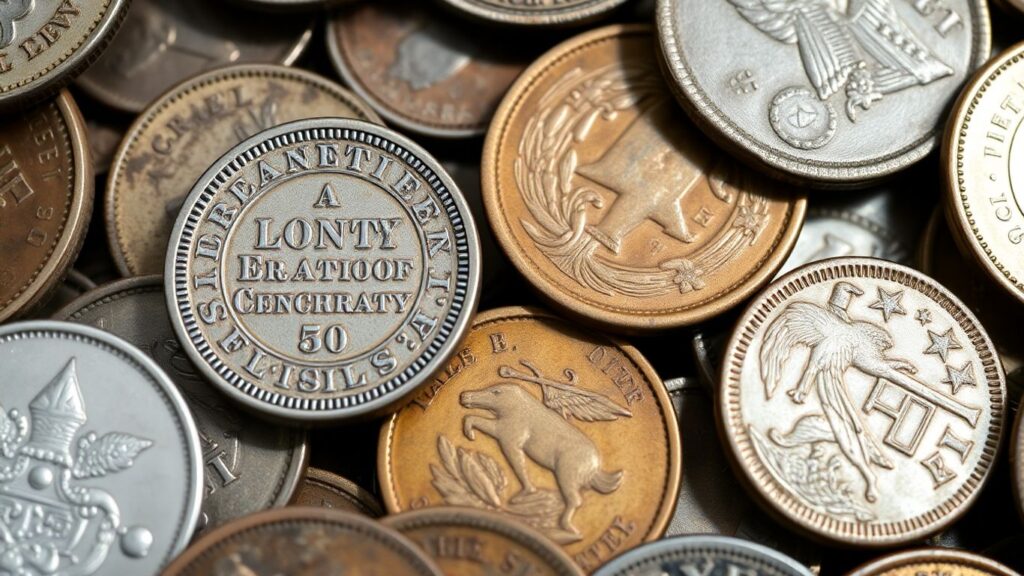
When you look at coins, whether they’re old or new, you might wonder what makes them valuable. It’s not always just about the metal they’re made of. There are actually two main ways to think about a coin’s worth: its numismatic value and its melt value. Understanding the difference between numismatic value and melt value is key to figuring out what a coin is really worth, especially if you’re thinking about collecting or investing.
Key Takeaways
- Numismatic value comes from a coin’s rarity, condition, and collector demand, separate from its metal content.
- Melt value is determined solely by the weight and current market price of the precious metals a coin contains.
- Some coins are valuable for their metal content (melt value), while others are prized for their history and collectibility (numismatic value).
- Severely damaged coins or those with little collector interest might be worth more for their metal than for their numismatic appeal.
- Knowing both numismatic and melt values helps you accurately assess a coin’s true worth, whether you’re buying, selling, or just curious.
Understanding The Difference Between Numismatic Value and Melt Value
When you start looking at coins, especially older ones or those made of precious metals, you’ll quickly run into two main ways they get their worth: numismatic value and melt value. They sound a bit fancy, but they’re actually pretty straightforward concepts once you break them down. Think of it like this: one is about what the coin means to collectors, and the other is about what the metal it’s made of is worth right now.
Defining Numismatic Value
Numismatic value is all about a coin’s collectibility. It’s the extra worth a coin has beyond just the metal it contains, driven by things like its rarity, historical significance, condition, and how much collectors want it. A coin might be made of a common metal, but if it’s super rare or has a fascinating story, collectors will pay a premium for it. This is the value that makes coin collecting such an interesting hobby and a potential investment.
Factors that really push up a coin’s numismatic value include:
- Rarity and Mintage Numbers: How many of these coins were originally made, and how many are still around today? Fewer coins usually mean higher value.
- Collector Demand and Popularity: Is this a coin that a lot of people want to own? Sometimes a cool design or a special series can make a coin incredibly popular.
- Coin Condition and Grade: A coin that looks almost brand new, with no scratches or wear, will be worth much more than one that’s been handled a lot.
Defining Melt Value
On the flip side, melt value is much simpler. It’s the worth of the precious metal content within a coin. If you were to melt down a coin made of gold, silver, or platinum, the melt value is what that raw metal would be worth based on current market prices. This value is pretty much independent of the coin’s design, history, or how rare it is. It’s all about the weight and purity of the metal.
Here’s a quick look at what goes into melt value:
- Spot Price of the Metal: This is the current market price for gold, silver, or platinum, which changes daily.
- Purity and Fineness: How much of the coin is actually made of the precious metal? A coin that’s 99.9% pure silver will have a higher melt value than one that’s only 90% pure.
- Weight: Naturally, a heavier coin made of precious metal will have a higher melt value than a lighter one.
The distinction between these two values is key. A coin might have a low melt value because it’s made of a less precious metal, but its numismatic value could be sky-high due to its rarity. Conversely, a coin made of pure gold might have a substantial melt value, but if it’s common and in poor condition, its numismatic value could be quite low, potentially even less than its melt value.
Factors Influencing Numismatic Value
So, what makes a coin more than just a piece of metal? It’s all about its numismatic value, and a few key things really push that number up. Think of it like collecting anything else – some items are just more sought after than others.
Rarity and Mintage Numbers
This is a big one. How many of a particular coin were ever made? That’s the mintage number. If only a few thousand were produced, and even fewer survived in good shape, it’s going to be worth more to collectors than a coin that was churned out by the millions. It’s simple supply and demand, really. A coin with a low mintage is inherently rarer, making it a more desirable find for someone trying to complete a set or just own something unique. The initial mintage is the total supply that will potentially be available to the market. Once that year’s production is done, the supply is fixed. The fewer coins there are, the higher the numismatic value tends to climb.
Collector Demand and Popularity
Even if a coin is rare, it won’t fetch top dollar if nobody wants it. Collector demand is huge. Sometimes a coin just has a cool design that people love. Other times, specific coin series get a big push, like those state quarters that got a lot of people collecting. When a coin becomes popular, more people want it, and that drives up the price. It’s not always easy to predict what will become popular, but when it happens, watch out! A coin’s value is primarily driven by demand, which can significantly influence even the rarest pieces. When a large number of collectors desire a specific coin, its market price can increase substantially, regardless of its scarcity. You can see how this plays out when looking at coin value guides.
Coin Condition and Grade
This is where things get a bit more technical, but it’s super important. The condition, or ‘grade,’ of a coin can make a massive difference. A coin that looks almost perfect, with no scratches or wear, will be worth way more than the exact same coin that’s been tossed around in pockets for years. Even tiny details matter to experienced collectors. They have specific grading scales, and a coin that’s just one notch higher on that scale can jump in value significantly. It’s not just about whether it’s old; it’s about how well it has been preserved.
The condition of a coin is often the most subjective, yet most impactful, factor in determining its numismatic worth. Even minor imperfections can drastically alter a coin’s desirability and, consequently, its price among collectors.
Calculating Melt Value
So, you’ve got some coins, and you’re wondering about their worth. Beyond what a collector might pay, there’s the raw material value – the melt value. This is basically what the metal in the coin is worth if you were to melt it down. It’s a straightforward calculation, but you need a few key pieces of information.
Understanding Spot Price
The spot price is the current market price for a precious metal like gold or silver. Think of it as the going rate for immediate delivery. This price changes constantly, sometimes by the minute, depending on what’s happening in the world – economic news, political events, you name it. It’s the baseline for figuring out how much your metal is worth right now. You can find this information from various financial news outlets or specialized commodity websites. Keeping an eye on the spot price is pretty important if you’re thinking about selling based on metal content. For instance, a coin with a $1.00 melt value could be traded between $0.95 and $1.05 using a melt value calculator.
The Role of Purity and Fineness
Not all coins made of gold or silver are pure. They often contain other metals mixed in to make them more durable – this is called an alloy. Purity, or fineness, tells you how much of the precious metal is actually in the coin. For gold, this might be expressed in karats (like 14k or 18k), and for silver, it’s often a percentage (like 90% or 92.5% for sterling silver). The higher the purity, the more precious metal there is, and thus, the higher the melt value.
Weight and Its Impact on Value
This one’s pretty simple: the more metal a coin has, the more it’s worth based on its melt value. However, it’s not just any old ounce. For precious metals, we use a specific unit of measurement called the troy ounce. One troy ounce is a bit heavier than a standard ounce you might use for, say, baking. So, to calculate the melt value, you’ll need to know the coin’s weight in troy ounces and its purity. Then, you multiply those two numbers together to get the amount of pure precious metal, and finally, multiply that by the current spot price.
Here’s a quick rundown of how to calculate it:
- Determine the weight of the coin in troy ounces.
- Find the purity (fineness) of the precious metal in the coin.
- Multiply the weight by the purity to get the pure metal content.
- Multiply the pure metal content by the current spot price of that metal.
For example, if you have a coin that weighs 1 troy ounce and it’s 90% silver, and the spot price for silver is $30 per troy ounce, the calculation would be: (1 troy ounce * 0.90) * $30/troy ounce = $27. This $27 is the coin’s melt value.
Key Terms for Melt Value Assessment
When you’re trying to figure out what a coin is worth based on its metal content, there are a few terms you’ll hear a lot. Understanding these can make a big difference in knowing if you’re getting a fair deal or just how much raw material you’re holding.
Troy Ounce Explained
First off, when we talk about the weight of precious metals like gold and silver, we don’t use the regular ounce you see on your kitchen scale. We use something called a troy ounce. It’s a bit heavier. One troy ounce is about 31.1 grams, while a standard ounce is only about 28.3 grams. This difference might seem small, but when you’re dealing with large amounts of metal, it adds up. So, always remember that coin weights are usually given in troy ounces.
What is Bullion?
Bullion is basically precious metal in a bulk form. Think of gold bars, silver ingots, or even certain coins that are made primarily for their metal content, not for their face value as money. These items are valued based on how much pure metal they contain and the current market price of that metal. They’re not usually rare or historically significant in the way a collectible coin might be.
Understanding Alloys and Hallmarks
Coins, especially older ones, aren’t always made of 100% pure metal. They’re often mixed with other metals to make them more durable. This mixture is called an alloy. For example, some silver coins might be "90% silver" and the rest is copper. The melt value calculation needs to account for this. That’s where hallmarks come in. A hallmark is like an official stamp on the metal that tells you its purity. It’s a way to verify how much precious metal is actually in the item. For coins, this information might be less common than on bars or jewelry, but understanding that alloys exist is key.
The purity of the metal is a huge factor in melt value. A coin that’s 99.9% pure silver will be worth more for its metal than a coin that’s only 90% silver, even if they weigh the same. Always check for markings or get it tested if you’re unsure.
Here are some common terms you’ll encounter:
- Spot Price: This is the current market price for immediate delivery of a precious metal. It changes all the time, like stock prices.
- Fineness: This is another way to talk about purity. It’s usually expressed as parts per thousand. So, .999 fine gold means 99.9% pure gold.
- Weight: This is straightforward – how much the item weighs, usually in troy ounces.
Knowing these terms helps you cut through the noise and get to the real metal value of a coin.
When Melt Value Outweighs Collectibility
Sometimes, a coin’s worth isn’t about its history or how many collectors want it. Instead, its value comes down to something much simpler: the raw materials it’s made from. This is especially true for coins that have seen better days or were never particularly sought after by collectors in the first place. When the price of gold or silver goes up, these coins can become more valuable for their metal content than for any numismatic appeal they might have had.
Scrap Precious Metal Items
Many items, including coins, are made from precious metals like gold, silver, or platinum. If a coin is damaged, worn down, or just not interesting to collectors, its primary value can shift entirely to its metal content. Think about old jewelry that’s broken or out of style; people often sell it for its gold weight. The same logic applies to coins. If a coin is made of 90% silver and the silver price is high, that silver content might be worth more than any collector would pay for the coin itself. This is why keeping an eye on the spot price of precious metals is important if you own older coins made from these materials.
Severely Damaged Coins
Coins that are heavily damaged, such as those that have been run over by a car, corroded, or have had significant portions of their surface removed, often lose most, if not all, of their numismatic value. A coin needs to be in good condition to be desirable to collectors. When a coin is severely damaged, its appeal to collectors plummets. In these cases, the only real value left is the precious metal it contains. For instance, a pre-1965 silver dime that’s been badly bent might be worth more as scrap silver than as a collectible coin.
Coins Lacking Collector Interest
Not every coin ever minted is a hot item for collectors. Many coins are produced in such large quantities, or their designs are simply not appealing, that they never gain much traction in the numismatic market. These coins might have a face value, and they might be made of precious metal, but without demand from collectors, their value is often tied directly to the melt value of the metal. This is particularly common with modern bullion coins that are primarily bought for their silver or gold content, or older, common-date coins that are plentiful and unremarkable.
When a coin’s condition is so poor that its historical or aesthetic appeal is gone, or when its mintage is so high that it’s not rare, its intrinsic metal worth becomes the dominant factor in its valuation. It’s like having a beautiful antique chair that’s completely broken; you might salvage the wood for firewood, but its value as a piece of furniture is lost.
The Significance of Numismatics for Investors
When you’re thinking about investing in coins, it’s easy to get caught up in just the metal content. But there’s a whole other layer to consider: numismatics. This is where coins gain value beyond just their silver or gold weight. For investors, understanding this can really change how you look at your portfolio.
Portfolio Diversification Benefits
Adding numismatic coins to your collection is a smart way to spread out your investments. Instead of having all your money tied up in just one type of asset, like pure bullion, you’re bringing in something with different value drivers. This can make your overall investment strategy more robust. Think of it like not putting all your eggs in one basket.
- Reduces overall risk: If the price of gold or silver drops significantly, your numismatic coins might hold their value better because of their collector appeal.
- Access to unique markets: Numismatics taps into a collector base that isn’t solely driven by metal prices.
- Potential for higher returns: Rare and historically significant coins can appreciate much faster than their melt value would suggest.
Numismatics as a Bear Market Buffer
What happens when the price of precious metals takes a nosedive? This is often called a bear market. While bullion coins will likely lose value directly with the metal price, numismatic coins can sometimes act as a cushion. Their value isn’t entirely dependent on the daily spot price of gold or silver. A coin’s rarity, historical importance, or condition can keep its price stable, or even increase it, even when the metal market is down. This is a big deal for protecting your investment capital.
The appeal of numismatic coins lies in their story and scarcity, offering a value proposition separate from the fluctuating price of raw metals. This intrinsic collector interest can provide a stabilizing effect during periods of market volatility.
Understanding Coin Premiums Over Spot
When you buy a bullion coin, you’re usually paying a small amount over the spot price of the metal – that’s the premium. With numismatic coins, this premium can be much, much higher. Why? Because you’re not just buying metal; you’re buying history, rarity, and collectability. A coin that contains $30 worth of silver might sell for $100 or more if it’s rare enough or in exceptional condition. Learning to spot these opportunities is key to profiting from the numismatic market. It’s about recognizing that added value that numismatic coins bring to the table, which goes far beyond their metal content.
Distinguishing Between Coin Types
When you start looking at coins, especially those made of precious metals, you’ll quickly notice they fall into a couple of main categories. It’s not just about whether they’re old or new; it’s about what makes them tick, value-wise. We’ve got numismatic coins and then we have bullion coins. They might look similar, but their reasons for being valuable are pretty different.
Characteristics of Numismatic Coins
Numismatic coins are the ones that collectors really get excited about. Their value isn’t just tied to the silver or gold they’re made of. Think of it like this: a rare stamp isn’t just worth the paper it’s printed on. For coins, factors like how many were made (mintage), how many are still around, their condition, historical importance, and just plain old collector demand all play a huge role. These coins are sought after for their unique attributes and potential appreciation. Sometimes, a coin might have a melt value that’s pretty low, but because it’s rare or has a cool design, collectors will pay way more than just the metal’s worth. It’s all about the story and the rarity.
- Rarity: Fewer coins produced means higher value.
- Condition: A coin in top shape is worth more than a worn one.
- Historical Significance: Coins tied to important events or eras often command higher prices.
- Collector Demand: Popularity among collectors drives up prices.
The world of numismatics is fascinating because it blends history, art, and economics. A coin can be a tangible piece of the past, a work of metallic art, and an investment all at once. Understanding what makes a coin collectible is key to appreciating its true worth beyond just its metal content.
Characteristics of Bullion Coins
Bullion coins are a different beast. Their main claim to fame is the precious metal content. Think of coins like the American Gold Eagle or the Canadian Maple Leaf. While they do have a face value, that’s usually just a formality. What really matters is the amount of gold, silver, or platinum they contain, and the current market price of that metal. These coins are typically made with high purity, meaning they’re almost pure metal. Their value fluctuates pretty directly with the spot price of the metal they’re made from. They’re less about history and more about holding a tangible piece of a commodity. If you’re looking to invest in precious metals, bullion coins are often a straightforward way to do it, offering a direct link to the spot price of gold.
| Metal Content | Primary Value Driver | Purity Focus | Collector Interest | Example |
|---|---|---|---|---|
| Gold, Silver, Platinum | Precious Metal Weight | High (e.g., .999 fine) | Secondary | American Eagle, Maple Leaf |
Modern vs. Historical Coin Examples
When we talk about modern versus historical coins, the lines between numismatic and bullion can sometimes blur, but the core differences usually hold. Modern bullion coins, like the ones mentioned above, are minted with high purity and their value is primarily driven by the metal content. They’re produced in large numbers, so rarity isn’t usually a factor. Historical coins, on the other hand, are often numismatic treasures. Take a Morgan Silver Dollar minted in the late 1800s. While it contains silver, its value is significantly boosted by its age, the historical period it represents, and the fact that many have been lost or melted down over the years. Even a circulated historical coin can have a numismatic value far exceeding its melt value, simply because it’s a piece of history that people want to own and study.
Numismatic Value vs. Bullion Value in Investments
Investment Appeal of Numismatic Coins
When you’re looking at coins as an investment, it’s easy to get caught up in just the metal content. But for many collectors and investors, the real magic happens with numismatic coins. These aren’t just hunks of silver or gold; they’re pieces of history. Think about a Morgan Silver Dollar minted way back in the day. Its value isn’t just tied to how much silver is in it. Nope, its rarity, the year it was made, its condition, and how many people actually want to collect it all play a huge part. This added layer of collectibility is what sets numismatic coins apart and can lead to returns that far outstrip the simple price of the metal. It’s like owning a rare piece of art versus owning a bar of gold – both have intrinsic value, but the art has a whole other dimension of worth.
Investment Appeal of Bullion Coins
Bullion coins, on the other hand, are pretty straightforward. Their main draw is the precious metal they contain. Coins like the American Silver Eagle or the Canadian Maple Leaf are designed with purity and metal content as their primary focus. If you buy a one-ounce gold Maple Leaf, you’re essentially buying one ounce of gold in coin form. The price you pay will be very close to the current market price of gold, plus a small premium for the coin’s production and distribution. This makes them a popular choice for investors who want direct exposure to the price movements of gold, silver, or platinum without the complexities of numismatic grading and market trends. They’re easy to understand: if gold goes up, your coin goes up; if gold goes down, your coin goes down.
Choosing the Right Coin Type for Your Goals
So, which is the better investment? Well, it really depends on what you’re trying to achieve. If your goal is to have a straightforward investment tied directly to the price of precious metals, and you prefer simplicity, bullion coins are likely your best bet. They offer a clear way to hold physical gold or silver.
- For direct metal exposure: Bullion coins are ideal.
- For potential growth beyond metal prices: Numismatic coins offer this possibility.
- For portfolio diversification: Both can play a role, but numismatics can act as a buffer during metal price downturns.
It’s important to remember that while bullion coins track metal prices closely, numismatic coins have a value that’s influenced by both the metal content and the collector market. This means numismatic coins can sometimes hold their value or even increase when metal prices fall, acting as a bit of a safety net.
If you’re interested in the history, the artistry, and the potential for appreciation based on rarity and demand, then diving into numismatic coins might be more your style. It requires a bit more research and understanding of the collector market, but the rewards can be significant. Many investors find a mix of both types of coins provides a well-rounded approach to precious metals investing.
Practical Considerations for Coin Valuation
So, you’ve got some coins and you’re wondering what they’re actually worth. It’s not always as simple as looking up the price of gold or silver. There are a few things to keep in mind when you’re trying to figure out a coin’s real value.
The Importance of Expert Appraisal
Look, I’m no expert. I tried to appraise my grandpa’s old coin collection myself once, and let’s just say it didn’t go well. I ended up with a bunch of numbers that didn’t make sense and a growing suspicion that I was missing something big. Getting a professional opinion is usually the smartest move. These folks have seen thousands of coins and know the market inside and out. They can spot details you’d never notice and give you a much more accurate idea of what your coins are worth, whether it’s for selling, insuring, or just satisfying your curiosity.
Market Value vs. Intrinsic Value
This is where things can get a little fuzzy. Intrinsic value is pretty straightforward – it’s basically the melt value, the worth of the metal itself. Market value, on the other hand, is what someone is actually willing to pay for the coin right now. This can be influenced by all sorts of things, like collector demand, rarity, and even current events. Sometimes, a coin’s market value can be way higher than its melt value, and other times, especially for common coins made of precious metals, the melt value might be the dominant factor.
Here’s a quick look at how these can differ:
| Coin Type | Intrinsic Value (Melt) | Potential Market Value | Notes |
|---|---|---|---|
| Common Silver Dollar | Moderate | Moderate to High | Depends on grade and collector interest |
| Rare Gold Coin | High | Very High | Numismatic value often far exceeds metal |
| Modern Bullion Coin | High | Slightly Above Melt | Premium for minting and dealer markup |
| Damaged Common Coin | Low | Very Low | Often valued for melt only, if at all |
Recognizing Added Value Beyond Metal Content
It’s easy to get fixated on the metal content, especially with silver and gold coins. But there’s often more to it. Think about:
- Rarity: How many of these coins were originally made? How many are still around today?
- Condition: Even small differences in wear and tear can make a huge difference in value.
- Historical Significance: Does the coin have a story? Was it part of a famous event or collection?
- Eye Appeal: Sometimes, a coin just looks good. Its design, toning, and overall appearance can attract collectors.
- Mint Mark: Where and when the coin was made can be a big deal for certain series.
When you’re looking at a coin, try to see it not just as a piece of metal, but as a historical artifact with its own unique story and place in the collecting world. That’s where the real numismatic value often hides, far beyond what the silver or gold is worth by weight.
The Role of Condition in Coin Worth
When you’re looking at coins, especially older ones, how they’ve held up over time really matters. It’s not just about the metal they’re made of or how many were originally minted. The physical state of a coin, often called its ‘condition’ or ‘grade,’ can dramatically change its value, particularly for collectors. Think of it like a vintage car; a pristine model is worth way more than one that’s been sitting in a field for decades.
Subtle Differences in Coin Grades
Coin grading might sound complicated, but it’s basically a way to describe how worn a coin is. Experts use a scale, often from 1 to 70, to rate a coin’s condition. Even small things like a few faint scratches or a slight loss of detail can push a coin down a grade. For instance, a coin might look pretty good to you, but a professional grader might spot microscopic wear that lowers its grade significantly. This attention to detail is what separates a common coin from a rare find.
How Condition Affects Collector Appeal
Collectors generally want the best they can get. A coin that looks like it just came from the mint, with sharp details and no obvious damage, is going to be much more attractive than one that’s been handled a lot. This desire for high-grade coins means that even a small improvement in condition can lead to a big jump in what someone is willing to pay. It’s this visual appeal and the sense of owning something well-preserved that drives collector interest.
Impact of Wear and Tear on Value
Wear and tear are the biggest enemies of a coin’s value. Things like:
- Scratches: Even light ones can be a big problem.
- Dents and Gouges: These are usually quite obvious and hurt value a lot.
- Rim Damage: Bumps or nicks on the edge are also a negative.
- Cleaning: While it might make a coin look shinier, improper cleaning can actually damage the surface and lower its grade and value. The less a coin has been handled and damaged, the higher its potential numismatic value.
Here’s a quick look at how condition can affect value, using a hypothetical example:
| Grade Description | Hypothetical Value |
|---|---|
| Uncirculated (Mint State) | $100 |
| About Uncirculated (AU) | $50 |
| Extremely Fine (XF) | $25 |
| Very Fine (VF) | $10 |
| Fine (F) | $5 |
It’s important to remember that these are just made-up numbers to show the trend. Real coin values depend on many factors, including rarity and demand, not just condition. But you get the idea – better condition usually means better value for collectors.
When you’re assessing coins, whether for collecting or selling, paying close attention to their condition is a must. It’s a key part of understanding the difference between what a coin is worth for its metal content and what it might be worth to someone who appreciates its history and artistry. For more on how to assess coins, checking out resources on coin grading standards can be really helpful.
Wrapping It Up
So, when you’re looking at coins, remember there are two main ways they get their worth. There’s the collector’s value, which is all about rarity, history, and how many people want it. Then there’s the melt value, which is just what the metal inside is worth right now. Some coins are valuable for one reason, some for the other, and sometimes it’s a mix of both. It’s not always straightforward, and if you’ve got a pile of old coins, it might be a good idea to get a second opinion from someone who really knows their stuff. That way, you’ll know if you’re sitting on a treasure or just some old metal.
Frequently Asked Questions
What's the main difference between numismatic value and melt value?
Think of it this way: melt value is what a coin is worth just for the metal it’s made of, like gold or silver. Numismatic value is extra worth a coin has because it’s rare, old, or wanted by collectors. Some coins are valuable for their metal, some for being collectible, and some for both!
What makes a coin have numismatic value?
Several things can make a coin special to collectors. How many were made (mintage) is a big one – fewer made means it’s rarer. If lots of people want a certain coin, its value goes up. Also, how good the coin looks – if it’s not scratched or worn down – makes a big difference.
How do I figure out a coin's melt value?
To find the melt value, you need to know the coin’s weight, how pure the metal is (like 90% silver), and the current price of that metal on the market. You multiply the amount of pure metal by its current price. It’s basically the price of the raw materials.
What is a 'troy ounce'?
A troy ounce is a special way to measure precious metals like gold and silver. It’s a little heavier than a regular ounce you’d use for food. This standard measurement helps everyone agree on the weight when figuring out melt value.
When would a coin's melt value be more important than its collector value?
This usually happens with coins that are badly damaged, have very little collector interest, or are made of a lot of precious metal. For example, a very old, worn-out coin might be worth more if you melted it down for the silver it contains, rather than selling it as a collectible.
Are bullion coins the same as numismatic coins?
Not exactly. Bullion coins are mainly valued for their precious metal content, like modern silver eagles. Numismatic coins are valued more for their rarity and collector appeal, often being older coins like Morgan dollars, even if they have less pure silver.
Can a coin have both melt value and numismatic value?
Absolutely! Many coins, especially older ones made of silver or gold, have a base value from their metal content (melt value) and an additional value because they are rare or sought after by collectors (numismatic value).
Why is the condition of a coin so important for its value?
The condition, or ‘grade,’ of a coin can change its value dramatically. A coin that looks almost new, with no scratches or wear, will be worth much more to collectors than the exact same coin that’s been heavily used and looks dull. Even small differences in appearance matter a lot to serious collectors.