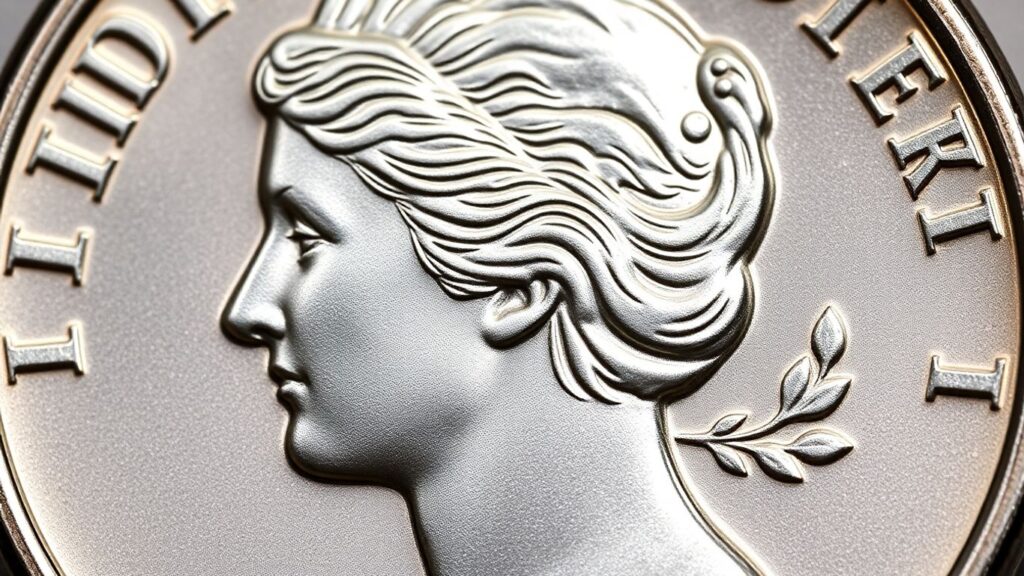
So, you’ve got a Mercury dime sitting in your pocket change or maybe tucked away in an old coin album. You’re probably wondering if it’s worth more than just ten cents. Well, it might be! People who collect these coins, known as Mercury dimes, look for a bunch of things beyond just the date. It’s not just about how old it is; the condition, where it was made, and even tiny details can make a big difference in what someone might pay for it. Let’s break down what coin collectors look for in Mercury dimes.
Key Takeaways
- The condition of a Mercury dime is super important. Collectors check details like the olive branch and other design elements for wear. Crisp, clear details mean a higher grade and more value.
- Mint marks tell you where the coin was made. Philadelphia coins have no mark, Denver has a ‘D’, and San Francisco has an ‘S’. Some mint marks, like the ‘D’ on certain dates, are more sought after.
- Certain dates are much rarer and more valuable. The 1916-D is famous, but others like the 1921, 1921-D, and 1926-S are also key dates collectors hunt for.
- Look closely for special varieties like ‘overdates,’ where one date is stamped over another, such as the 1942/1 and 1942/1-D. These can be quite valuable.
- The ‘Full Bands’ designation on the reverse, showing clear bands on the fasces, is a sign of a well-struck coin and adds significant value, especially for key dates.
Understanding Mercury Dime Condition
When you’re looking at Mercury dimes, the first thing most collectors really zero in on is the coin’s overall condition. It’s not just about the date or the mint mark; how well the coin has held up over time makes a huge difference in its value. Think of it like looking at an old car – a shiny, well-maintained one is worth way more than a rusty, beat-up wreck, right? It’s the same with these dimes.
Examining The Olive Branch For Wear
The olive branch on the reverse of the Mercury dime is a really good indicator of a coin’s condition. It’s one of the first places wear tends to show up. If the leaves and the stem are all sharp and distinct, that’s a good sign. If they look worn down, smooth, or you can barely make out the details, the coin has seen better days. Collectors often look for a strong, clear olive branch to signal a higher grade.
Assessing Other Key Design Elements
Beyond the olive branch, there are other parts of the design that tell a story about the coin’s condition. The winged cap on Liberty’s head should have clear, defined wings. The lines on the cap itself should be sharp. On the reverse, the fasces (that bundle of rods) should show distinct lines for each rod, and the axe blade should be well-defined. Even the lettering, like "LIBERTY" and the date, should be crisp and easy to read. If these details are mushy or worn away, it means the coin has been handled a lot or has suffered some damage.
The Importance Of Crisp Details
Basically, the sharper and more detailed the coin, the better. Collectors want to see that the coin left the mint with strong features and that it hasn’t been overly circulated or damaged since. This means:
- Sharpness: All the lines and features should be clear, not blurry or worn down.
- Completeness: No major parts of the design should be missing or smoothed over.
- Luster: For uncirculated coins, a certain shine or "mint luster" is desirable.
A coin that looks like it just came out of the mint, even if it’s been around for decades, is always going to be more appealing to collectors than one that’s been tossed around in pockets or bags for years. The difference in value can be pretty dramatic.
Here’s a general idea of how wear affects value, though remember this is a simplification:
| Condition Grade | Description |
|---|---|
| Good (G) | Very worn, major details are faint. |
| Fine (F) | Moderate wear, some details visible. |
| Very Fine (VF) | Light wear, most details are clear. |
| Extremely Fine (XF) | Very light wear, almost all details sharp. |
| About Uncirculated (AU) | No wear, but may have minor bag marks. |
| Uncirculated (MS) | No wear, full mint luster, potentially flawless. |
So, when you’re looking at a Mercury dime, take a good, close look. The condition really is king, and it’s often the first thing that separates a common coin from a valuable one.
Identifying Valuable Mint Marks
So, you’ve got a Mercury dime in your hand, and you’re wondering if it’s just another old coin or something special. One of the first things to check, after you’ve looked at the design details, is where it was actually made. This little detail, called the mint mark, can make a big difference in how much your dime is worth.
Philadelphia Mint's Absence Of A Mark
Coins made in Philadelphia back then didn’t get a mint mark. Yep, you heard that right. If you don’t see a little letter on your dime, it probably came from Philly. This was pretty standard practice for the Philadelphia Mint for a long time. So, no mark doesn’t mean it’s worthless; it just means it’s from the original mint.
Denver Mint's 'D' Designation
Now, if you spot a tiny ‘D’ on the reverse side of the dime, usually near the bottom rim, that means it was struck at the Denver Mint. These ‘D’ mint dimes can be quite sought after, especially certain dates. The Denver Mint started producing Mercury Dimes in 1916, and some of its issues are among the most popular with collectors.
San Francisco Mint's 'S' Mark
Similarly, a little ‘S’ on the coin indicates it was made at the San Francisco Mint. Like the Denver issues, San Francisco mintages can also be quite significant in the collecting world. The ‘S’ mint dimes often have their own set of key dates and varieties that collectors actively hunt for.
Here’s a quick look at where to find them:
- Philadelphia: No mint mark.
- Denver: ‘D’ on the reverse.
- San Francisco: ‘S’ on the reverse.
The presence or absence of a mint mark, and which mint it came from, is a primary factor in a Mercury dime’s rarity and, consequently, its market value. Collectors often prioritize coins from mints known for lower production numbers or specific historical significance.
It’s not just about if there’s a mark, but also which mark is there, and when the coin was made. Some combinations of date and mint mark are much rarer than others, making them the real treasures for collectors.
Key Dates And Their Significance
When you’re looking at Mercury dimes, some dates just stand out. These aren’t just random years; they represent specific moments in minting history that make them much harder to find and, therefore, more sought after by collectors. Think of them as the "greatest hits" of the Mercury dime series.
The Infamous 1916-D Rarity
This is the one everyone talks about. The 1916-D Mercury dime is the undisputed king of the series. Why? Because it had the lowest mintage by a mile – only 264,000 were ever made. Compare that to the Philadelphia mint’s 1916 issue, which saw over 22 million coins produced. It’s a huge difference. Nobody’s entirely sure why Denver produced so few, but it was during a time when the older Barber dime was still being made in large numbers. This scarcity makes the 1916-D incredibly valuable, but be careful – there are a lot of fakes out there. Genuine ones have a distinct "D" mint mark that’s almost square and slanted.
The allure of the 1916-D isn’t just its low production numbers; it’s the mystery behind why so few were minted in the series’ very first year, adding a layer of historical intrigue that collectors find fascinating.
The 1921 And 1921-D Semi-Keys
Moving on to 1921, we find two more coins that are a big deal for collectors: the regular 1921 and the 1921-D. These are often called "semi-key" dates. The Philadelphia mint produced just over 1 million of the 1921 dimes, and Denver managed only about 1.08 million for the 1921-D. These low numbers are thought to be a result of the economic slowdown that hit around 1920 and lingered for a couple of years. Finding these in good condition can still be a challenge.
The 1926-S And Its Weak Strikes
The 1926-S is another semi-key date that collectors pay attention to. Its mintage was around 1.5 million. What makes this one tricky is that many of them were weakly struck from the mint. This means the details, especially on the "full bands" of the fasces, might not be very clear. Finding a sharp, well-defined 1926-S, particularly one with full bands, takes a lot of searching. It’s estimated that only a couple of hundred examples have ever been certified as having full bands by major grading services, making them quite rare. You can find more information on Mercury dime values.
Here’s a quick look at some of these important dates:
- 1916-D: The ultimate key date, lowest mintage.
- 1921: Semi-key date, very low mintage.
- 1921-D: Semi-key date, also very low mintage.
- 1926-S: Semi-key date, known for weak strikes.
Recognizing Overdate Varieties
Sometimes, coins have little quirks that make them extra special to collectors. Overdates are one of those quirks. These happen when a mint has to reuse a die from the previous year and punches the new date right over the old one. For Mercury dimes, the most famous examples come from 1942.
The 1942/1 Philadelphia Overdate
This one is pretty cool because you can usually see the "1" from 1941 peeking out from under the "2" of 1942. It’s more obvious than its Denver counterpart, making it a bit easier to spot. Finding a clear 1942/1 Philadelphia overdate is a real treat for any collector. These are considered scarce, and even coins that have been worn from circulation can fetch a decent price, often in the $400 to $500 range. If you happen to find one in mint condition, especially with Full Bands, you’re looking at a much higher value, potentially $2,500 or more.
The 1942/1-D Denver Overdate
The 1942/1-D is similar to the Philadelphia version, but the "1" from the previous year is a bit more subtle. You’ll need to look closely, often seeing faint traces of the "1" under the left side of the "2." It requires a bit more effort to identify, but it’s just as sought after. The values are pretty comparable to the Philadelphia overdate, meaning circulated examples are worth a good chunk, and uncirculated ones are quite valuable. It’s a great example of how a small detail can make a coin stand out.
Identifying Overdate Characteristics
Spotting an overdate isn’t always straightforward, especially with the more subtle ones. Here’s what to keep an eye out for:
- Visible Date Remnants: Look for parts of the previous year’s date showing through or around the current date. This could be a numeral, a portion of a numeral, or even just the shape of a digit.
- Die Wear: Sometimes, the die used for the overdate might show signs of wear from being used for the previous year’s coins, which can affect the overall strike quality.
- Comparison is Key: If you suspect you have an overdate, compare it to a known regular strike of the same date and mint mark. This helps highlight any anomalies.
Overdates are a fascinating error type that shows the practicalities of mint operations. They represent a moment in time where efficiency met a slight deviation from perfection, creating a collectible rarity. These coins are a tangible link to the minting process itself.
These overdates are quite rare, and finding them in top condition, particularly with the Full Bands designation, significantly increases their desirability and price. It’s a good reminder that sometimes the most interesting finds aren’t the most obvious ones, and a keen eye can uncover some real treasures, like the 1942/1 Mercury Dime overdate.
The Role Of Full Bands
Full Bands On The Olive Branch
When you look at the reverse of a Mercury dime, you’ll see a fasces, which is like a bundle of rods tied together with an axe. At the top of this fasces, there’s an olive branch. For a coin to be considered "Full Bands" (often abbreviated as FB), the horizontal bands that wrap around the rods of the fasces need to be clearly and fully visible. This isn’t just about the bands themselves; it also applies to the detail on the olive branch. Collectors really want to see those horizontal lines on the fasces bands as distinct and complete. It shows that the coin was struck with enough force and precision to bring out these finer details.
Full Bands On The Fasces
This is where the "Full Bands" designation really comes into play. The fasces is the central design element on the reverse, and it’s made up of several vertical rods. These rods are held together by horizontal bands. To get the "Full Bands" status, these bands must show clear, unbroken horizontal lines. Think of it like looking at a well-defined stripe on a piece of clothing – you want to see the whole stripe, not just a blurry suggestion of it. The clarity of these bands is a direct indicator of the quality of the strike and the overall preservation of the coin. It’s a detail that many collectors use to separate a good coin from a great one.
Scarcity Of Full Band Designations
Finding Mercury dimes with full bands isn’t always easy, especially in higher grades. Many dates, even common ones, were not struck with enough pressure to bring out these fine details. This makes coins that do have full bands significantly more desirable and, consequently, more valuable. Some dates are notoriously difficult to find with full bands. For instance, the 1926-S, known for its weak strikes, is particularly challenging. While common dates might be plentiful, finding them with the "FB" designation can be a real hunt. This scarcity drives up the price for these specific, well-struck examples.
Here’s a look at how the "Full Bands" designation can impact value, using a few examples:
| Date | Common Uncirculated (No FB) | Uncirculated (Full Bands) |
|---|---|---|
| 1916-D | $18,000 | $10,000+ |
| 1921 | $2,500 | $5,000+ |
| 1921-D | $2,650 | $5,500+ |
| 1926-S | $2,750 | $6,000+ |
Note: Prices are approximate and can vary based on specific grade and market conditions.
Beyond The Obvious: Design Nuances
The Winged Liberty Head Design
When you first look at a Mercury dime, you’ll probably notice the striking portrait of Lady Liberty. But take a closer look. She’s not just wearing a simple cap; she’s sporting a winged Phrygian cap. This design choice by Adolph Weinman was pretty radical for its time. The wings are meant to symbolize freedom of thought and speech. It’s a detail that really sets this coin apart from others. Many collectors appreciate the artistic merit of this design, seeing it as a miniature work of art. It’s not just about the metal content or the date; it’s about the story the coin tells through its imagery.
Interpreting The Fasces Symbol
Flip the coin over, and you’ll see another powerful symbol: the fasces. This is a bundle of rods bound together around an axe. In ancient Rome, it was a symbol of authority and unity. For the Mercury dime, it represents strength and solidarity. You’ll also see an olive branch on the reverse, symbolizing peace. The combination of these elements – the fasces and the olive branch – speaks to a nation that is both strong and peaceful. It’s a pretty neat historical nod, don’t you think?
Adolph Weinman's Initials
Here’s a detail that’s easy to miss if you’re not looking for it: the designer’s initials. Adolph Weinman’s monogram, ‘AW’, is subtly incorporated into the design. On the obverse, you can find them near the truncation of Liberty’s neck, just above the date. On the reverse, they are located on the lower right, near the base of the fasces. Finding these initials can be a good indicator of authenticity and can also be a point of interest for collectors who enjoy hunting for these small, hidden features. It’s like a little signature from the artist himself, hidden in plain sight.
The Impact Of Mintage Numbers
When you’re looking at Mercury dimes, the number of coins made, or mintage, plays a pretty big role in how much they’re worth. It’s not just about how pretty the coin looks; it’s also about how many of them are actually out there. Think about it – if only a few were ever made, they’re naturally going to be harder to find and, therefore, more desirable to collectors.
Low Mintage Key Dates
Some dates just stand out because so few were produced. The 1916-D is the classic example here. With only 264,000 made, it’s the undisputed king of Mercury dime rarities. Compare that to common dates that can have mintages in the tens of millions, and you can see why the 1916-D is such a big deal. It’s not just the low number, though; it’s also the fact that it was made in the first year of the series, adding to its mystique.
Other dates, like the 1921 and 1921-D, also have significantly lower mintages than most. These were produced during a bit of an economic downturn, which likely explains why fewer coins were minted. They aren’t as rare as the 1916-D, but they’re definitely more sought after than your average Mercury dime.
Recession's Effect On Production
Economic conditions really do affect coin production. The early 1920s saw a recession, and this directly impacted how many dimes were struck. The 1921 and 1921-D issues are prime examples of this. Their lower mintages, compared to coins made in more prosperous times, make them more interesting to collectors looking for something a little less common.
Comparing Mintages Across Mints
It’s also interesting to see how mintages varied between the different mints – Philadelphia (no mint mark), Denver (‘D’), and San Francisco (‘S’). Sometimes, one mint would produce far fewer coins of a particular date than another. For instance, the 1916-D is rare, but the 1916 (Philadelphia) and 1916-S had much larger mintages. This difference highlights how location can matter when you’re trying to figure out a coin’s scarcity.
Here’s a look at some mintages for key dates:
| Date | Mint Mark | Mintage |
|---|---|---|
| 1916 | (None) | 22,180,080 |
| 1916 | D | 264,000 |
| 1916 | S | 10,450,000 |
| 1921 | (None) | 1,230,000 |
| 1921 | D | 1,080,000 |
| 1926 | S | 1,520,000 |
When you’re building a Mercury dime collection, paying attention to the mintage figures is a smart move. It helps you understand why certain coins are more expensive and where the real rarities lie. It’s a numbers game, but one that adds a lot of depth to the hobby.
Professional Grading And Authentication
Why Professional Grading Matters
So, you’ve found a Mercury dime that looks pretty special. Maybe it’s got that shiny, almost untouched look, or perhaps it’s one of those rare dates we talked about. Before you get too excited, it’s smart to think about getting it looked at by the pros. Professional grading is like getting a second opinion from a seasoned expert who knows these coins inside and out. It’s not just about confirming it’s real; it’s about getting an objective assessment of its condition, which directly impacts its worth. Without it, you might be guessing at a coin’s true value, and that can lead to some costly mistakes, whether you’re buying or selling.
Services Like PCGS And NGC
When people talk about professional grading, two names usually come up: PCGS (Professional Coin Grading Service) and NGC (Numismatic Guaranty Company). These outfits have been around for a while and have pretty much set the standard for how coins are evaluated. They have teams of experienced graders who examine coins under magnification, looking at everything from the sharpness of the details to the amount of wear. Once they agree on a coin’s grade, they seal it in a special, tamper-evident holder, often called a "slab," along with a label detailing the coin’s identity and grade. This slabbed coin is then pretty much guaranteed to be authentic and accurately graded, making it much easier for collectors to buy and sell with confidence. It takes a lot of the guesswork out of the equation.
Verifying Metal Content And Authenticity
Beyond just assigning a grade, these grading services also play a big role in making sure a coin is the real deal. They’re trained to spot fakes, which unfortunately pop up more often than you might think, especially with popular coins like Mercury dimes. They can tell if the metal is correct, if the strike is right, and if any details have been altered. Sometimes, they even use advanced technology to check the coin’s composition. This authentication process is super important because a fake coin, no matter how well-made, has no numismatic value. It’s all about trust, and these services provide a high level of it for collectors.
When you’re looking at a Mercury dime, especially one that’s supposed to be a key date or in really nice condition, it’s always a good idea to see if it’s been graded by a reputable third party. This gives you a much better idea of what you’re actually getting. It’s like buying a used car – you’d want a mechanic to check it out first, right? Same idea here, just with coins. It adds a layer of security and certainty that’s hard to beat.
Market Dynamics And Collector Strategy
So, you’ve got a few Mercury dimes lying around, maybe even a couple that look pretty good. What now? How do you figure out what they’re actually worth and how to build a collection that doesn’t just sit in a drawer? It’s not just about finding the shiniest coin; it’s about understanding the game.
Understanding Price Categories
Not all Mercury dimes are created equal, and neither are their price tags. You’ve got your common circulation finds, which are mostly worth their silver content plus a little extra for being a collectible. Then you have the key dates and rare varieties, which can jump up significantly in price, especially if they’re in great shape. It’s a whole spectrum, really.
Here’s a rough idea of how things break down:
- Common Circulation Finds: These are your everyday dimes, often found in change or bought in bulk. Their value is usually tied to the silver price, with a small numismatic premium. Think of these as the building blocks for a collection.
- Better Dates and Varieties: These might not be the absolute rarest, but they’re harder to find in good condition. Prices start to climb here, and the condition of the coin becomes much more important.
- Key Dates and Rarities: This is where things get interesting. Coins like the 1916-D or certain overdates fall into this category. They’re scarce, highly sought after, and can command prices from hundreds to thousands of dollars, depending on their grade.
- Ultra-Rarities: These are the million-dollar coins, the ones you only read about. They’re exceptionally rare, often with unique histories, and are typically in the hands of very advanced collectors or institutions.
Focusing On Key Dates And Varieties
If you’re serious about building a Mercury dime collection that has some real staying power, you’ll want to pay attention to the key dates and varieties. These are the coins that collectors actively seek out, and their demand tends to keep their value steady, even when the silver market fluctuates. Learning to spot these, and understanding what makes them special (like those weak strikes on the 1926-S or the overdate on the 1942 issues), is a big part of the fun.
It’s like knowing which players are the superstars in a sports team; they’re the ones everyone talks about and wants on their roster. For Mercury dimes, the 1916-D is the undisputed MVP, but there are other valuable players too.
Quality Over Quantity
Honestly, it’s better to have a few really nice Mercury dimes than a whole box of beat-up ones. When you’re looking at coins, especially the more valuable ones, the condition (or grade) makes a massive difference. A coin that’s heavily worn might only be worth its silver weight, but one that’s nearly perfect can be worth exponentially more. Focusing on acquiring coins with excellent detail and minimal wear will serve you much better in the long run.
Think about it: if you’re buying a used car, you’d rather have one that’s been well-maintained, right? Same idea here. Collectors, and eventually buyers, will pay a premium for coins that look great and have survived the years in good shape. So, take your time, learn what to look for in terms of wear and tear, and try to get the best example you can afford for those key dates.
Potential For Future Appreciation
Silver Content Value
Look, Mercury dimes are made of 90% silver. That’s a big deal, especially when silver prices go up. Even a beat-up dime has a baseline value just because of the metal it’s made from. So, as the price of silver fluctuates, the floor price for these dimes goes up and down too. It’s not like collecting pennies; there’s always that intrinsic worth tied to the precious metal.
Historical Significance
These coins were around during some pretty interesting times in American history – the Great Depression, World War II. They’re more than just metal; they’re little pieces of the past. People connect with that history. Think about it, holding a coin that someone might have used to buy bread during the Depression or saved during the war… it’s pretty cool. That connection to history adds a layer of appeal that pure silver alone doesn’t always have.
Increasing Collector Demand
More and more people are getting into coin collecting, and Mercury dimes are a popular entry point. They’re not super expensive for most dates, they look nice, and there are plenty of varieties to chase. Plus, with the rise of online communities and resources, it’s easier than ever for new collectors to learn about them and get started. As more people want them, prices tend to creep up, especially for the nicer ones and the key dates.
The combination of intrinsic silver value, a tangible link to significant historical periods, and a growing collector base suggests that Mercury dimes, particularly those in better condition or with rare mint marks and dates, are likely to hold their value and potentially see further appreciation over time. It’s a classic case of supply meeting demand, with the added bonus of a precious metal backing.
Here’s a quick look at what influences their potential:
- Silver Price Trends: Keep an eye on the global silver market. Higher silver prices directly boost the melt value of your dimes.
- Key Date Availability: Scarce dates and mint marks, like the 1916-D, are always in demand and tend to appreciate more steadily.
- Condition Matters: A coin in a higher grade (like MS-65 or better) will always outperform a worn-out coin, even if they are the same date.
- Numismatic Interest: The ongoing interest from collectors, driven by the coin’s design and historical context, provides a consistent demand beyond just the silver content.
Wrapping Up Your Mercury Dime Hunt
So, when you’re looking at Mercury dimes, it’s not just about the date stamped on the front. You’ve got to check out the details, like that olive branch, and see where it was made. Some of those mint marks, especially the ‘D’ for Denver, can really make a coin jump in value. And don’t forget those special dates like the 1916-D or the 1942 overdates – those are the ones that get collectors really excited. Keep an eye on the condition, too; a coin that looks sharp and crisp is usually worth more than one that’s seen better days. It’s a whole world beyond just the basic date, and that’s what makes collecting these dimes so interesting.
Frequently Asked Questions
What makes a Mercury Dime valuable?
A Mercury Dime’s value really depends on a few things. The year it was made and where it was minted (the mint mark) are super important. Also, how good the coin looks – if it’s worn out or still looks sharp – makes a big difference. Some specific dates and special errors are much rarer and thus worth more.
How can I tell if my Mercury Dime is in good condition?
You can check the olive branch on the back of the coin. If it looks worn down or has dark spots, the coin is probably in rough shape. If the details are still clear and it looks pretty clean, it’s in better condition. Looking at other parts like Liberty’s head and the words on the coin helps too.
What are the most important mint marks to look for?
The mint mark tells you where the coin was made. Coins from Philadelphia don’t have a mark. Coins from Denver have a ‘D’, and coins from San Francisco have an ‘S’. The ‘D’ mint mark, especially from certain years like 1916, often means the coin is rarer and more valuable.
Are there any specific dates of Mercury Dimes that are worth a lot?
Yes, definitely! The 1916-D is famous for being very rare and valuable. Other dates like the 1921, 1921-D, and 1926-S are also considered ‘key dates’ or ‘semi-keys’ and can be worth a good amount, especially if they are in great shape.
What is an 'overdate' variety?
An overdate happens when a mint tries to reuse a die from a previous year but doesn’t completely erase the old date. So, you might see a ‘1942’ over a ‘1941’ on the coin. These are unusual mistakes that collectors find interesting and can make the coin more valuable.
What does 'Full Bands' mean on a Mercury Dime?
‘Full Bands’ refers to the detail on the fasces (a bundle of rods) on the reverse of the dime. If all the bands holding the rods are clearly visible and sharp, it’s called ‘Full Bands.’ Coins with this detail are harder to find and often worth more.
Why should I get my Mercury Dime professionally graded?
Professional grading by companies like PCGS or NGC gives you an expert opinion on your coin’s condition and authenticity. This can help you understand its true value and makes it easier to sell because buyers trust these graded coins.
Are Mercury Dimes made of silver?
Yes, Mercury Dimes are made of 90% silver. This means they always have some value based on the silver content itself, even if the coin isn’t particularly rare. This silver value adds a baseline worth to all Mercury Dimes.